Exclusive: Iraq nears agreement with German company to transport its oil through the Strait of Hormuz with Iranian approval
Exclusive: Iraq nears agreement with German company to transport its oil through the Strait of Hormuz with Iranian approval
2026-08-18
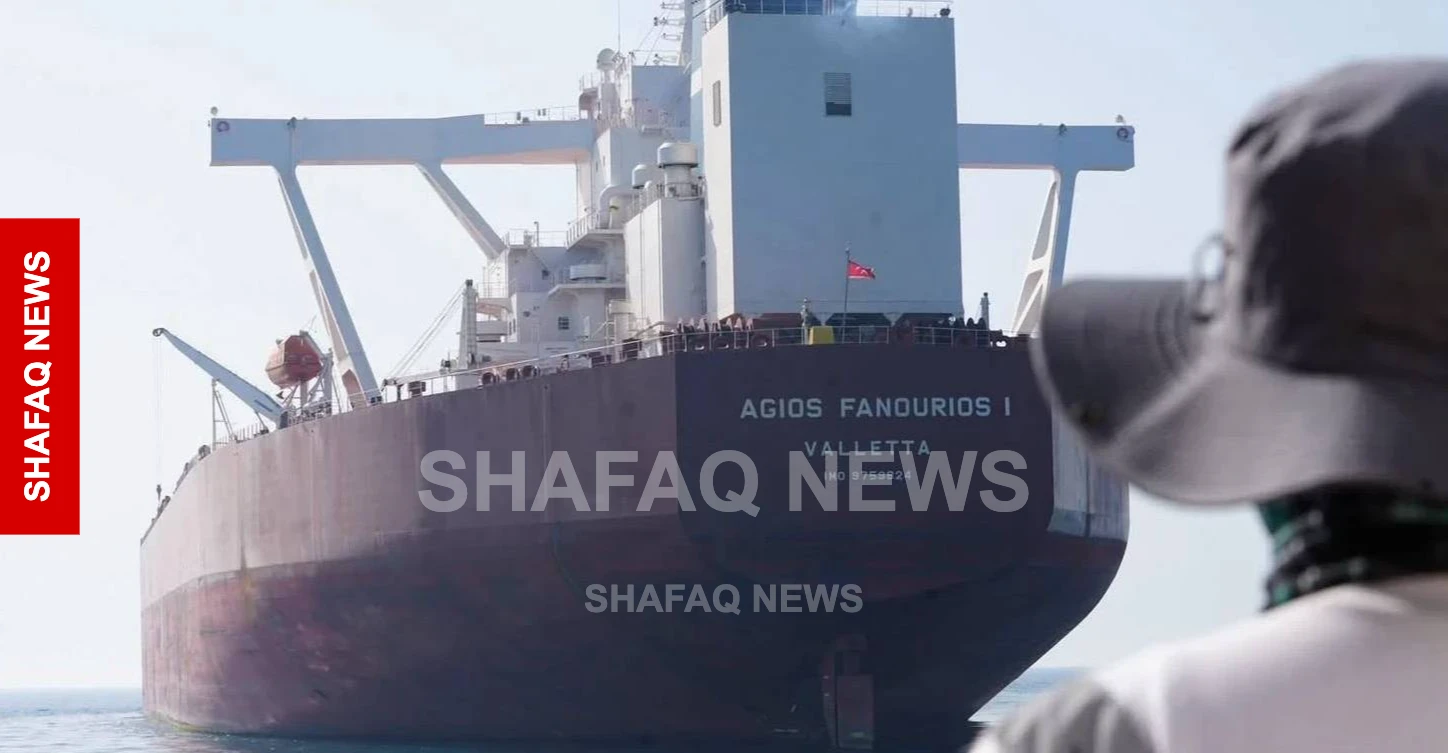 Shafaq News – Baghdad
An Iraqi government source revealed on Monday that the State Oil Marketing Company (SOMO) is conducting intensive negotiations with American and German oil transport companies in an attempt to secure the passage of Iraqi crude through the Strait of Hormuz, taking advantage of Iranian approval for the passage of tankers flying the Iraqi flag amid the disruptions to shipping in the waterway.
The source told Shafaq News Agency that “Iraq is seeking to capitalize on Iran’s approval for Iraqi-flagged oil tankers to cross the border to deliver crude oil to global markets,” indicating that “SOMO has held talks with two companies specializing in global oil transport, one American and the other German.”
He explained that “the American company refused to raise the Iraqi flag on its tankers, which is a basic condition set by Baghdad to ensure the safe passage of oil through the strait, and therefore no agreement has been reached with it so far.”
According to the source, “the German company has agreed to raise the Iraqi flag on its tankers while transporting crude oil from Iraqi ports and passing through Hormuz to global markets,” noting that “Iraqi oil will not be subject, according to understandings with the Iranian side, to any financial fees for passage.”
However, the source pointed to another obstacle related to the American side, saying that Baghdad “needs American approval or authorization to complete the transit arrangements,” predicting that it would be obtained soon, in light of the American sanctions imposed on parties linked to Iranian navigation and insurance mechanisms in the Strait of Hormuz.
The United States imposed sanctions on July 29 on companies and tankers linked to Iran, including entities that Washington said were using insurance and shipping services to collect revenue from ships crossing the strait, further complicating insurance and financial transactions related to transit.
The government source pointed out that the deadline set by Prime Minister Ali Faleh al-Zaidi for the Ministry of Oil to find solutions to the crude oil export crisis “may be extended for a second week,” explaining that reaching final arrangements with shipping companies “is not easy,” as the companies are demanding higher transportation fees and additional insurance guarantees commensurate with the level of risks in the strait.
On Monday, Al-Zaidi gave the Ministry of Oil a week to show tangible results in addressing the export crisis, and directed it to contract with international companies to market and sell oil, and to develop alternative export outlets, in light of the decline in exports due to the Hormuz crisis.
The new negotiations come after an official Iraqi move towards Washington and Tehran to obtain arrangements that would ensure the continuous passage of oil tankers, while Iraq’s exports in July amounted to about 49 million barrels, more than 30 million barrels of which passed through the Strait of Hormuz, according to data from the Ministry of Oil.
Security risks and high insurance costs remain major obstacles to restoring Iraqi exports to normal levels. Shipping companies have refrained from sending tankers to Basra ports despite the significant discounts offered by SOMO to buyers. Ship tracking data from earlier in August showed a sharp decline in shipping traffic through the Strait of Hormuz, as ship owners remained hesitant to enter the region due to the risk of being targeted.
In a sign of the difficult situation, Totsa, the trading arm of Total Energies, recently offered Basra crude for loading from locations outside the Strait of Hormuz, as buyers continue to be reluctant to send tankers to Iraq’s southern ports because of security risks.
shafaq.com
