Commercial property tenants in Baghdad are suffering under the “forced dollar”
Commercial property tenants in Baghdad are suffering under the “forced dollar”
2025-06-25 04:24
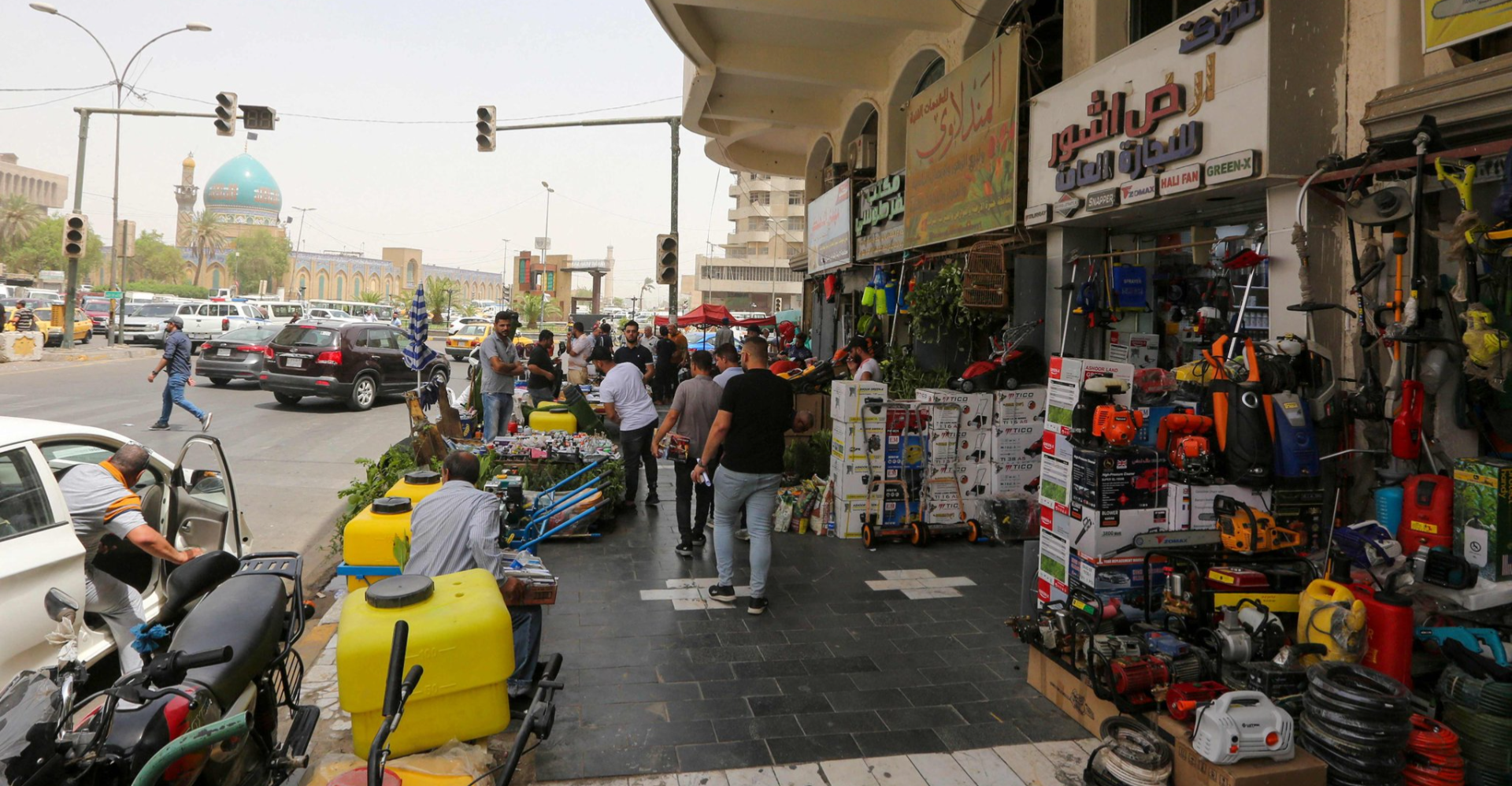 Shafaq News/ Ali Kazem Fawaz, 53, took one last look at his shop in the New Baghdad area, after being forced to close it following a rent increase to $4,000 a month, an amount he says he cannot afford.
In an interview with Shafaq News Agency, Ali said that he was paying 1.5 million dinars per month, which is a large sum in itself, especially when you add in workers’ wages, taxes, electricity, and other expenses.
However, according to the shop owner, “I was able to secure a modest income for my family, but the new amount imposed by the landlord was beyond my ability to pay, especially given his insistence on paying it exclusively in dollars, despite attempts at negotiation and the intervention of numerous shop owners in the area.”
Ali’s case illustrates a deepening crisis in Baghdad, where commercial rents have soared to unprecedented levels, sometimes reaching thousands of dollars, even in low-income areas. This has forced many tenants to close their businesses or relocate to less expensive areas.
It has become common for some property owners to refuse to charge rent in Iraqi dinars, preferring the dollar. This is due to the absence of modern legislation regulating the relationship between landlords and tenants, particularly in commercial real estate.
Old laws that do not keep pace with changes
The contractual relationship between landlords and tenants is still regulated by Real Estate Rental Law No. (87) of 1979, which does not include clear texts requiring rents to be priced in Iraqi dinars, or setting a ceiling for rental allowances, but rather leaves the matter to the discretion of both parties.
In this regard, legal advisor Walid Al-Shabibi told Shafaq News Agency, “Rent Law No. 87 of 1979 pertains to residential properties, while properties rented for commercial or industrial purposes are subject to the provisions of Civil Law No. 40 of 1951. Both aim to protect the tenant, but their practical application leaves the tenant at the mercy of the market.”
He continued, “Previously, residential and commercial properties were subject to Law No. 78 of 1979, which provided broader protection for tenants. However, now there are no clear legal controls for determining rental rates, which forces some tenants to sign long-term contracts of up to 15 years or more to escape price fluctuations.”
Al-Shabibi added, “A property owner can submit a request to have the tax authority assess the rent if he feels unfairly treated due to a long-term contract, provided that the assessment does not exceed a certain percentage of the previous rent.”
Despite these legal loopholes, Al-Shabibi believes that “there is currently no need to enact a new law. Rather, the state must intervene to support vulnerable groups by building commercial and industrial complexes and leasing them at reasonable prices.” He explained that “the solution lies in the state’s involvement as an investor, because the constitution does not permit interference in private property or imposing conditions on it, which prevents the state from imposing direct controls on rents.”
The dollar is destroying small businesses.
The stories of tenants are recurring in Baghdad, from Mansour to Karrada, Yarmouk, and Al-Rubaie Street, where rents have risen dramatically and are now priced in dollars, forcing many shop and restaurant owners to close or relocate.
Kazem Hassan Zamel, 45, told the agency, “I rented a popular restaurant in Karrada three years ago for 1.5 million dirhams a month, but two months ago I was surprised by a rent increase to $3,000. I couldn’t pay, so I was forced to close the restaurant and look for another location.”
He points out that after the contract expired, the landlord offered him the option of renewing the rent at the new amount or leaving. He chose the latter option because there was no legal authority to protect him from such exploitation.
In other areas, such as Abu Dasheer in the Dora district, tailor Fatima Hassan faces similar challenges. She rented a small shop for 200,000 dinars, but the rent gradually increased to 500,000 dinars per month, forcing her to close, she said.
Hassan added, “I couldn’t find a shop with a suitable suit, so I decided to receive my clients in my home and hung a sign on the wall for this purpose.”
No protection
Under the legal cover of the principle that “the contract is the law of the contracting parties,” some landlords continue to charge high rents, placing tenants in a legally vulnerable position.
In the absence of laws that set a ceiling on rental fees or prohibit their pricing in dollars, many Iraqis are forced to submit to landlords.
Commenting on this phenomenon, economic and financial expert Haider Judy said, “Real estate owners prefer the dollar to protect the value of their properties amid the instability of the Iraqi dinar, and there is nothing legally preventing them from doing so.”
Speaking to Shafaq News Agency, Judy pointed out that “the gap between the official and parallel exchange rates negatively impacts commercial and financial activities,” stressing that “economic stability cannot be achieved without a clear financial plan aimed at narrowing the gap between the two rates and enhancing confidence in the local currency.”
Judy also called on the Iraqi Parliament to review commercial leasing laws and issue a reform package that includes setting a rent ceiling and prohibiting dollar pricing to reduce price manipulation.
Property owners’ point of view
For their part, property owners justify the rent increases by the “higher costs of owning the property itself.”
Hussein Hamid, a property owner in a shopping mall, believes that “high rents are due to the huge financial obligations on the landlord.”
“If the monthly rent is $1,000, I am required to pay $400 per month as a monthly installment to the bank or housing fund, in addition to annual payments of up to $20,000 to the investor. As a result, I don’t benefit from the property for many years,” Hamid said.
He added, “I cannot reduce the rent independently of the other owners in the complex, as this would harm their interests. Despite all this, the rent allowances do not represent even a quarter or a third of a percent of the property’s value, which is a small percentage compared to current real estate prices.”
The absence of modern laws has given property owners free rein to set prices and currency, without any legal controls or consideration for the difficult economic conditions facing many citizens.
Instead, tenants found themselves faced with two bitter choices: accept unfair terms or face forced eviction.
The current state of Iraq’s commercial real estate market reveals a clear power imbalance between landlords and tenants, amid outdated laws that fail to keep pace with current economic challenges and fail to hold accountable those who manipulate and exploit the country’s economic situation, according to economic observers.
With rents still priced in dollars and no real legal protections in place, vulnerable small business owners remain under unbearable pressure, with no immediate hope of reform. This forces the Iraqi government to find rapid solutions to this phenomenon.
shafaq.com
