British report: Pipeline projects will not free Iraq from the grip of Hormuz
British report: Pipeline projects will not free Iraq from the grip of Hormuz
2026-08-19
 Shafaq News – Translation
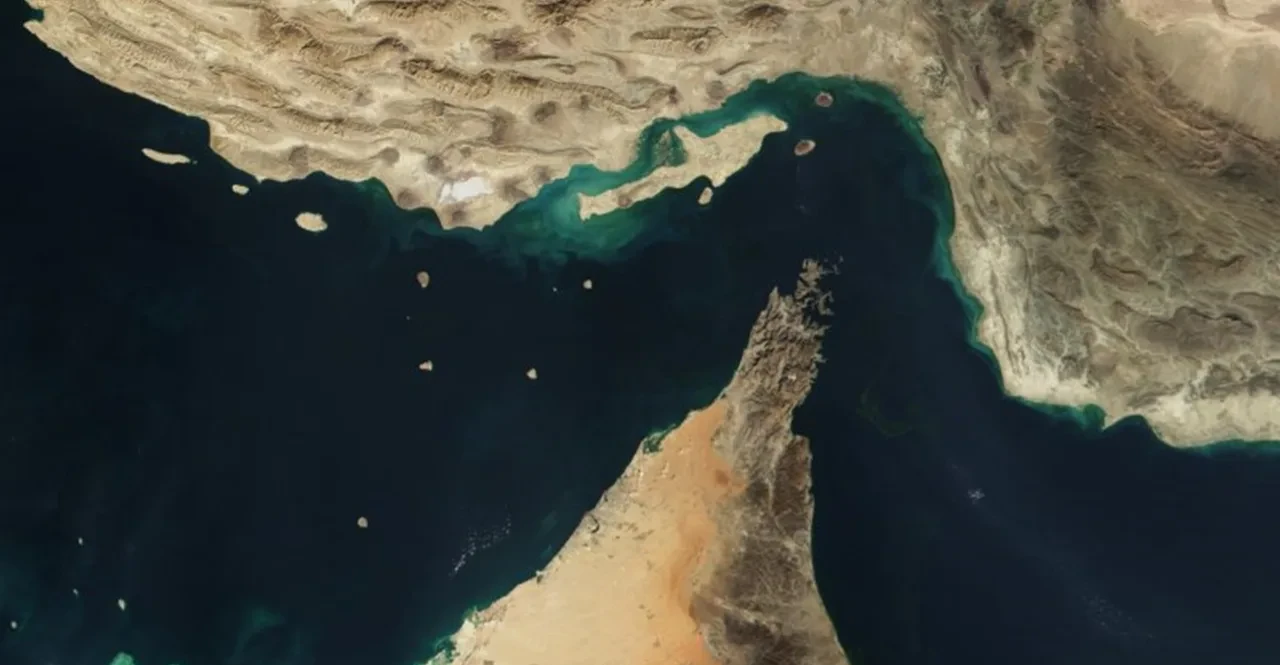
Amid the prolonged crisis in the Strait of Hormuz, Iraq is scrambling to find new outlets and routes to export its oil products, including through some pipeline projects that face significant logistical challenges. However, the British website Sea Trade Maritime News believes that Iraq will remain primarily dependent on two-way tanker traffic through Hormuz, especially in order to meet its two Asian giant customers, India and China.
After the British website specializing in maritime trade affairs stated in a report, translated by Shafaq News Agency, that Iraq, the second largest oil-producing economy in OPEC after Saudi Arabia, is heavily dependent on oil revenues, which constitute about 90% of its budget, it pointed out that the majority of its oil exports, which exceeded 3 million barrels per day before the war, depended on the Strait of Hormuz.
The website noted in its report that Kpler’s data showed that Iraq’s three biggest oil customers over the past two years were in Asia, which is Iraq’s main market, specifically China, India and South Korea.
The report noted that the southern fields in Iraq represent the largest part of Iraq’s oil exports, and therefore the Strait of Hormuz remains crucial due to the lack of an effective pipeline system that would allow large quantities of Basra crude oil produced in the southern region to be transported north and exported via the existing pipeline to the Turkish port of Ceyhan on the Mediterranean Sea.
The report stated that Iraq has discussed plans to build new pipelines on several occasions over the past years, but many factors, ranging from internal politics, conflicts, and geopolitics to bureaucracy, corruption, and security and financial risks, have hindered these plans.
The report said that with Iran establishing a new shipping system in the Strait and the continued high risks against commercial vessels, Iraq is trying to revive some of these pipeline plans as it relies on expanding some solutions to keep its oil flowing to global markets.
While the report noted that past experiences show that Baghdad has failed to implement some pipeline projects, it said that the current critical conditions resulting from the Iran war may exacerbate the need to establish pipelines, but it considered that the resumption of two-way tanker traffic in the Strait of Hormuz will remain essential for Iraq’s oil exports, specifically to the two giant Asian oil consumers, India and China.
The report addressed Iraq’s efforts to expand its northern pipeline export system to the Turkish port of Ceyhan, noting that the pipeline’s maximum capacity is 1.5 million barrels per day, but this capacity is not being fully utilized. The report stated that the capacity currently under discussion under the new agreement is 750,000 barrels per day. It continued, “Even this is unlikely to be achieved, at least in the near term, due to infrastructure constraints, including oil availability, as well as the overall security situation.”
He also noted that the maximum amount that can be exported from northern Iraq, from the Kirkuk fields operated by the federal government and those operated by the Kurdistan Regional Government, amounts to between 320,000 and 430,000 barrels per day if the infrastructure and security challenges can be overcome.
In addition to these new plans, the report said that Iraq wants to build a new pipeline linking southern Iraq to the north, and transport Basra oil from the south to be exported in the future via a pipeline system with Turkey, and if possible via a branch connected to the Syrian port of Banias on the Mediterranean Sea, as well as a pipeline to the Jordanian port of Aqaba on the Red Sea.
The report continued that in order to complete these new export outlets, Iraq will have to build a pipeline from Basra to Haditha in Anbar province.
The report recalled what the Ministry of Oil announced last May, saying that the Basra-Haditha oil pipeline project would have a capacity of about 2.5 million barrels per day, and would be used to export oil in three directions: towards Banias in Syria, Ceyhan in Türkiye, and Aqaba in Jordan.
However, the report noted that this is not the first time Baghdad has announced its intentions to build this pipeline.
The report stated that Iraq is not in a position to finance this new pipeline system, and for that reason, Baghdad is seeking investments from foreign oil companies, including American companies.
Pipes from the past
The report continued that Iraq used to have a network of pipelines, and in the last century it had a double pipeline that ran from the Kirkuk fields to Tripoli in northern Lebanon, and Haifa before the establishment of Israel, which was completed in 1934.
Iraq also had a pipeline that reached the Syrian port of Banias, which was completed in 1952. However, the report stated that none of these pipelines are operational due to the various conflicts in the region since the last century.
The report also noted another pipeline project built by Iraq at that time, called the Strategic Pipeline, which was opened in December 1975. Iraqi officials at the time considered it a vital pipeline for marketing southern oil through Mediterranean terminals and northern oil through Gulf terminals in Iraqi waters.
The report continued that Iraq also had a pipeline through Saudi Arabia, established in 1988, which extended from southern Iraq to the Saudi port of Al-Mu’ajiz on the Red Sea, but it did not last long due to Saddam Hussein’s invasion of Kuwait in 1990.
Hormuz main port
The report stated that Iraq exported approximately 35.5 million barrels per month from the southern regions in July, but this was significantly less than the volumes that Baghdad exported before the shipping crisis in the Strait of Hormuz, which amounted to approximately 105 million barrels per month (equivalent to approximately 3.5 million barrels per day).
The report noted that while some oil tankers were able to load at Iraqi terminals on the Gulf and depart through the Strait during the war, this shipping activity was highly volatile due to the uncertainty surrounding talks between Iran and the United States, and Tehran’s insistence on a new arrangement to govern this sensitive waterway. It further pointed out that this stalemate
The report concluded by stating that while Iraq plans future pipeline projects, the Strait of Hormuz is expected to remain a key outlet for Iraqi oil exports. It cited recent remarks by Iraqi Oil Minister Bassem Khudair, who said that Baghdad is in talks with Iran regarding “arrangements” to allow Iraqi oil exports to pass through the strait, but that the issue has not yet been definitively resolved.
The report concluded that, based on past experience, pipeline projects in Iraq are likely to face obstacles, including changes in government which usually send some projects back to the study stage, in addition to security challenges.
shafaq.com
