An expert predicts a 30% drop in dollar sales in Iraq.
An expert predicts a 30% drop in dollar sales in Iraq.
2026-03-09 00:54
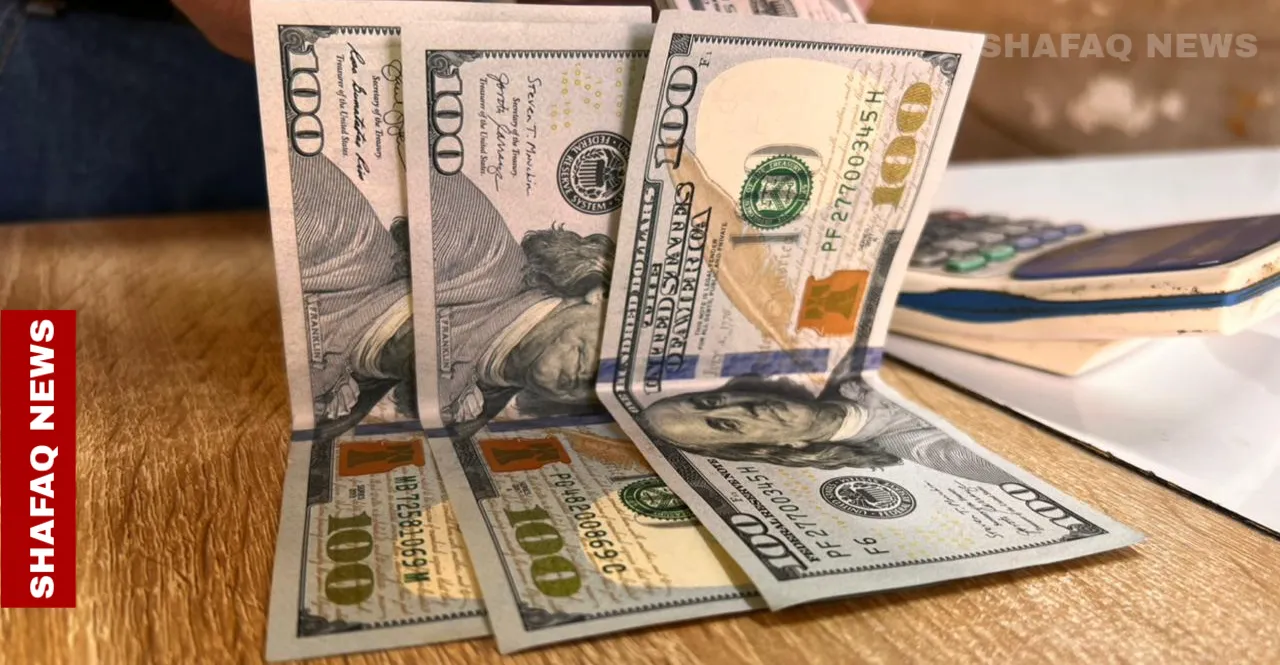 Shafaq News – Baghdad
Economic expert Manar Al-Obaidi said on Monday that the total sales of foreign currency by the Central Bank of Iraq amounted to about $884 billion during the period from 2006 to 2025, noting that these sales witnessed a remarkable variation between the years.
Al-Obaidi explained in a statement received by Shafaq News Agency that the peak of sales was recorded during the period 2022-2025, when it reached about $265 billion, which is equivalent to about 30% of the total sales of the Central Bank during those years, with an annual average of about $66 billion.
He added that 2025 saw the highest annual level of foreign currency sales, reaching about $80 billion, the first time that central bank sales have exceeded this level since 2003.
He noted that despite the auditing, restriction and new mechanisms that were applied to foreign exchange transactions during 2025, they were unable to curb the rapid growth in dollar sales to finance foreign trade, reflecting the continued high demand for foreign currency.
Al-Obaidi pointed out that the period that recorded the highest levels of dollar sales (2022-2025) is the same period that witnessed the largest gap between the official price and the exchange rate in the parallel market, where the average difference during those years reached about 13.67%.
He pointed out that the difference between the official price and the parallel market price did not exceed 6% during the past twenty years except in the period between 2014 and 2017, while the lowest level of the difference was recorded between 2018 and 2021 with an average of 2.28%.
Al-Obaidi predicted that foreign currency sales would change during 2026 with the implementation of the ASYCUDA system and the adoption of the pre-calculation mechanism for customs tariffs, as well as the geopolitical and economic changes in the region, predicting a decline in sales of up to 30% compared to previous years.
He explained that the exchange rate in the parallel market and the quantities of foreign currency sold depend mainly on the supply and demand equation, noting that the increase in the supply of dollars during the past years was not enough to curb the high demand.
He called for directing the treatment towards managing the demand for dollars by tightening control over border crossings, regulating the import of some goods that drain the largest share of foreign currency, in addition to working on changing consumption patterns in a way that contributes to reducing demand and strengthening control over the exchange rate in the parallel market.
In contrast, Al-Obaidi pointed out that inflation rates may be a more important indicator than the exchange rate in the parallel market, explaining that despite the decline in the value of the dinar in the parallel market during recent years, inflation has recorded low levels, reaching about 0% in 2025 according to data from the Ministry of Planning.
He stressed the need for a more accurate analysis of the data to identify the factors affecting commodity prices in the market, as well as to study the reasons for the increase in central bank sales to these levels despite tightening control procedures, and whether the problem is related to auditing mechanisms or to increased demand for imports.
shafaq.com
