Al-Zaydi gives Kataib Hezbollah a deadline to hand over “Al-Jarf” and prepares to mobilize the Counter-Terrorism Service.
Al-Zaydi gives Kataib Hezbollah a deadline to hand over “Al-Jarf” and prepares to mobilize the Counter-Terrorism Service.
2026-11-15
 Shafaq News – Baghdad
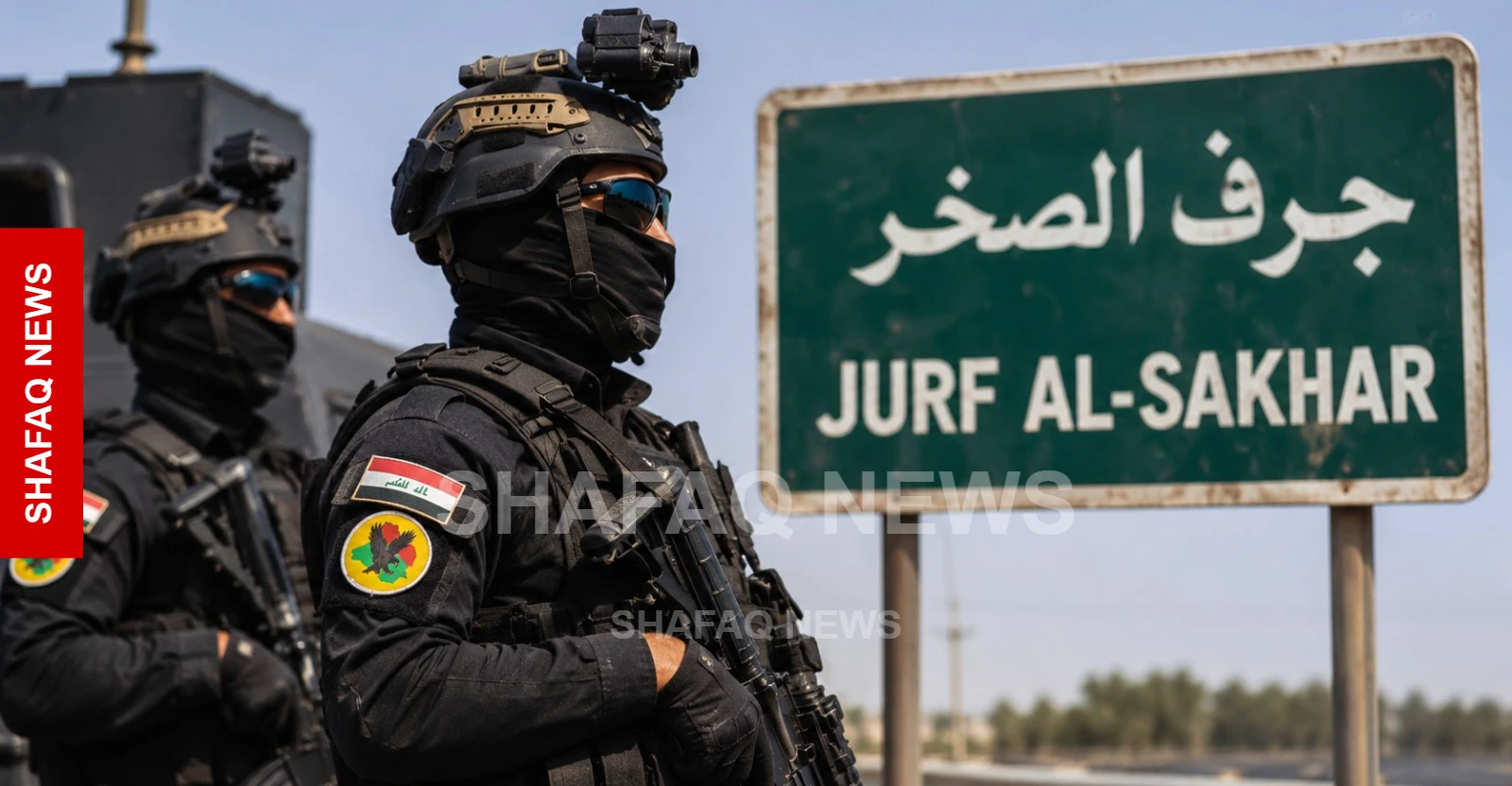
On Sunday, informed government and political sources revealed a “serious” intention on the part of the Prime Minister, Commander-in-Chief of the Armed Forces, Ali al-Zaidi, to impose full security and military control over the Jurf al-Nasr “al-Sakhr” district, north of Babil Governorate, through special forces from the Counter-Terrorism Service.
Sources told Shafaq News Agency that al-Zaydi informed mediators from the Popular Mobilization Forces and the Coordination Framework that Kataib Hezbollah was given a final deadline, ending at the end of this week, to hand over full security responsibility for al-Jurf to government forces, warning of resorting to the military option if there was no response.
She added that the Prime Minister intends to task special forces from the Counter-Terrorism Service with carrying out an operation to impose control over the district in the coming days, in the event that mediation efforts fail, noting that al-Zaydi informed the mediators that any party that obstructs the implementation of government measures will be dealt with according to the law, including the provisions of the Counter-Terrorism Law.
According to the sources, al-Zaydi confirmed that the government had obtained full judicial support for the anticipated move, while mediators are trying to convince him to back down from the military option, fearing that the confrontation with Kataib Hezbollah would escalate and the situation would get out of control.
She explained that the Prime Minister is still committed to the option of intervention, especially after the results reached by the government committee tasked with investigating the smuggling of oil and its derivatives from Jurf al-Sakhr, as well as preventing the committee from accessing some areas within the district to complete its investigations.
These developments come at a time when sources told the agency about directives to deploy additional federal police forces in Al-Jarf and tighten inspection procedures at its entrances and exits, while the new move focuses on involving the Counter-Terrorism Service in imposing control over the entire district, and not just strengthening the external checkpoints.
A previous plan to restore government control over Jurf al-Sakhr involved the involvement of three brigades from the Shrine Forces, the Third Division of the Federal Police, and a force from the Counter-Terrorism Service. However, its implementation faltered, according to an informed source who spoke to Shafaq News, due to the leaking of its details, which prompted the government to search for an alternative plan.
The escalation came after Al-Zaydi received the report of the committee tasked with investigating the oil smuggling file from Jurf al-Sakhr, which confirmed, according to information previously revealed, the existence of smuggling operations and oil refining facilities within the region.
As a result, the Prime Minister decided to refer those accused of involvement in smuggling operations to the judiciary, and to dismiss a number of senior security, military and administrative officials in Babil Governorate, including the governorate’s police chief and officials in the intelligence, national security and Popular Mobilization Forces, the energy police and the oil pipeline company.
These measures were preceded by placing the military and security units on “C” alert, the highest level of alert, coinciding with military movements towards Jurf al-Sakhr, amid information about government preparations to reassert control over the area.
The past few days have also witnessed contacts and meetings between al-Zaydi and leaders in the coordination framework and the Popular Mobilization Forces, including the Secretary-General of the Badr Organization, Hadi al-Amiri, the head of the Popular Mobilization Forces, Faleh al-Fayyad, and the Chief of Staff of the Authority, Abdul Aziz al-Muhammadawi, known as “Abu Fadak”, in an effort to address the crisis and avoid a military confrontation.
Jurf al-Sakhr, officially known as Jurf al-Nasr, has been under the influence of Hezbollah Brigades and armed factions for years, while the issue of security control over it has resurfaced after suspicions arose regarding the smuggling of oil and its derivatives, and the dispute escalated over the powers of government forces to enter areas within the district.
shafaq.com
