Al-Zaidi in 100 days: Exceptional challenges and tougher upcoming tasks
Al-Zaidi in 100 days: Exceptional challenges and tougher upcoming tasks
2026-08-20
 Shafaq News – Baghdad
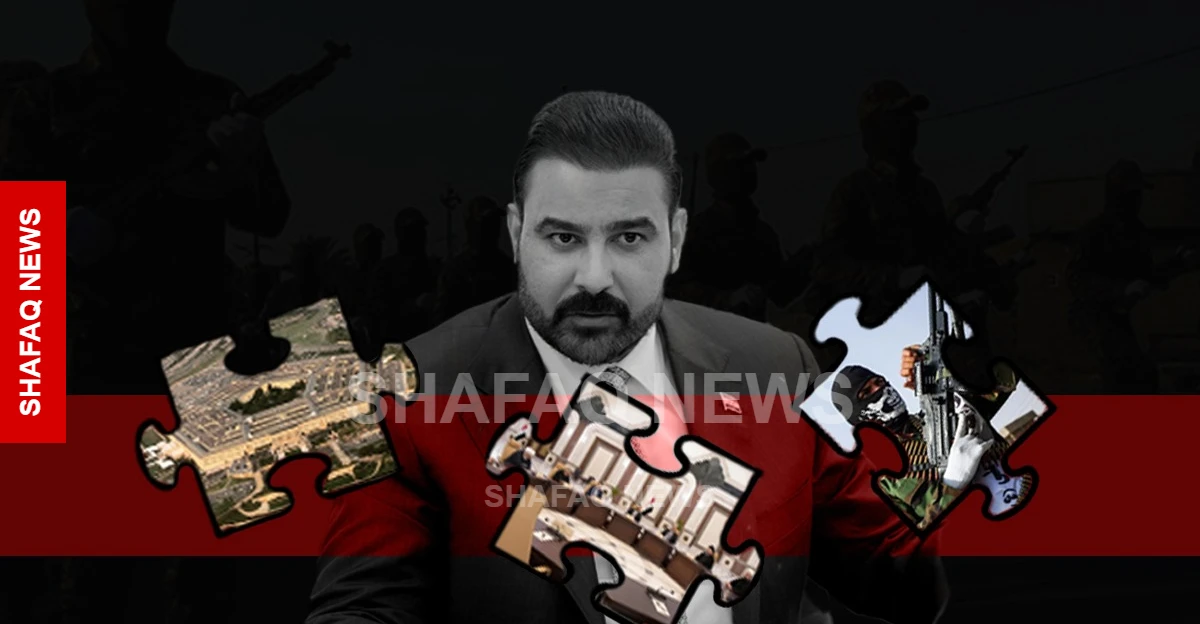
During the first 100 days of his premiership on May 14, 2026, Iraqi Prime Minister Ali Faleh al-Zubaidi faced a series of heavy and simultaneous issues, ranging from the oil export crisis, liquidity and salaries, to restricting weapons to the state, combating corruption, the water crisis and drought, as well as completing the formation of his government and managing Iraq’s relations amidst escalating regional and international tensions.
Today, Thursday, August 20, 2026, the Al-Zidi government enters its 98th day since gaining the confidence of the House of Representatives, at an early stage to evaluate its performance, amid a difference in reading its record between those who see that it has opened files that have been postponed for years, and those who believe that several decisions and plans have not yet turned into tangible results on the ground.
Al-Zidi’s government gained the confidence of the House of Representatives with a vote that included 14 ministers out of 23 portfolios, while nine ministries, including the Interior, Defense and Planning, remained without original ministers, to be run by acting ministers amid political disputes over candidates and quotas.
Despite this ministerial vacancy, the Cabinet approved its government program for the years 2026-2029 a few weeks after gaining confidence, including 139 priorities distributed across 14 sectors and 13 key pieces of legislation, within a vision based on building a “stable state, a productive economy, and balanced partnerships.”
Oil export crisis
The oil file is at the forefront of the economic challenges facing the government, especially with the decline in Iraq’s ability to export crude through its traditional outlets due to tensions between Iran and the United States and the complexities of navigation in the Strait of Hormuz, which puts public finances under additional pressure in an economy that depends heavily on oil revenues.
In this context, MP Uday al-Zamili says that the oil export crisis is still without “effective solutions,” but rather revolves around proposals and settlements, noting that al-Zaidi took action through his visits to the United States, Iran and Turkey and concluded a number of agreements, but the details of some of them were not adequately presented to Parliament.
Al-Zamili adds to Shafaq News Agency that “the mechanism for exporting oil is still slow and unstable,” pointing to what was announced about an Iraqi-Turkish agreement to export about one million barrels per day through Turkish ports, but he wonders about the nature of the mechanism and the compensation that Iraq will receive, and whether the understandings will be reflected in other files, including water and trade exchange.
He affirms that Al-Zidi’s government is still in its early stages, and that the Prime Minister will later be subject to parliamentary questioning and accountability after the completion of his formation, stressing that the government is still “lame” due to the shortage of nine ministers, and needs evaluation and support from the House of Representatives.
The importance of the oil file increases with its direct link to the state’s ability to finance salaries and public expenditures, which prompted Al-Zaydi, last Monday, August 17, to hold an extensive meeting with officials of the Ministry of Oil and the Ministers of Oil and Finance, demanding urgent solutions for export routes and to confront the repercussions of the crisis.
Ensuring water quotas
The water issue is no less important than oil, given the decline in water revenues and the drought that is putting pressure on the governorates and the agricultural sector and threatening environmental and food stability.
However, the Prime Minister’s water advisor, Turhan Mufti, offers a more optimistic reading, saying that the water situation during the summer of 2026 is about three to four times better than the previous year, and therefore the current situation cannot be described as severe as it was last year.
The Mufti confirms to Shafaq News Agency that the government is relying on its agreements with Turkey, explaining that the memorandum of understanding for the framework agreement on water and the memorandum of understanding for the mechanism for financing projects will enter into force starting from next September, which will provide a basis for the sustainability of the Iraqi water share according to an equation that is being worked on to determine.
He says that the Al-Zaidi government, through concluding the two agreements, was able to lay the foundation for maintaining “sufficient and adequate” quantities of water, whether Iraq faced water scarcity or not, while emphasizing at the same time the need for smart water use and expanding irrigation technologies and modern resource management.
Revenue diversification
In parallel with the oil export crisis, the government is trying to find alternative revenues and reduce the dependence of public finances on oil, by stimulating non-oil revenues, reforming the banking, tax and customs system, and supporting investment and the private sector.
In this regard, Khalid Walid, a member of the Reconstruction and Development Coalition headed by former Prime Minister Mohammed Shia al-Sudani, believes that al-Zaidi’s government is primarily a “government managing a political, economic and security crisis,” in light of the repercussions of the war and the tensions that the region has witnessed.
Walid tells Shafaq News Agency that the government is trying to find new ways to maximize non-oil revenues, diversify oil export methods, and reduce operational spending as much as possible, in addition to reforming institutions, activating anti-corruption measures, and correcting errors in government structures.
He adds that during his foreign tour, which included Washington, Tehran and Ankara in July 2026, Al-Zaidi tried to keep diplomatic channels open and contain the repercussions of the Iraqi and regional situation in a way that preserves the national interest.
But Walid sets a basic criterion for judging the government after the hundred days, which is its ability to turn promises and plans into tangible reality, considering that the files of combating corruption and restricting weapons will be the governing factors in evaluating the performance of Al-Zidi’s government until the end of the year.
The fight against corruption has been at the forefront of the government’s work since it launched, on June 28, 2026, an anti-corruption campaign and took legal and regulatory measures against prominent political and administrative figures, in a move that its supporters described as different from the practices of previous governments.
The Prime Minister’s financial advisor, Mazhar Muhammad Salih, said last Saturday that the government’s assessment should not be based on the number of days that have passed, but rather on the direction it has chosen from the beginning, considering that the government has placed combating corruption at the forefront of its priorities and moved the file from political discourse to an institutional path based on oversight, accountability and recovery of funds.
Weapons and sovereignty
While the issue of corruption represents the most prominent achievement of the government at the institutional and judicial level, restricting weapons to the hands of the state represents the most difficult political and security challenge.
Al-Zaydi set September 30, 2026 as the deadline for ending the issue of weapons outside the framework of the state, in conjunction with the arrangements for ending the military mission of the international coalition.
The Coordination Framework forces say they agree on the principle of restricting weapons, while the dispute revolves around implementation mechanisms, guarantees, and timing. Ideas have also been put forward for negotiating with the factions on disarmament arrangements, including withdrawing heavy weapons and depositing them in warehouses, within a formula that prevents sliding into an internal confrontation.
Regarding the issue of sovereignty, Khalid Walid believes that restricting weapons, the withdrawal of foreign forces, and protecting the unity of Iraqi territory will be the decisive criteria for the government’s performance during the next phase.
Washington-based political analyst Ramadan al-Badran believes that al-Zaidi faces challenges that have accumulated over the years, in addition to crises imposed by regional transformations, but he considers that the Prime Minister is “trying to lay the right foundations” based on national, regional and international consensus.
Al-Badran told Shafaq News Agency that Al-Zaidi opened files that had not been opened before with the same seriousness, most notably combating corruption and trying to control weapons within the framework of the state, considering these to be steps in the right direction, even if they do not mean that the problems have been solved.
Al-Badran concludes that evaluating what Al-Zaidi has accomplished cannot be separated from security stability, financial liquidity, and regional conditions, considering that the Prime Minister “has accomplished a great deal” in relation to the nature of the stage.
shafaq.com
