A Western analysis presents Iraq as a model for applying Trump’s latest sanctions on Iran.
A Western analysis presents Iraq as a model for applying Trump’s latest sanctions on Iran.
2026-08-2
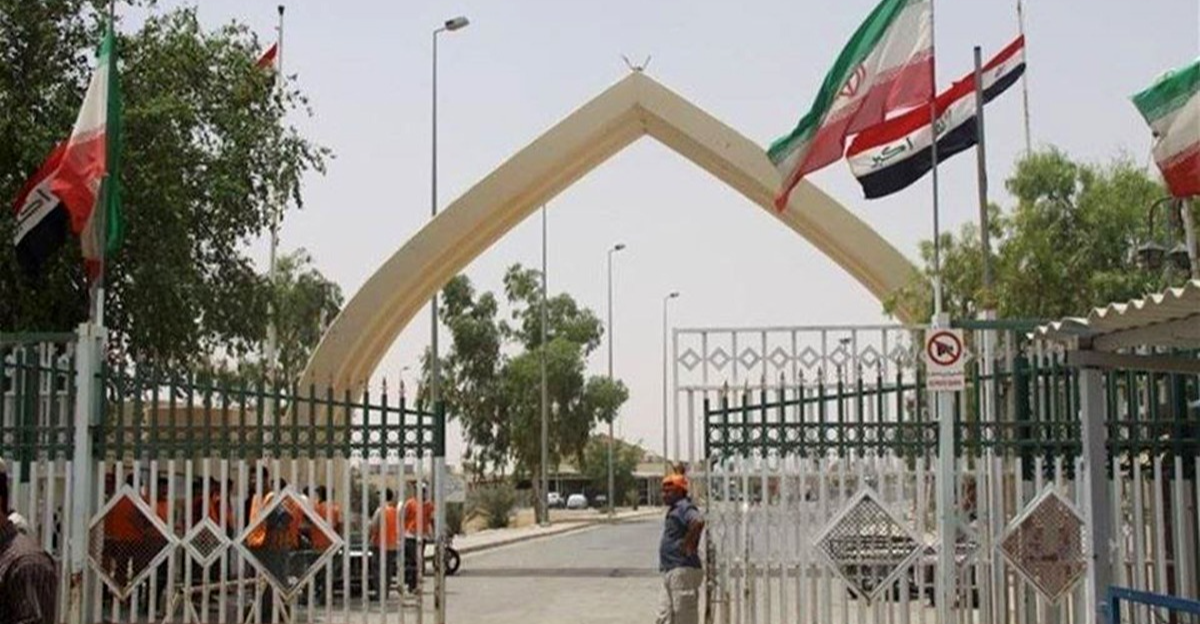 Shafaq News – Follow-up
The economic sanctions and recent threats made by US President Donald Trump against Iran have opened the door to much speculation about what will happen, how Washington intends to do to “strangle” Tehran economically, and what mechanisms can be employed to implement this.
Reuters addressed the issue from the angle of how Iraq could be a “model” for implementing US threats to exclude countries that continue to trade with Iran from the dollar-based financial system.
Washington has already imposed sanctions on a number of Iraqi banks accused of dealing with Tehran, but has avoided taking measures that would destroy the economy of the two countries’ strategic ally.
US President Donald Trump warned that any country providing Iran with vital economic support would face severe consequences. This could put Iran’s main trading partners of recent years—China, the UAE, Turkey, India, Pakistan, and Oman—in the crosshairs.
US Treasury Secretary Scott Bisent announced on Monday an “economic assault” on Iran through sanctions, saying that its trading partners would be targeted, without naming them.
Since its invasion of Iraq in 2003, the United States has exercised effective control over Iraqi oil revenues in dollars, primarily through the Federal Reserve Bank of New York, giving Washington exceptional leverage over Baghdad’s affairs.
Iraq is a rare ally of both the United States and Iran, holds reserves exceeding $100 billion in the United States, and relies heavily on Washington’s goodwill to ensure the continued flow of its oil revenues and funds.
Reuters revealed in late 2024 a fuel oil smuggling network generating at least $1 billion annually for Iran and its proxies in Iraq. Other countries neighboring Iran that are involved in similar schemes may face similar U.S. scrutiny .
Although the United States has exceptionally strong influence over Iraq compared to Iran’s other major trading partners, the dollar’s status as the cornerstone of global trade makes its reach enormous.
Reuters reported last April that the United States had halted a $500 million cash shipment to Iraq and suspended aspects of security cooperation to pressure Baghdad over Iranian-backed factions.
Reports in January of this year indicated that Washington threatened senior Iraqi politicians with sanctions, including oil revenues, if such groups joined the next government.
Successive US administrations in recent years have sought to stifle this dollar flow by imposing sanctions on Iraqi banks, with the exception of some of the largest banks.
The current Iraqi prime minister appeared to be a candidate deemed acceptable by the Trump administration, at a time when Washington was exerting continuous pressure on Baghdad to curb Tehran’s influence.
Neil Quilliam, an associate fellow at the UK-based Chatham House think tank, said that US pressure has increased the costs and risks of financial transactions with Iran, forcing Iraqi institutions to improve compliance.
But this pressure did not sever Iraq’s economic ties with Iran, which extend beyond the financial system, leaving Baghdad caught between its dependence on both Washington and Tehran .
Quilliam said, “Countries like China or Türkiye have larger economies and a greater capacity to withstand pressure. Iraq, on the other hand, has far fewer alternatives and a much smaller capacity for financial resilience.”
He added, “Its weakness stems to some extent from the volume of its trade with Iran, and to a greater extent from its dependence on continued access to the US-led financial structure.”
Official figures indicate that Iraq’s trade with Iran exceeded $10 billion in 2025, driven mainly by Iranian exports of food and consumer goods to the Iraqi market.
Trade declined in 2026 following the outbreak of the Iran war, as security risks increased, border crossings were disrupted, and transportation costs rose.
Iran has long viewed Iraq as an economic ” lung , ” and exerts considerable military , political , and economic influence there through powerful Shiite factions and the political parties it supports .
It also obtained hard currency from Iraq through exports and avoided US sanctions through its banking system .
Energy occupies a pivotal position in this relationship, as Iraq pays Iran between four and five billion dollars annually for natural gas used in electricity generation, according to Iraqi energy officials, who warned that imposing new US measures could jeopardize these payments .
Tom Keating, director of the Finance and Security Centre at the Royal United Services Institute (RUSI), a British think tank, said that Iraq has long been an effective route for Iran to circumvent sanctions.
He added, “As Iran’s ties to the international financial system become increasingly restricted, existing weaknesses will be more easily exploited. In this respect, Iraq, its banking system , and its informal financial sector can expect to face increasing challenges .”
But he said that adopting an incentive-based approach rather than a punitive one might be more effective.
He added that the United States, for example, could provide technical assistance to the central bank and government in Iraq on a broader scale as part of a “carrot-and-stick strategy”.
The United States is also anticipating broader repercussions for the financial system. When asked why he was refraining from directly sanctioning Iran or naming specific countries as targets, Bessent said, “What would motivate me to blow up the global financial system?”
shafaq.com
