A report reveals that Iraqi passports and citizenship were granted to members of the Iranian Revolutionary Guard after 2003.
A report reveals that Iraqi passports and citizenship were granted to members of the Iranian Revolutionary Guard after 2003.
2026-11-21
 Shafaq News – Special Translation
For more than 20 years, hundreds of Iranian agents, with the facilitation of Iraqi and Lebanese authorities, have used passports and identity documents issued under false names to travel across the Middle East, contributing to the expansion of Tehran’s influence and support for allied armed groups.
This was revealed in an extensive report by the Abu Dhabi-based newspaper ” The National ,” quoting security officials in Iraq and Lebanon, who also touched on the citizenship-granting ceremonies that were being carried out secretly for suspected agents and their families.
The newspaper report, translated by Shafaq News Agency, pointed to the recent decision by Lebanese authorities to launch biometric passports, which it described as having the primary goal of preventing Iranian agents from exploiting a decades-old tactic to move covertly throughout the region.
While the exact figures are still unknown, it is believed that the number of Lebanese and Iraqi identity documents obtained by members of the Iranian Revolutionary Guard, either through forged documents or through legal channels, is in the hundreds.
The report indicated that this tactic dates back to at least the Iraq War era, and has been brought back into focus in light of the regional confrontation between the United States and Israel on one side, and Iran and its allies on the other, particularly Hezbollah and Iraqi armed groups. This also highlights the shadow war between Iran on one side, and the Israeli Mossad and Western intelligence agencies on the other, a confrontation that has swept the Middle East for decades.
According to the report, other Iranians have acquired citizenship through marriage, as mixed marriages between Lebanese, Iraqis and Iranians have become increasingly common, given shared cultural and religious ties, especially since the Iranian Revolution of 1979.
He explained that the introduction of new biometric passports in Lebanon was accelerated after a long delay, following an Israeli missile strike on a fourth-floor hotel room in the Raouche area of Beirut in March, which killed a number of Iranian Revolutionary Guard officials residing there, as documents found among the rubble revealed that they had used Lebanese passports to check into the hotel.
He noted that these fake Lebanese citizens were believed to be members of the Quds Force of the Revolutionary Guard, and that their Lebanese passports were not biometric, making them easier to forge and perhaps more difficult to verify.
The report quoted a Lebanese security official as saying that after the assassinations, the transition to biometric passports was accelerated, and the security services agreed to gradually get rid of the old passports, explaining that “you cannot fool the biometric system, it contains your history… and those who were killed in Raouche were Iranian agents carrying forged Lebanese passports.”
In Iraq, the report said that members of the Revolutionary Guard and Hezbollah were provided with Iraqi documents in the years following the 2003 invasion, according to confirmations from five political and security sources, who said that these documents allowed them to move freely throughout Iraq and help organize armed groups.
The report quoted a retired intelligence officer as saying that this tactic was concentrated between 2003 and 2008, during which Iraqi documents were given to specific individuals whose work included training and organizing militias.
According to the same officer, who served until 2016, the number of cases was in the dozens, not thousands, adding that many Iranians linked to the Quds Force in Iraq used Iraqi passports or IDs, and that they needed these documents to move freely in Iraq.
After the report noted the rise in sectarian violence in the years following the fall of Saddam Hussein’s regime, as Sunni extremists and Shiite armed groups confronted US forces in Iraq, it quoted a political source as saying, “The danger of sectarian war was an existential threat, not only to the Shiite community, but also to the nascent democracy at that time, and that is why all Shiite parties agreed to confront this danger. Iran’s role was essential from the very beginning, through sending advisors, providing weapons, training, and funding.”
According to the political official, Iran invested heavily in new militias known at the time as “special groups,” and some of these Iranian advisors were given Iraqi identities, which were not necessarily passports.
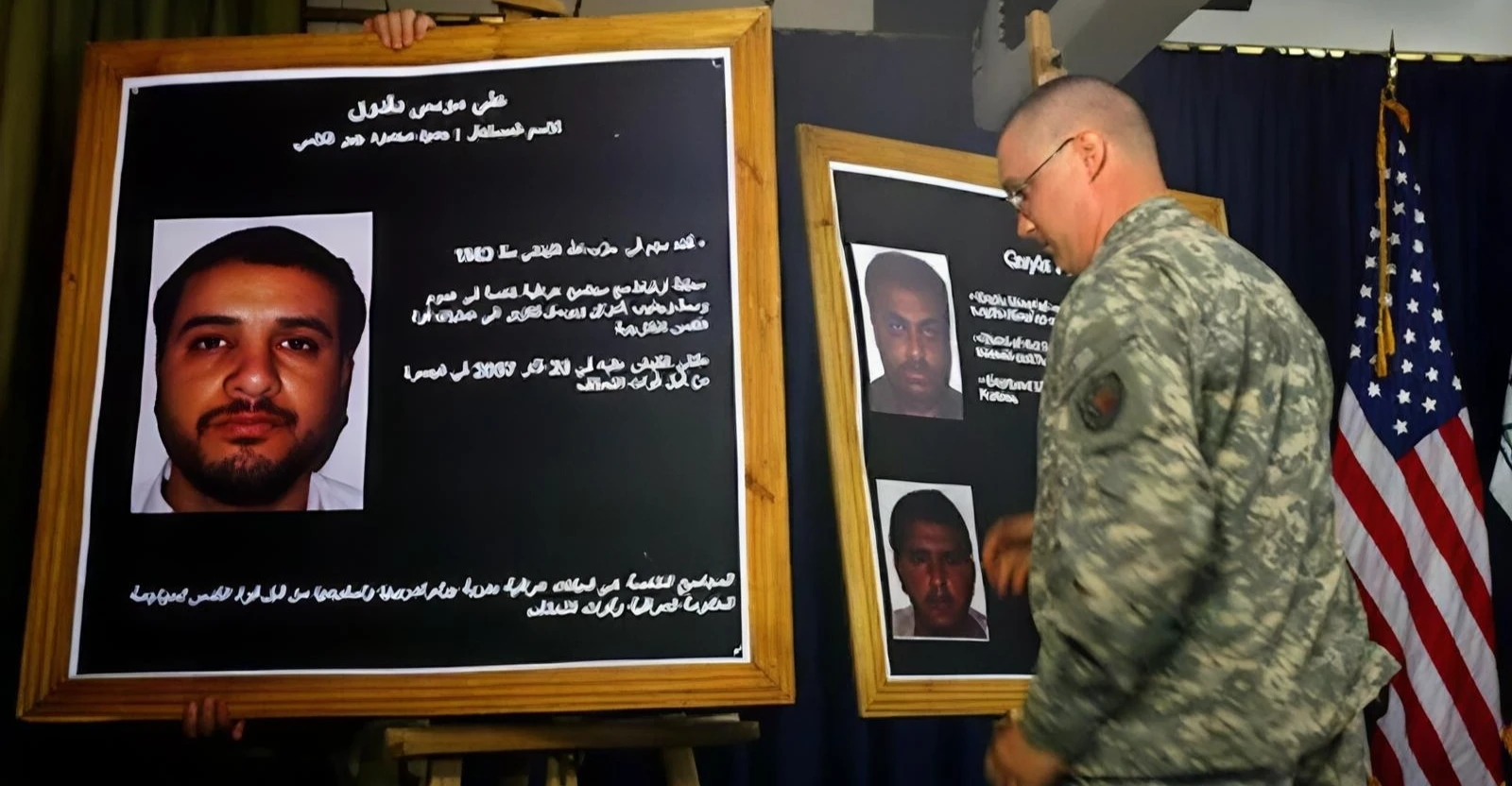
According to the retired intelligence officer, the use of Iraqi identity documents was not limited to Iranians, but also included prominent leaders of the Lebanese Hezbollah, who helped train Iraqi factions and plan attacks against US forces, including Ali Musa Daqduq, who arrived in Iraq in 2005 and worked for Asaib Ahl al-Haq, and contributed to the Karbala operation in 2007 that ended with the killing of five American soldiers.
Daqduq had two types of Iraqi identity documents when he was arrested in Iraq and was released in later years, but he was killed in an Israeli raid in Lebanon last June.
The report quoted Matthew Levitt, who worked as an analyst for the US Federal Bureau of Investigation (FBI) and the US Treasury Department, as saying that the Iranians’ use of Iraqi passports is a major problem, explaining that the penetration of Iranian agents into positions within the Iraqi government means that no one should be surprised by their ability to obtain Iraqi identity documents.
According to the report, the use of Iraqi documents by Iranian citizens was not limited to members of the Iranian Revolutionary Guard, as Iraqi authorities in 2024 withdrew passports and revoked the citizenship of a number of Iranian Kurdish opposition figures, raising questions about how they obtained those Iraqi documents.
The report concluded that some Iraqi officials are aware that issuing passports to figures from the Iranian Revolutionary Guard could have serious repercussions for their country, especially for Baghdad’s relations with Western partners, but their ability to end these practices is limited.
shafaq.com
