A legal expert settles the debate: There is no law criminalizing the sale of pork in Iraq.
A legal expert settles the debate: There is no law criminalizing the sale of pork in Iraq.
2026-09-10
 Shafaq News – Baghdad
Legal and constitutional expert Habib Al-Quraishi confirmed on Thursday that there is no explicit penal provision in Iraqi legislation that criminalizes the sale of pork itself, explaining that the prohibition of pork in Islamic law does not mean, from a criminal standpoint, that every act related to it automatically becomes a crime, unless there is a legal provision that specifically criminalizes the act.
Al-Quraishi told Shafaq News Agency that “simply selling pork, knowing its nature, does not appear to constitute a crime in itself according to Iraqi legislation, in contrast to the existence of regulatory texts that envision the production and marketing of this type of meat, with the requirement that the data affixed to the package be clear and state that it contains pork.”
He explained that “the legal situation is different in the case of selling pork as lamb or beef, as the incident can fall under the crimes of fraud in commercial transactions, based on Article (467) of the Penal Code No. (111) of 1969, which punishes fraud in the nature, type or essential characteristics of the goods.”
He added that “Law No. (22) of 1972 Regulating the Slaughter of Animals and its amendments and instructions issued thereunder regulate the processes of preparing, transporting, storing and selling meat intended for human consumption, and that violating these provisions may result in penalties including imprisonment, closure of the shop and cancellation of the license to practice the profession, according to the nature of the violation and the text applicable to it.”
He continued: “Food Regulation No. (29) of 1985 deals with the concept of selling broadly, including importing, displaying, advertising, storing, transporting, delivering, and possessing for the purpose of sale. It prohibits the trading of food in cases, including if it is harmful to public health, spoiled, decomposed, damaged, adulterated, or if it has been prepared or displayed in unsanitary conditions, or if it violates the requirements of the information card.”
Regarding attempts to rely on the dissolved Revolutionary Command Council Resolution No. (146) of 1998 to criminalize the sale of pork, the expert explained that “the resolution does not explicitly mention pork, and its application is linked to the fulfillment of the conditions specified in the text, especially those related to the material or food being unfit for human consumption.”
He stressed that “the statement that pork is absolutely unfit for human consumption is not consistent, according to legal and regulatory data, with the existence of Iraqi legislation and instructions that regulate the breeding of pigs and dealing with them, including Instruction No. (1) of 1988 regarding the health and technical conditions for raising pigs.
According to the available legislative texts, the legal expert said, “There is no explicit text that canceled or replaced those instructions after 2003, which makes reliance on them valid unless it is proven that they were canceled or that they conflict with subsequent legislation.”
Al-Quraishi concluded his statement by saying that “criminalizing the sale of pork requires an explicit legal text that specifies the act and the punishment, and that it is not permissible to expand the interpretation of penal texts or create a crime based solely on religious prohibition, in application of the principle of penal legality which stipulates that there is no crime or punishment except by text.”
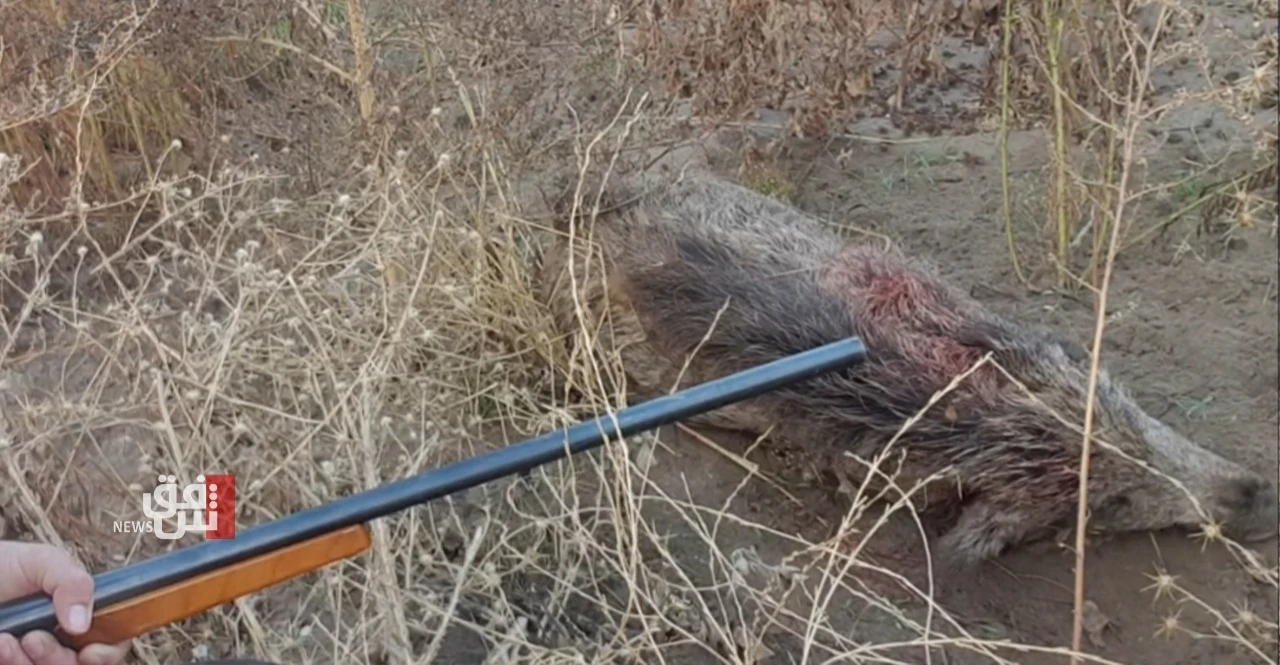
A security source informed Shafaq News Agency on Wednesday that an intelligence security team had arrested the owner of a butcher shop who was hunting wild boars in the Al-Hurriya district of Kufa and selling them to citizens as “minced meat” in the city center of Najaf.
shafaq.com
