A “fake” Iranian tanker sparks controversy over breaking the US embargo, and fake signals reveal the truth.
A “fake” Iranian tanker sparks controversy over breaking the US embargo, and fake signals reveal the truth.
2026-11-22
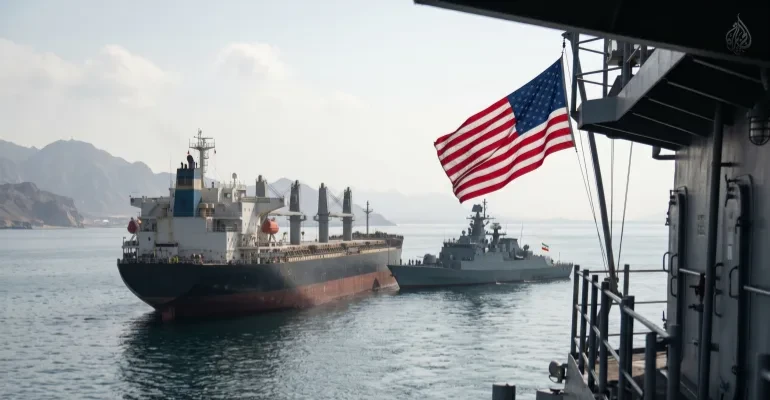 Shafaq News – Tehran
News of a giant Iranian oil tanker moving through the Strait of Hormuz, in defiance of the US naval blockade, turned into widespread controversy in the past few hours, before a company specializing in monitoring maritime traffic revealed on Sunday that the tanker that sparked the speculation did not exist, and that the signals attributed to it were fake.
The story began when data from the ship-tracking website “MarineTraffic” showed an Iranian-flagged tanker named “Khateshkan,” meaning “blockade breaker,” moving eastward through the Strait of Hormuz towards the Gulf of Oman, sparking speculation that Tehran was beginning to implement its threats to breach the US blockade imposed on its oil exports.
According to the data circulating, the tanker’s draft was 22.5 meters, which corresponds to a giant tanker loaded with crude oil, while navigation information showed that its destination was Nigeria, which reinforced the belief that it was carrying out an Iranian attempt to resume oil exports despite the American military measures.
However, TankerTrackers, a company specializing in tracking oil tankers, denied the validity of this information after reviewing navigation data and satellite images, confirming that the alleged ship does not exist at all.
The company stated via its account on the “X” platform that “this tanker does not exist in the first place,” explaining that the data associated with the Automatic Identification System (AIS) signal is incorrect, and there are no satellite images confirming the movements attributed to it.
A review of the ship’s data revealed several inconsistencies, most notably the absence of an International Maritime Organization (IMO) number for the alleged tanker, as well as the fact that the call sign registered in its name belonged to a Liberian-flagged chemical tanker called “Stolt Bobcat” that was located in the Spanish port of Tarragona.
It also turned out that the tanker’s recorded arrival time in Nigeria was illogical, as it supposed to cover the distance from Iran within hours, which is impossible for commercial vessels.
The exposure of the false signal brought renewed attention to the wave of speculation that accompanied talk of Iran’s readiness to break the siege, especially since the incident came days after Iranian statements that carried direct threats to the United States.
Iranian Foreign Minister Abbas Araqchi confirmed last Friday that his country is seeking to resume oil exports, stressing the need to break the US maritime blockade.
In the same context, Alaeddin Boroujerdi, a member of the National Security and Foreign Policy Committee in the Iranian parliament, warned that preventing Iranian tankers from crossing could return the country to a state of war.
Boroujerdi said the current situation is intolerable for the Islamic Republic, and that Tehran may expand its actions and target American interests in the region if its national interests are attacked.
He explained that decisions regarding the movement of oil tankers are made by the Iranian Supreme National Security Council, stressing that his country is not seeking war, but it will not accept the continuation of actions that affect its interests and national security.
These statements came amid reports of Iranian preparations to send oil tankers through the Strait of Hormuz, after media outlets close to the Revolutionary Guard raised the idea of sending a convoy of tankers to break the American blockade.
Last Wednesday, the US Central Command announced it was tightening the blockade to include ships receiving shipments from tankers loaded with Iranian oil at sea, warning that they could be stopped, inspected, diverted, or detained, and that force could be used against ships that do not comply with legal orders.
shafaq.com
