“Security concerns” are driving Iraqis to withdraw their money from state-owned banks.
“Security concerns” are driving Iraqis to withdraw their money from state-owned banks.
2026-03-09 01:39
 Shafaq News – Baghdad
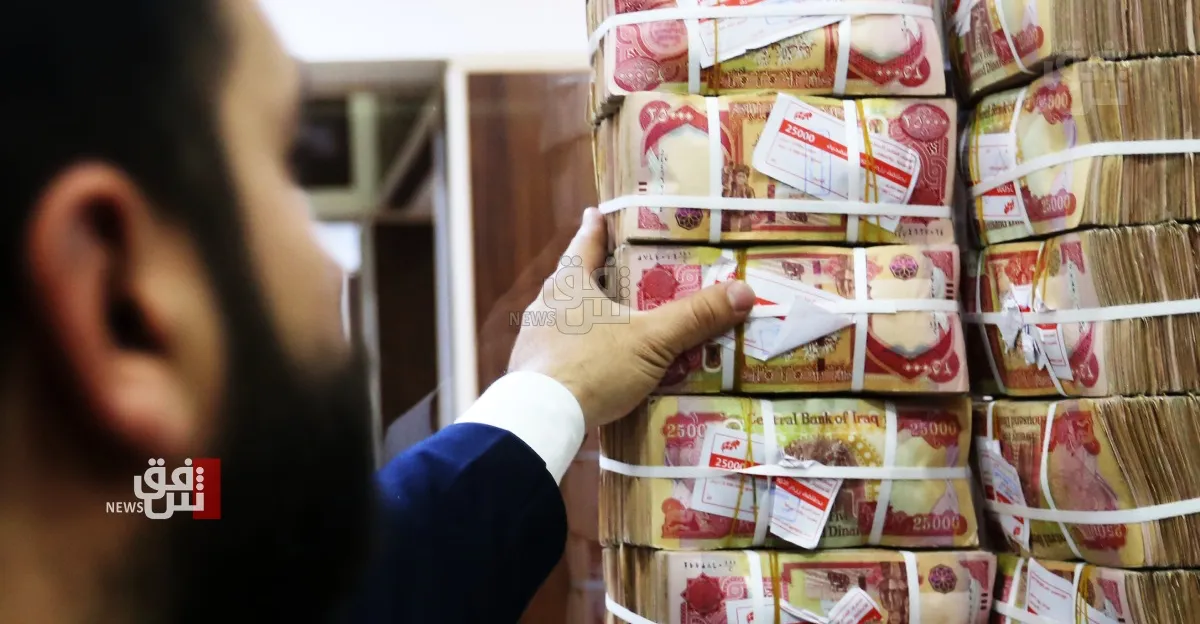
An informed source reported on Monday that state-owned banks in Iraq, particularly Rafidain Bank and Rasheed Bank, are suffering from a severe liquidity crisis and a shortage of cash, with a clear decline in the funds available within those banks.
The source told Shafaq News Agency that “citizens who have deposited money have been withdrawing their funds from government banks recently as a result of security concerns and developments in the region.”
He added that these concerns stem from escalating regional tensions, particularly the war between the United States and Israel on one side, and Iran on the other, and the potential repercussions this could have on the security and economic situation in Iraq.
The source indicated that government banks are still suffering from problems resulting from administrative and legal violations in their work, as they have not witnessed serious steps to develop their banking systems in recent years, as they still rely heavily on paper procedures and traditional methods of work, far from adopting electronic systems and modern banking technologies.
According to his statement, the lack of efficiency and experience in the management of some government banks, especially Al-Rafidain and Al-Rasheed, along with the slow pace of modernization and development processes, contributed to their remaining underdeveloped, which negatively affected the level of banking services and the citizens’ confidence in the government banking sector.
The source continued, saying that “some branches of government banks are asking customers to wait or come back later to receive their money in full, while some branches are providing part of the required amount and postponing the delivery of the rest.”
This crisis comes amid economic conditions and financial pressures facing the relevant institutions and the government in general, which has directly affected a wide segment of citizens.
On February 28, the United States and Israel launched a series of raids on targets inside Iran, including the capital Tehran, resulting in significant damage and civilian casualties, in addition to the assassination of Iranian Supreme Leader Ali Khamenei and a number of Revolutionary Guard and Army commanders.
Iran responded to the “American-Israeli” attack, resulting in widespread repercussions in the countries of the region, including Iraq, Israel, Jordan, Kuwait, Bahrain, Qatar, the UAE and Saudi Arabia.
shafaq.com
