British Institute: Al-Maliki’s nomination for Iraqi premiership is an indicator of US-Iranian rivalry
British Institute: Al-Maliki’s nomination for Iraqi premiership is an indicator of US-Iranian rivalry
2026-02-07 05:21
 Shafaq News – Special Translation
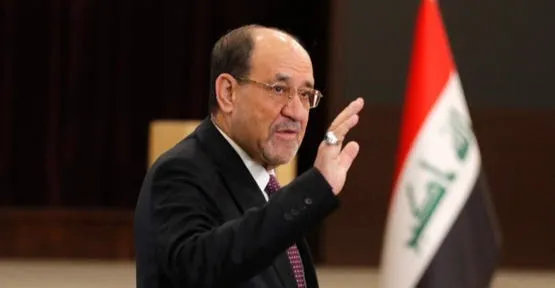
The British Chatham House Institute believes that the sudden return of Nouri al-Maliki’s nomination to head the new Iraqi government reveals that Iraq is still an American-Iranian battleground, and that Tehran, by supporting him, cannot tolerate instability and uncertainty for a long time in Baghdad, and needs a “trustworthy figure,” at a time when Iraq needs to approve the formation of its government now in light of the many challenges it currently faces.
The British Institute, in a report translated by Shafaq News Agency, pointed out that US President Donald Trump’s warning against nominating Maliki again demonstrated the reality of foreign influence in Iraq, despite the insistence of the country’s leaders that this influence is a thing of the past after the end of the presence of US forces and the United Nations mission, but “Iraq is still a battleground for US-Iranian competition.”
The British report argued that when this competition intensifies, Iraq’s fragility quickly becomes apparent, noting that when Tehran grappled with increasing domestic and regional pressures, it showed few signs of strategic fatigue and instead quickly responded to bolster its preferred candidate in Baghdad, referring to Maliki.
The report continued that Washington, for its part, while distracted from Iraq, rushed to oppose the influence of Maliki and Iran, adding that Maliki’s reappearance as a candidate surprised almost all Iraqi political actors, noting that Maliki remained one of the most influential political mediators in Iraq despite not holding any position since 2014, in a system where power is often exercised informally and not through official institutions.
The report argued that Maliki’s potential return also demonstrates Iran’s continued influence in Iraq, even as Tehran faces mounting pressure at home and across the region, noting that Maliki has maintained close ties with Iran since leaving power.
The report indicated that for Tehran, Iraq is strategically important from various conflict zones where Iran’s influence and networks have eroded since October 7, 2023, adding that Iraq serves as a security buffer and is intertwined with Iran’s internal stability, noting that Tehran is under pressure from sanctions, while Iraq acts as an economic lifeline.
For these reasons, the British report said that Iran cannot tolerate prolonged uncertainty or instability in Baghdad, which explains Tehran’s support for Maliki, as he is a trusted figure who can impose order in a field that Iran can no longer leave in the hands of a weak transitional leader.
In contrast, the report said that Washington had largely allowed Iraq to fall off its list of priorities, noting that once it became clear that Maliki was the leading candidate for prime minister during the post-election government formation negotiations, Washington moved to re-engage in Iraqi affairs.
The report stated that Iran, for its part, has shown that it retains the ability to respond quickly and shape outcomes in Iraq, quoting a senior Iraqi official as saying, “Iran is not just one person (the Supreme Leader), but rather a case of institutions. And these institutions are present in Iraq, as if nothing has changed.”
But at the same time, the report said that Washington revealed its continued influence, adding that for many Iraqis, the fact that a single social media post by an American president could recalibrate the political process was a stark reminder that their country lacked full sovereignty, despite official claims to the contrary.
The report considered it unlikely that Maliki’s nomination would survive these internal and external pressures, but in order for the fragile stability in Iraq to continue, the government formation process must move quickly and avoid the paralysis that lasted for another year after the previous elections, stressing that the internal and external challenges mean that Iraq can no longer avoid them, and it needs a government to deal with them, including keeping Iraq isolated from the regional wars that are still raging around it.
The report concluded by saying that the most important thing is the repercussions of the renewed US-Iranian confrontation, adding that any existential threat to the Islamic Republic would resonate throughout Iraq, overwhelming a political system ill-prepared to manage the fallout.
shafaq.com
