“Temporary relief”… Will Iraq settle for “1/12” instead of a budget?
“Temporary relief”… Will Iraq settle for “1/12” instead of a budget?
2026-02-06 02:55
 Shafaq News – Baghdad
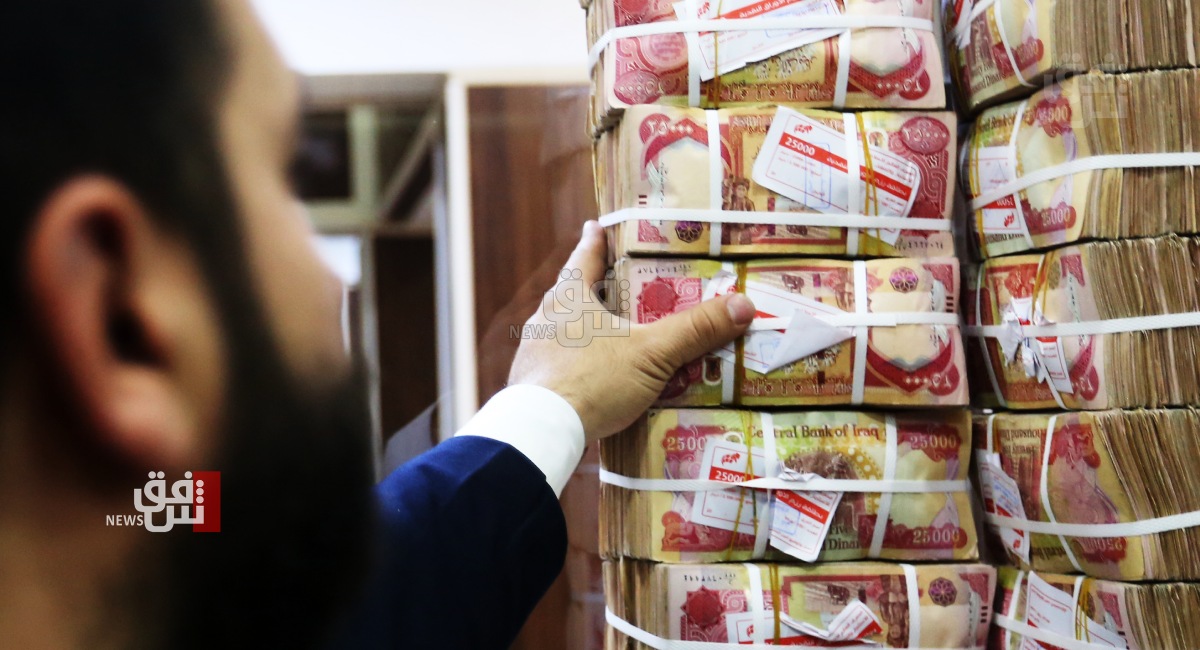
For the second year in a row, the country is operating under the “12/1” financial management system, which ensures the provision of operational expenses only, most notably salaries, in the absence of a general budget that specifies spending categories and ensures the existence of investment projects, quotas for governorates, and development in various vital sectors in the country.
The absence of a budget coincides with significant fluctuations in oil prices, rising and falling according to political changes in the region, in addition to a liquidity crisis in the country, which turns the country’s financial management system into a “machine” for paying the dues of employees and retirees and nothing else, without any other activity.
What is happening has been described by economic experts as a “major crisis” with negative effects, although they pointed out that the lack of financial revenues led to the absence of any budget last year, which is what the new government will also do.
“12/1” is sufficient
The largest part of the country’s general budget is operational, which includes basic spending limits for ministries, salaries, fuel, and food rations, with the investment budget usually constituting less than 30%. Therefore, the country operates according to a “1/2” system in one way or another, as economist Nabil Jabbar Al-Ali sees it.
According to Al-Ali, speaking to Shafaq News Agency, the new Iraqi government may be content with following this system, as it guarantees the provision of operational expenses. The main reason is the lack of large revenues sufficient to achieve projects and other things, due to the decline in oil prices. This is also the reason that prompted the government not to pass a budget last year.
He believes that the new government will simply continue with this system and will not present a budget. When it does present one next year, it will focus on paying off debts, most notably those owed to contractors and companies.
The Financial Management Law in Iraq, amended in 2019, stipulates that spending shall be at a rate of “1/12” or less of the total actual expenditures for current expenses for the previous fiscal year, after excluding non-recurring expenses, on a monthly basis and until the federal general budget is approved.
Its third paragraph also states: In the event that the draft federal general budget law for a particular fiscal year is not approved, the final financial statements of the previous year shall be considered as the basis for the financial statements of this year and shall be submitted to the House of Representatives for the purpose of approving them.
The year 2015 passed without the government submitting the three-year budget schedules, which are supposed to be approved by Parliament. At the time, news circulated that the government refrained from submitting them because they coincided with the elections, and so that they would not be exploited by some political parties.
The outgoing government approved a three-year budget for the years 2023, 2024, and 2025, which was considered the highest in Iraq’s history, with the value of each budget exceeding 200 trillion dinars, with a deficit of 60 trillion dinars for each.
“Temporary relief”
The absence of a budget is not a “simple matter,” according to economic expert Ali Karim Idhaib, but rather leads to the country’s paralysis in terms of projects and appointments, especially in light of the current financial crisis and shortage of cash liquidity.
In his interview with Shafaq News Agency, Idheeb explains that the country is almost entirely dependent on oil, and when prices drop, things tend towards “chaos” due to the lack of financial planning in the country.
He emphasizes that the absence of a budget directly impacts the citizen, in terms of fewer job opportunities and weak services. Investors are also hesitant to enter the Iraqi market due to the lack of a stable financial vision. Consequently, the continuation of this situation threatens the stability of the country’s macroeconomy.
Idheeb believes that relying on the “12/1” system for a long period is not a solution, as it is a “temporary emergency measure,” and not a financial policy by which a country the size of Iraq can be run.
He points out that the “12/1” system limits spending to salaries and operating expenses, meaning there is no room to launch new projects or complete stalled projects. In this case, companies and contractors are the most affected, because their dues are delayed, and some of them are forced to stop their work or even withdraw completely. This causes unemployment and hits the local market.
He adds that relying on this system creates a state of distrust in the economic environment and makes the investor hesitant, whether local or foreign.
Despite the elections being held in October 2025, the current government has not yet been formed. Parliament is still discussing the issue of electing the President of the Republic, who in turn tasks the candidate of the largest bloc with forming the government, amidst political disagreements among all political blocs regarding the completion of the three presidencies.
Intensive meetings and delegations are currently taking place between the various forces, with the aim of reaching a resolution to complete the formation of the presidencies, amid expectations that the crisis will continue for another period, especially since the timelines include a 30-day deadline for the candidate of the largest bloc after he is assigned by the President of the Republic, until he presents his government and Parliament grants him its confidence.
“bankruptcy”
Economic expert Mustafa Al-Faraj reveals that some companies and contractors have declared bankruptcy and are moving to liquidate their machinery and companies due to the state’s failure to pay their dues because of the absence of a budget. This is in addition to the cessation of appointments and job opportunities in the private sector. Therefore, the absence of a budget for the current year will exacerbate the crisis.
According to Al-Faraj, speaking to Shafaq News Agency, the new government will not be formed before the middle of the year, based on the available data. This will prevent it from presenting any budget and will postpone it to next year.
Regarding the impact of its absence, he emphasizes that the absence of budgets is a big mistake, and no country can proceed without a budget and be satisfied with operational expenses only, as this will completely halt projects and promotions and affect citizens and employees.
shafaq.com
