With or without Maliki, Iranian influence will remain in the new government.
With or without Maliki, Iranian influence will remain in the new government.
2026-01-31 04:35
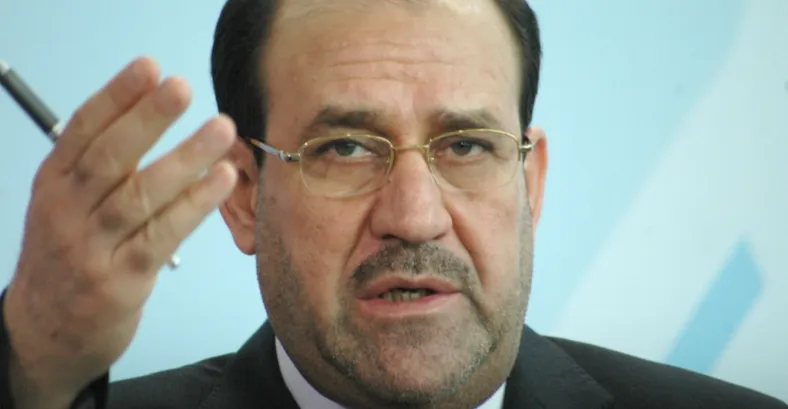 Shafaq News – Special Translation
Despite the nomination of Nouri al-Maliki to form the new government, the American magazine ” National Interest ” considered that this does not necessarily mean that he will assume the position, noting also that even if another figure comes, the next Iraqi government will not get rid of Iranian influence through the forces and groups loyal to it.
While the American magazine indicated in its report, translated by Shafaq News Agency, that the Shiite leadership chose Nouri al-Maliki two and a half months after the parliamentary elections, it pointed out that US President Donald Trump announced three days later his objection to al-Maliki’s nomination, saying that “if he is elected, the United States will no longer help Iraq.”
The report continued that although the Coordination Framework announced the selection of Maliki, this does not necessarily mean that he will get the position, explaining that the Framework’s forces worked to resolve the internal deadlock with this selection, but they did not reach a complete consensus on the selection, which would contribute to complicating the remaining obstacles in the multi-step process of forming the government, while it is certain that Trump’s objection does not enhance Maliki’s chances.
The report went on to say that regardless of Maliki’s success, it is not just about Trump and the United States, as Iran’s influence is palpable everywhere in Iraq.
According to the American report, the Trump administration has high hopes for Iraq in the coming years, ranging from getting it out of Tehran’s clutches to promoting development and economic growth. However, it added that, unfortunately for the White House, the Iranian-backed Shiite parties were the big winners in the November elections.
The report noted that some members of the coordinating framework are from militias linked to Iran and enjoy considerable power, but it is believed that Washington sent a message to Iraq that the leaders of these militias should not hold positions in the next government, which means that the prime minister and key ministers cannot come from armed groups.
The report stated that although Maliki is not a member of an Iranian-backed militia, he has acted as a political “godfather” and defender of militias and political parties allied with them throughout his career, noting that he founded the Popular Mobilization Forces, which formalize the militias.
According to the report, the coordination framework contributed to bringing men linked to militias into power, including the selection of the first deputy speaker of parliament, Adnan Faihan al-Dulaimi, who the report said belonged to a US-designated “terrorist group” and was involved in the 2007 Karbala attack in which US soldiers were killed.
The report indicated that if the new Iraqi leadership were not linked to the militias, it would be a victory for the United States and the Iraqis, but it considered that this red line would not dispel the established influence of the pro-Iranian forces in key government ministries and economic sectors, especially under the Maliki government.
The report explained that, given that the coordination framework itself enjoys Iranian support, militia leaders and politicians close to Tehran will have a seat at the table regarding every major decision, which certainly does not create the right environment for Washington to achieve its aspirations regarding disarmament.
The report continued that the coordination framework does not respond to American calls not to include leaders of Iranian-backed militias, noting that in almost every picture of the framework’s leadership meetings, Asa’ib Ahl al-Haq leader Qais al-Khazali sometimes sits next to the Prime Minister, recalling that this group has claimed responsibility for thousands of attacks against American and coalition forces since the American invasion in 2003, and that al-Khazali himself is designated by the US as a “terrorist,” and has previously boasted about the Karbala attack.
The report also discussed Hadi al-Amiri, the leader of the Badr Organization, which was founded by the Iranian Revolutionary Guard in the 1980s. He has worked to advance Iran’s interests militarily and through control of the state ever since, and he has previously described the Supreme Leader of the Islamic Republic, Ali Khamenei, as “the leader not only of the Iranians but of the Islamic nation.”
After also mentioning Kataib Hezbollah and other leaders of the framework, the report said that these figures would lead the decision-making process in Iraq under Maliki’s government, or under any other prime minister approved by the coordinating framework, even if the Iraqis heeded Trump’s warning and did not choose Maliki.
The report concluded that in order to foster a genuine partner for the West, the Trump administration must marginalize Iran’s powerful allies in Iraq not only in government positions, but also in the Shiite decision-making body, represented by the Coordinating Framework.
The report argued that this is not a problem that the United States, or the Iraqis who are fed up with Iran exploiting their country, can fix overnight, adding that it is important to add small victories, such as preventing Iran’s closest allies from taking over powerful government positions, which will reduce Iran’s grip on the country.
shafaq.com
