Western report: Maliki’s return and Khamenei’s assassination could restructure the political system in Iraq
Western report: Maliki’s return and Khamenei’s assassination could restructure the political system in Iraq
2026-01-30
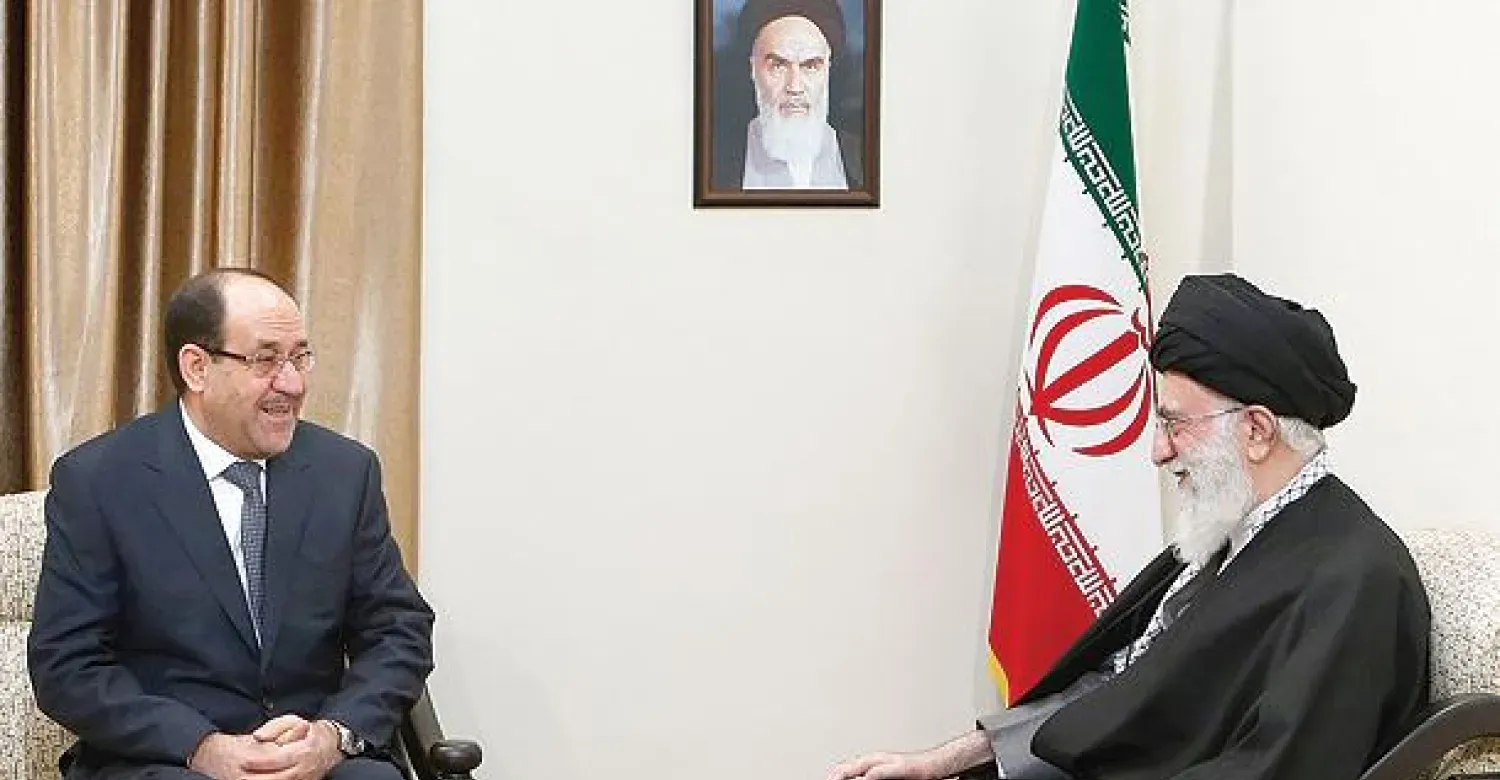 Shafaq News – Special Translation
A US report warned that Nouri al-Maliki assuming the premiership and the overthrow of Iranian Supreme Leader Ali Khamenei could ultimately lead to a restructuring of the political system in Iraq.
A report by the US-based Al-Monitor website, translated by Shafaq News Agency, stated that Iraq, in light of the political stalemate, open US intervention, and threats of war across the border with Iran, may be dragged back into darker phases, after having barely managed to achieve a degree of stability.
The report explained that Iraq, after decades of conflict and chaos, has recently regained a relative sense of normalcy, but the political scene is now under pressure to try to balance its relations with its two main allies, Iran and the United States, which does not hide its desire to interfere in Iraqi political decision-making.
According to the Monitor report, while Iraqis were searching for a new prime minister, American envoys exerted direct pressure, before US President Donald Trump issued an ultimatum to stop supporting Iraq if Nouri al-Maliki, whom the report described as a “strong politician close to Iran,” returned to the premiership.
The report quoted Iraqi political analyst Ihsan al-Shammari as saying that “the Trump administration does not differentiate between Iran and Iraq, but rather deals with them as one inseparable issue.”
The report recalled the experience of the recent parliamentary elections, and the selection by the leaders of the Maliki Coordination Framework of their candidate to form the government, noting that Maliki had previously enjoyed American support, but his relationship with Washington later declined due to his growing ties with Iran and accusations that he was pushing a sectarian agenda.
According to the report, Trump’s intervention against al-Maliki’s nomination at the present time has complicated the scene, as it quoted a source close to the coordination framework as saying that talks are still ongoing within the coordination framework to find a way out of the crisis, describing the situation as “complicated”.
The American report added that Iraqi leaders are divided over this issue. While some see the need for Maliki to back down in order to protect Iraq from Trump’s threats, others are sticking to their positions and rejecting any American interference in internal affairs.
The report also quoted an Iraqi official close to Maliki as saying that the latter “is not seeking confrontation, but his team is working to reach an understanding with the United States,” adding that “the situation is difficult, but not impossible, and it will take some time.”
The report noted that the United States uses its influence over Iraq by keeping a large portion of oil export revenues in the Federal Reserve Bank of New York, as well as the presence of numerous American companies investing in the country.
In this context, a source close to the coordination framework was quoted as warning of serious concerns that Trump might impose sanctions on Iraq if Maliki returns to the premiership.
The report also quoted Al-Shammari as warning that Iraq’s continued current approach towards Iran could expose it to “isolation through sanctions or Trump’s maximum pressure campaign, which will extend to the economy and financial systems.”
The report noted that armed groups under US sanctions had long pledged to intervene to defend Iran, although they did not fire a single shot during the last Iran-Israel war. However, with the escalation of Trump’s new threats against Iran, two of these groups (Kataib Hezbollah and Harakat al-Nujaba) announced their readiness for war and opened recruitment offices for those willing to fight.
The report quoted Al-Shammari as warning that any American war on Iran could turn Iraq into a “battlefield, a base for revenge, or a tool for military pressure,” stressing that Washington’s threats to “overthrow the regime, target the Iranian Supreme Leader, or launch a military strike” would have a major impact on Iraq at various levels.
Al-Shammari concluded by saying that any potential change in the Iranian regime would push the forces allied with Tehran inside Iraq to engage in a political and military struggle for survival, which could ultimately lead to a “restructuring of the Iraqi political system.”
shafaq.com
