Al-Sadr distances his movement from a plot to storm polling stations and destabilize the country on election day.
Al-Sadr distances his movement from a plot to storm polling stations and destabilize the country on election day.
2025-10-30 01:28
 Shafaq News – Najaf
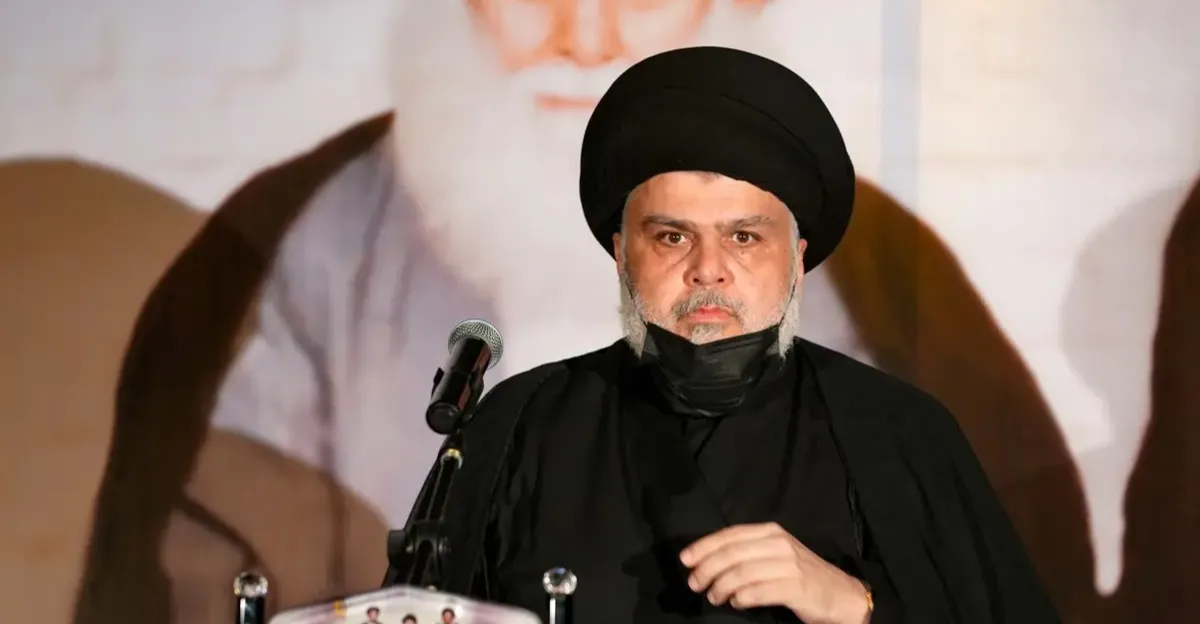
On Thursday, Shiite nationalist leader Muqtada al-Sadr distanced his movement from a plot to storm polling stations, burn ballot boxes, and destabilize security and stability on the day of the Iraqi parliamentary elections scheduled for November 11.
This came in response to news that Al-Sadr learned about through a post by one of his supporters.
The leader of the Shiite National Movement responded by saying, “Anyone who does that is not one of us.”
Al-Sadr described those reports as “lies spread by corrupt people to carry out the acts themselves, and then attribute them to us, and we are innocent of that.”
In March, al-Sadr announced that he would not participate in the upcoming elections, citing the presence of “corruption and corrupt people,” while indicating that Iraq was “living its last breaths.”
In June 2022, al-Sadr decided to withdraw from the political process in Iraq and not to participate in any future elections so as not to associate with “corrupt” politicians, after calling for the resignation of all 73 of his deputies in parliament.
The Sadr bloc had obtained the highest number of votes in the early parliamentary elections held in October 2021, but the efforts of the movement’s leader failed to form the new federal government due to the Shiite Coordination Framework standing against it by obtaining a fatwa from the Federal Court regarding the so-called blocking third in holding a session to elect the president of the republic, which is a prelude to naming the prime minister.
The three-way alliance between the Kurdistan Democratic Party led by Masoud Barzani, the Sovereignty Alliance headed by Khamis al-Khanjar, and the Sadrist Movement led by Muqtada al-Sadr fell apart following the resignation of the Sadrist bloc’s deputies and the movement’s withdrawal from the political process on al-Sadr’s orders.
The political scene went through a crisis and a deadlock at that time, unprecedented in the history of Iraq, as the government was formed a full year after the early elections in the country.
Iraq held early parliamentary elections on October 10, 2021, to resolve a political crisis that had gripped the country following large demonstrations in the central and southern regions in 2019 protesting widespread unemployment, rampant financial and administrative corruption in government departments and institutions, and the deteriorating state of public services and living conditions, which led former Prime Minister Adel Abdul Mahdi to resign under popular pressure.
As soon as the preliminary election results were announced, voices rose from influential political forces and parties rejecting their loss of many seats, accusing them of widespread vote rigging, which was denied by the executive and judicial authorities, while the United Nations and international organizations praised the integrity of the electoral process.
Al-Sadr continues to adhere to his boycott of the upcoming parliamentary elections, despite persistent political attempts to dissuade him from the decision. He also stipulates, according to previous statements and positions, the dissolution of all armed factions, including the “Peace Brigades,” the handover of weapons to the state, and the fight against corruption, as conditions for any possible return to the political process, amid warnings of a low voter turnout if the movement continues its boycott.
shafaq.com
