Al-Alaq reveals a major economic catastrophe by disclosing the size of Iraq’s internal and external debt.
Al-Alaq reveals a major economic catastrophe by disclosing the size of Iraq’s internal and external debt.
2025-10-19
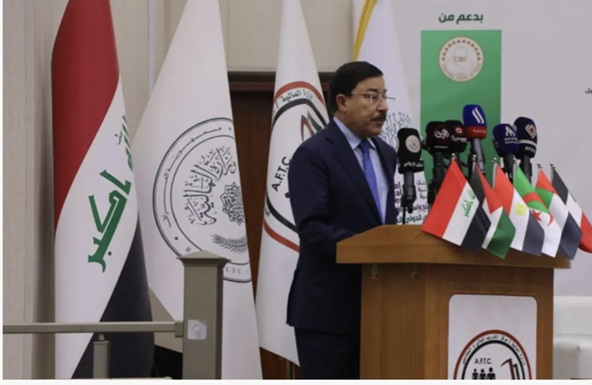 The Governor of the Central Bank of Iraq, Ali Al-Alaq, revealed that Iraq’s total internal and external debt amounts to approximately $150 billion.
This statement comes amid Iraq’s growing fiscal deficit and the difficulty of covering it through traditional debt instruments.
Al-Alaq’s statement came in a written response to a parliamentary question submitted by MP Raed Al-Maliki, in which he explained that domestic debt has risen to 91 trillion Iraqi dinars, while external debt has reached approximately $54 billion.
Al-Alaq emphasized that the budget deficit is “very large” and cannot be covered by loans and bonds alone. He noted that Iraq is not subject to restrictions imposed by the US Federal Reserve preventing it from disposing of oil revenues, a reference to the ongoing debate over Baghdad’s freedom to manage its oil revenues abroad.
The governor noted that the value of Iraq’s bonds held in the United States has reached $11 billion, as part of a policy to diversify cash reserves and foreign investments.
In a related context, a recent Central Bank report released last week showed that Iraq’s domestic debt rose to 90.3 trillion dinars in July 2025, a 2.91% increase compared to June, and a 16% increase compared to the same period in 2024, when it reached 76 trillion dinars.
The report attributed this increase to a 1.72% decline in government bank loans, which prompted the state to rely more heavily on domestic debt instruments to cover spending.
In a related development, MP Hadi Al-Salami announced that the Federal Court has addressed the House of Representatives regarding the questioning of Prime Minister Mohammed Shia Al-Sudani over the delay in submitting the 2025 general budget schedules and final accounts. This move reflects escalating tensions between the legislative and executive authorities over the financial situation.
For its part, the Eco Iraq Observatory warned that oil revenues are no longer sufficient to cover the state’s monthly current expenditures, which amount to approximately 11.5 trillion dinars. The observatory explained that these expenditures constitute the largest portion of the state’s expenditures, out of a total expenditure of 27 trillion dinars, which includes licensing rounds and investment agreements, including the Chinese agreement.
These financial developments come at a time when the Iraqi government is facing increasing pressure to secure salaries for employees and retirees and control public spending amid expectations of a slowdown in growth rates due to overreliance on oil and declining performance in non-oil sectors.
burathanews.com
