Al-Sudani from an American perspective: A non-revolutionary “third party” and this is what awaits him.
Al-Sudani from an American perspective: A non-revolutionary “third party” and this is what awaits him.
2025-09-14 08:18
 Shafaq News – Special Translation
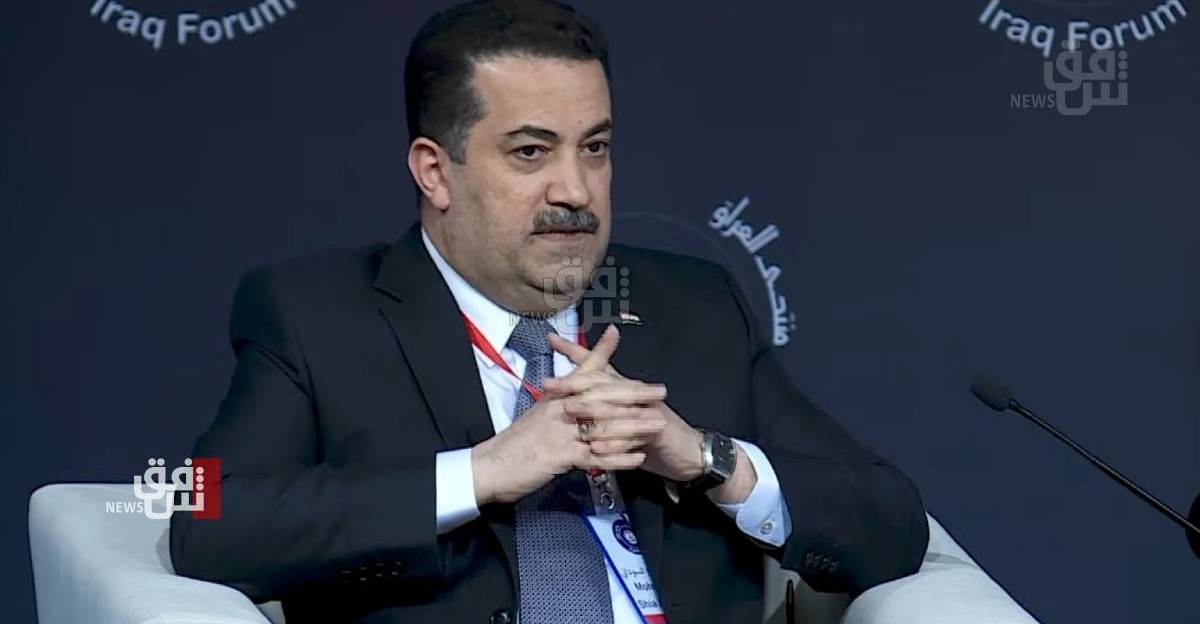
War on the Rocks , an American website specializing in military and strategic affairs, has painted a picture of the upcoming Iraqi elections, which represent a moment of change and an opportunity for Prime Minister Mohammed Shia al-Sudani to strengthen his political presence and introduce change, even if he is not a revolutionary.
The US report, translated by Shafaq News Agency, indicated that Iraq, given the current polarized regional situation, can serve as a bridge between competing powers, reducing regional tensions and strengthening Baghdad’s position as a major energy producer and a growing geopolitical power.
With the November 11 elections approaching and political anticipation and debates escalating in Iraq, the report believes the atmosphere suggests an opportunity for change, even if not radical. Voters appear to be reenergized, and there are expectations of a high turnout.
Therefore, the government that emerges from these elections, according to the report’s forecasts, will enjoy a stronger popular mandate and may provide the political stability necessary to implement consistent policies, implement credible reforms, and behave more predictably on the international stage.
The US report also noted that, in a polarized Middle East, Iraq can serve as a bridge between competing powers, limiting regional tensions and leveraging its position as a major energy producer and geopolitically pivotal state.
For the United States, the stakes are particularly high, according to the report, because a more resilient and independent Iraq would be a long-awaited gain after decades of strategic, political, and military investment and cooperation.
However, the report stated that despite all the optimism, the elections are unlikely to lead to a profound break with the political system that has existed in Iraq since 2003, because the quota system between the three main groups remains deeply entrenched.
Thus, while the vote may not abolish the quota system, it could alter the internal balance of power and recalibrate the elites who will control the reins of government, according to the report’s conclusion.
A third Shiite way?
With key Shiite players, such as the Shiite National Movement led by Muqtada al-Sadr and the Victory Alliance led by Haider al-Abadi, “the rise to prominence is for al-Sudani,” whom the report described as “a pivotal figure and a prominent candidate in the elections. His popularity stems from his reputation as a pragmatic, administrative, and moderate leader, which has earned him rare acceptance across the spectrum in a divided political arena.”
The report noted that al-Sudani demonstrated “his ability to balance competing interests while presenting a unified national vision,” as well as his ability to “manage contradictions,” his ability to balance Washington and Tehran, his engaging, non-sectarian rhetoric, and his record of delivering public services. These factors have all earned him credibility even in non-Shiite areas, strengthening his position as a pragmatic leader in a highly fragmented political landscape.
As a result, for many Iraqis, al-Sudani represents “the hope of a third Shiite path, somewhere between the conservatives of the pro-Iranian Coordination Framework and the more nationalist-religious Shiites like Muqtada al-Sadr,” according to the report.
However, he believed that judging by al-Sudani’s performance over the past two years, despite his pragmatic and popular approach, he clearly represents only a new, younger face within the Coordination Framework, as there has always been intense competition between al-Sudani and other members within the Coordination Framework.
He pointed out that the Sudanese still operate within their established system of formal and informal rules that define them, including patronage networks, sectarianism, and the dominance of political and armed factions that have long dominated the scene.
He believed that “Al-Sudani’s victory could lead to a reshaping of elite politics without necessarily or officially disrupting the regime.”
In addition to parliamentary calculations, the report predicts that the elections will likely shape the alliance policies that determine Iraq’s domestic politics and direct its foreign policy. Therefore, the outcome is expected to impact Iraq’s role in the Middle East, which is undergoing a restructuring due to shifting alliances and regional tensions.
For outside observers, the upcoming elections will provide a window into whether Iraq can consolidate a degree of political stability, whether it will emerge as a more confident regional player or continue to flounder under the weight of its political traditions, or whether elite bargaining will once again dilute promises of change.
Iraq may therefore once again find itself at a familiar crossroads: reform aspirations clash with entrenched power, according to the report. Alongside the policies of the “Shiite house,” the “Sunni and Kurdish houses” are also recalibrating their strategies amidst competition between forces within each house.
Looking to the future
The report suggested that al-Sudani’s potential victory would not lead to a revolution in Iraq’s political structure, explaining that “al-Sudani is known more as a middle-manager than a revolutionary, and therefore his second term is likely to lead to a period of cautious consolidation rather than radical change.”
Although the report described the system as flawed, it considered that “even incremental progress can represent a turning point,” noting that incremental progress can be a reasonable mechanism for reform, as reform should not be viewed as inevitable or impossible.
He continued by saying that the redistribution of power, although occurring within the framework of the quota system and not revolutionary, could be significant, particularly if al-Sudani is able to strengthen his electoral base and marginalize the hardline elements most opposed to reform.
According to the report, the real test will be whether this gradual progress toward stability can yield sufficient tangible gains to breathe life into a situation many consider “clinically unstable.” This depends on three important factors: the resilience of Iraq’s institutions, the mobilization of popular support, and regional and international support.
He ruled out the possibility that the entrenched elites would give up their gains without a fight and without broad societal and international support, but he emphasized that the path of reform in Iraq must be determined in Baghdad.
The US report concluded that continued gradual progress could open up not only greater internal stability but also new opportunities for a region seeking a foothold.
shafaq.com
