“Al Khor” consolidates the roots of “Desert Storm” between Iraq and Kuwait
“Al Khor” consolidates the roots of “Desert Storm” between Iraq and Kuwait
2025-08-03 02:26
 Shafaq News – Baghdad
On August 2, 1990, Iraqi forces invaded Kuwait, a move that upset the balance of power in the Gulf and the region, sparking an international war known as “Desert Storm,” which ended with Iraq’s withdrawal and its transformation into a target for international sanctions.
Thirty-five years after the invasion, Iraqi-Kuwaiti relations remain shrouded in historical sensitivity, raised whenever a border or economic issue between the two sides is raised, as is currently the case with the Khor Abdullah issue, which has returned to the forefront of Iraqi politics and media attention.
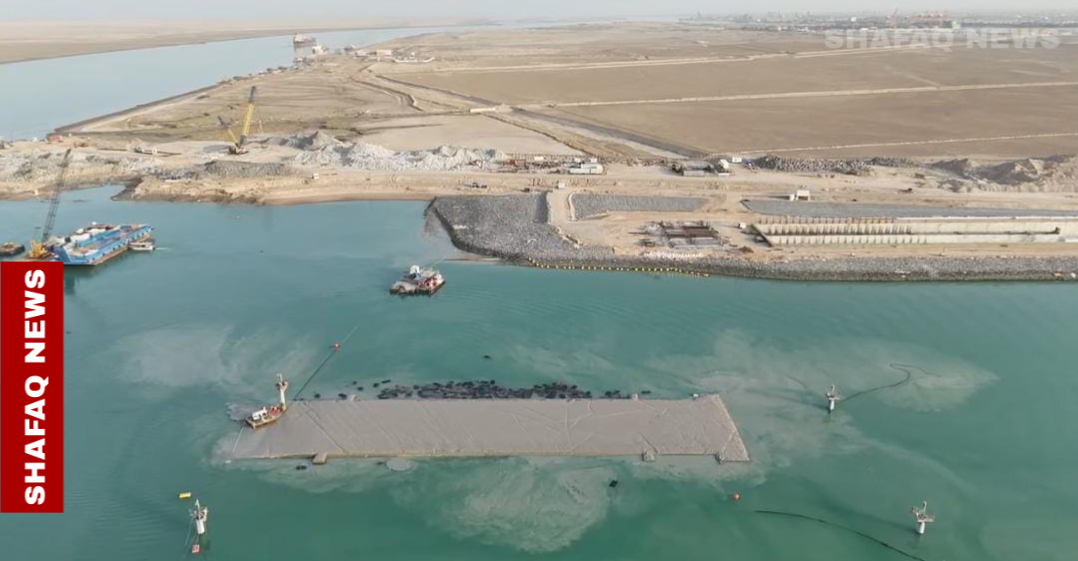
Khor Abdullah, the waterway located in the far south of Basra, has been the subject of ongoing controversy since the demarcation of the maritime border under UN Resolution 833 of 1993, which was based on the ceasefire of the Second Gulf War.
The resolution stipulated the demarcation of the land and maritime borders between Iraq and Kuwait according to detailed maps, which the Iraqis at the time considered imposed by force of international resolution and under Chapter VII of the United Nations Charter.
Based on the above, Kuwaiti affairs researcher Sami Al-Ali stated, “Linking today’s issues to the anniversary of the invasion does not mean justifying the past, but rather understanding the roots of historical tension, especially since the post-1991 agreements were concluded in a coercive environment in which the legal Iraqi voice was suppressed.”
In a related context, Mohammed Al-Basri, an activist and researcher on border affairs, told Shafaq News Agency, “Khawr Abdullah is a historical Iraqi waterway, and has been administratively under the jurisdiction of Basra Governorate since the founding of the modern Iraqi state. Giving it up not only represents a loss of sovereignty, but also a threat to Iraq’s maritime and economic security.”
These statements sparked widespread controversy in the Iraqi parliament, especially after the House of Representatives voted in September 2023 to cancel the agreement regulating navigation in the Khor Abdullah Strait, which was concluded between Iraq and Kuwait in 2012 and ratified in 2013.
The decision prompted an official response from the Kuwaiti government, which submitted a protest note to the UN Security Council, stating that the move “violates international agreements and threatens the stability of bilateral relations.”
In contrast, Iraqi political figures stated that Parliament exercised its right to review agreements concluded under “unnatural” circumstances, calling for a review of all post-invasion border decisions, particularly those passed under international pressure.
Brigadier General Mahmoud al-Jubouri, a former Iraqi army officer, told the agency, “After the invasion, Iraq fell into international isolation, which some parties used to impose unbalanced border agreements. We, as military personnel, know the strategic importance of Khor Abdullah, and its loss is an extension of the losses that occurred after 1991, which no one has reviewed to this day.”
For his part, international law expert Fawzi Hamid observed that “Resolution 833 came within the framework of a ceasefire, but it was not discussed in circumstances that would allow Iraq to defend its interests, neither in terms of sovereignty nor geography.”
Hamid added, during his interview with Shafaq News Agency: “Even if there are international agreements, reconsidering them is permissible under international law if it is proven that they were made under duress or a violation of the principle of national sovereignty.”
Economically, observers have warned that the dispute over Khor Abdullah has impacted maritime integration projects between Iraq and Kuwait, particularly regarding the Grand Faw Port and the connecting canal with Kuwaiti ports. Iraqi officials have previously spoken of attempts to restrict Iraqi shipping in the Gulf via narrow waterways that do not serve long-term economic interests.
In this context, a number of activists and researchers have called for the border demarcation issue to be reopened before international courts, rather than relying solely on old decisions that failed to serve Iraq’s interests under a political regime that lacked popular legitimacy.
Mohammed Al-Basri concluded his statement by asserting that “what is happening today is not a conflict with Kuwait, but rather a conflict over sovereign rights. Iraq must assert its rights through dialogue and legal diplomacy, without submitting once again to external pressure.”
The agreement regulating navigation in Khor Abdullah, concluded in 2012 between the Republic of Iraq and the State of Kuwait, is a technical and administrative solution to the effects of the invasion of Kuwait by Saddam Hussein’s regime in 1990 and the resulting demarcation of borders pursuant to Security Council Resolution No. (833) of 1993. Article 6 of the agreement affirms that “the agreement does not affect the borders between the two parties in Khor Abdullah established pursuant to Security Council Resolution No. (833) of 1993.”
The Iraqi Council of Ministers approved the draft ratification law at the end of 2012, and the House of Representatives approved it by a simple majority under Law No. (42) of 2013, and then it was published in the Iraqi Gazette, Issue No. (4299) dated 11/25/2013.
shafaq.com
