426 billion dinars for Iraqi MPs, with a small turnout… dismantling a parliament that “spends more than it legislates”
426 billion dinars for Iraqi MPs, with a small turnout… dismantling a parliament that “spends more than it legislates”
2025-07-26 02:58
 Shafaq News – Baghdad
Special investigation.
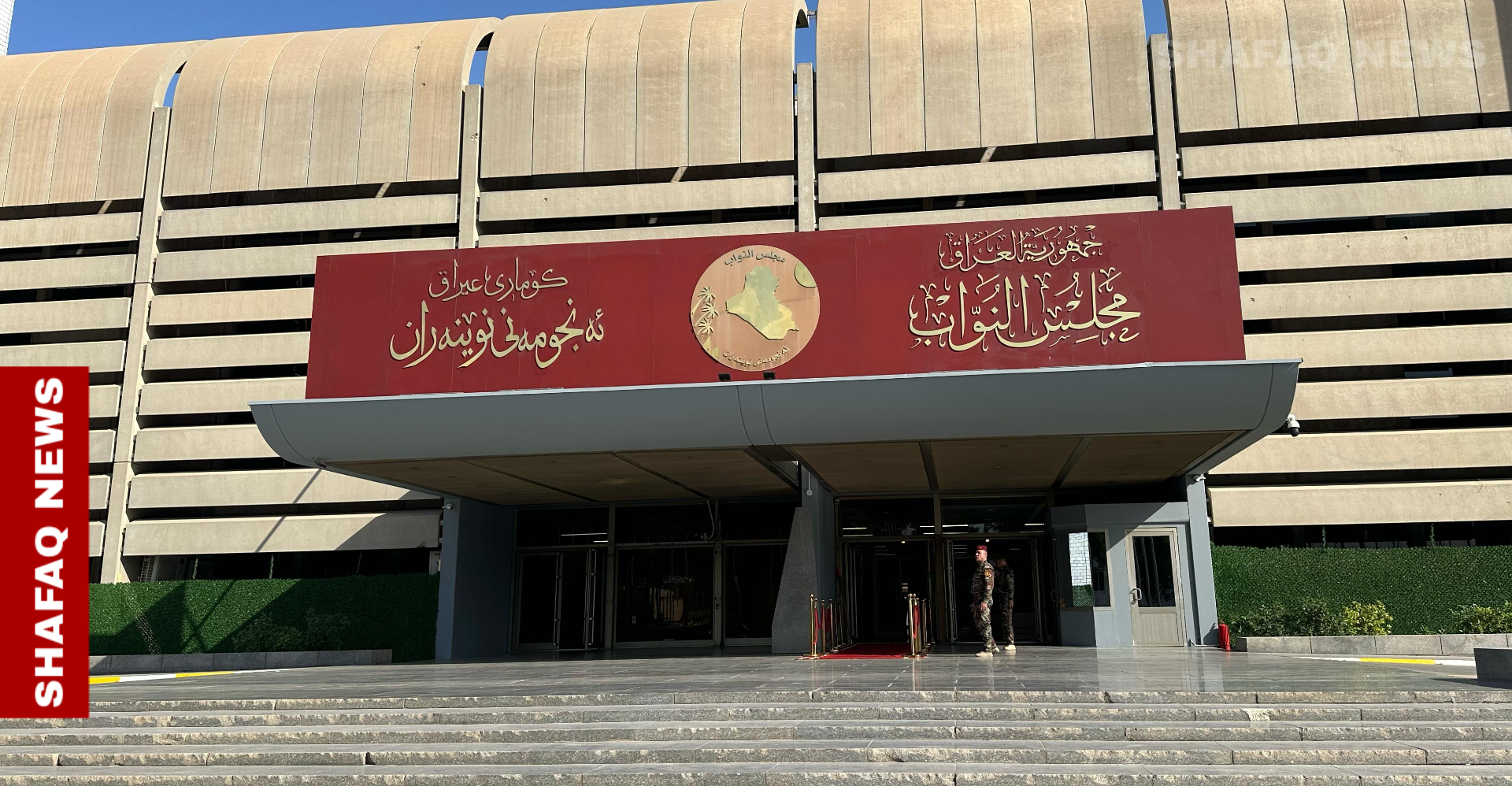
In the Iraqi parliament building in Baghdad’s Green Zone, 329 members of parliament sit, most of whom receive an average of 1.296 billion dinars over the four-year parliamentary term, including salaries, protection allowances, and rent allowances. But behind these figures, which silently accumulate in the Ministry of Finance’s books, a paradox emerges: an institution that receives trillions of dinars in expenditures, while its legislative output can be measured on the fingers of one hand. The debate continues: Who audits the MPs’ accounts? And who holds accountable an institution that legislates its own privileges?
Since the start of its term in January 2022, the current parliament, the fifth since 2003, has appeared burdened by tensions and divisions, unable to fulfill its constitutional function. Its sessions have been noticeably few, some have been canceled due to political disputes, and others were not held at all due to the lack of a quorum. Meanwhile, key legislative issues—such as the oil and gas law and the Federal Court—remain unresolved.
The real cost
Shafaq News Agency’s investigation team conducted a detailed review of the financial privileges received by members of the Iraqi Parliament, based on data and figures obtained by the agency, as well as cross-referenced testimonies from current and former MPs, to determine the actual cost borne by the state treasury during the various parliamentary sessions.
This review reveals that the salaries and allowances granted to representatives varied significantly from one term to the next, without transparent criteria or unified financial controls.
During the first and second terms, a representative received a monthly salary of 12 million dinars, in addition to a security allowance of up to 40 million dinars, and a rental allowance of 3 million dinars for representatives residing outside the capital, Baghdad—although some of them live in the capital—bringing a total monthly salary of approximately 55 million dinars.
With the launch of the third cycle, these amounts saw a relative reduction, with the monthly salary declining to 7 million dinars, the protection allowance falling to 16 million dinars, and the rental allowance remaining stable. This level of allocations continued until the end of the fourth cycle.
In the current fifth term, each MP receives a monthly salary of 8 million dinars, in addition to 16 million dinars as a security allowance and 3 million dinars as a rental allowance for MPs not residing in Baghdad. This brings the total monthly salary of each MP to 27 million dinars.
The investigation team conducted a thorough inventory of these figures, revealing that the annual salary of a member of parliament in the current session amounts to 324 million dinars, equivalent to 1.296 billion dinars over a single four-year parliamentary term. Taking into account the number of members of parliament, which is 329, the total annual cost of salaries and allowances amounts to approximately 426 billion and 384 million dinars. This cost increases significantly when other operating expenses are taken into account, including employee salaries and administrative allowances for parliamentary offices and committees.
Remarkably, these financial privileges have remained in place despite previous attempts to curtail them. In 2018, the Federal Supreme Court issued a decision to reduce the salaries of MPs by varying percentages, primarily affecting those with lower-level degrees. Those with higher degrees were exempted from the reduction. This weakened the decision’s actual impact on the general budget, amid the absence of strict implementation and an independent oversight mechanism.
Despite this generous spending, Parliament has only held 132 sessions since the beginning of its term until the spring of 2025, while its internal regulations stipulate 256 sessions annually, at a rate of 32 sessions per legislative term.
This deficit is not solely due to the timetable, but also to widespread internal turmoil that has paralyzed the institution from within. The most prominent manifestation of this was the vacancy in the position of Parliament Speaker for more than a year after the Federal Court removed Mohammed al-Halbousi in November 2023 on charges of forging a resignation. This was a precedent unseen in the Iraqi parliament since 2003.
The presidency wasn’t the only one at risk of a vacuum. According to observers, legislative discussions themselves have become more like political maneuvering inside a directionless hall. Some laws have already been passed, including the controversial 2023 three-year budget and amendments to the general amnesty and personal status laws. But most of what was proposed remained ink on paper, either due to a lack of consensus or the absence of the representatives themselves.
The excessive spending was not limited to salaries. Testimonies collected by the agency from current and former MPs reveal that the protection allowances granted to each MP—which are supposed to cover the salaries of 16 security personnel—are not always disbursed accordingly.
Some MPs are content with a driver or escort, diverting the remaining funds to office expenses or redistributing them internally. “Paper is one thing, reality is another,” says one former MP, who requested anonymity. “Protection has become a flexible clause to cover any unjustified spending.”
In a country burdened by internal and external debt, and suffering from declining investment in health, education, and services, the continued existence of these privileges raises questions about the state’s priorities. Since 2011, when parliament voted to reduce its members’ privileges in response to street demands, no substantive changes have been made. On the contrary, “hidden increases and new allocations were recorded through internal decisions that were not communicated through the media,” according to private testimonies from government officials.
Legal expert Alaa Shawn says, “This conflict of interest empties the demands for reform of their substance.” He adds, “We are faced with an institution that creates its own rules and then legitimizes its privileges in the name of the law.”
The deeper problem lies in the fact that these privileges are protected by legal texts, most notably Parliament Law No. 13 of 2018 and Parliamentary Salaries and Allowances Law No. 28 of 2011, which grant MPs the status of ministers in terms of rights and privileges. Amending these laws can only be done through Parliament itself, effectively making MPs the decision-makers over their salaries, creating a structural conflict of interest at the heart of the Iraqi legislative system.
shafaq.com
