Iraqi government: We will stop flaring gas in 2029, and we have an electricity shortage due to Iran.
Iraqi government: We will stop flaring gas in 2029, and we have an electricity shortage due to Iran.
2025-07-24 05:09
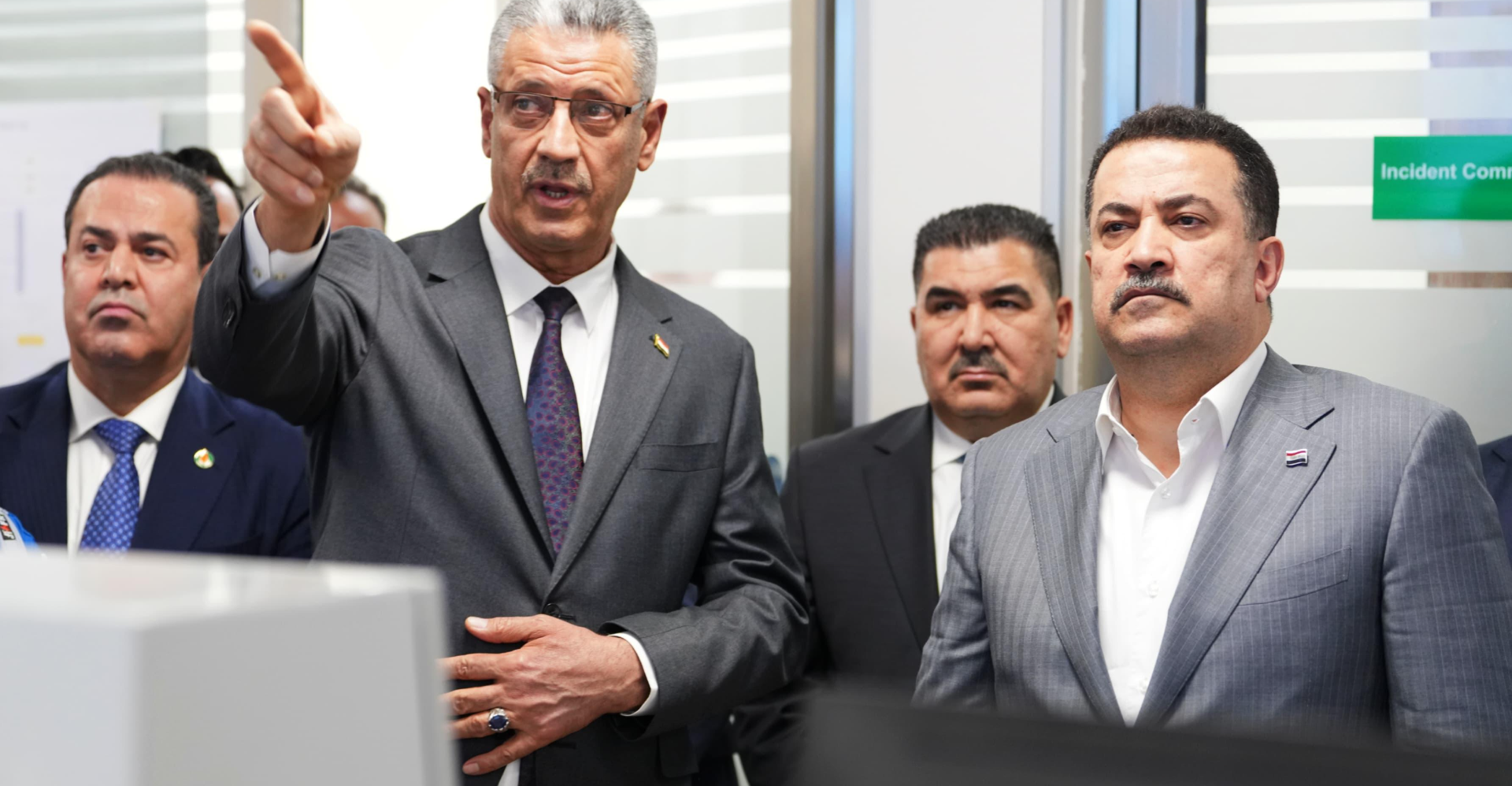 Shafaq News – Basra
Oil Minister Hayan Abdul-Ghani al-Sawad confirmed on Thursday that the ministry is proceeding with a complete cessation of associated gas flaring in Iraq by 2029. Meanwhile, Prime Minister Mohammed Shia al-Sudani stated that the country has a 4,000 megawatt energy deficit due to Iran’s failure to supply the required quantities agreed upon between Baghdad and Tehran due to US sanctions.
This came during the opening of the Central Gas Processing Plant (CPF GAS) in the Al-Faihaa oil field in Basra Governorate, with a capacity of 130 million standard cubic feet per day.
Al-Sawad said in a speech via (TV), “Today we have completed a large production facility in the field of gas investment, which is the second production line of the Basra Natural Gas Liquefaction Plant (BNGL), indicating that this achievement will add a production capacity estimated at (200) cubic meters per day to the national production of invested associated gas.
He pointed out that this achievement will support the gas-fired power plants. Furthermore, investing in these quantities will increase the rate of stopping the burning of gas associated with oil production operations, leading to the cessation of its burning within the next few years.
The minister added that gas investment completion rates have increased from 53% to nearly 70% since the government took office. These rates have reduced gas emissions and fulfilled Iraq’s commitments to the Paris Climate Conference. Furthermore, increased investment rates have provided fuel for power plants.
Al-Sawad continued that the ministry, as previously pledged, will halt gas flaring in all oil fields by mid- or late 2029, adding that Iraq is considered a major exporter of natural gas (BNGL) in addition to condensates for many other oil industries.
In turn, Prime Minister Mohammed Shia al-Sudani said in a speech, “One of the most negative indicators of the oil sector was the widespread burning and waste of associated gas, which led to the squandering of a wealth we desperately need.”
He added that Iraq has now reached a production rate of approximately 1,000 cubic meters per day, which translates to an energy generation capacity of approximately 3,500 megawatts, considering it “an important achievement in investing in wasted gas wealth.”
Al-Sudani added that Iraq has an energy shortage of approximately 4,000 megawatts due to the lack of gas supplies from neighboring Iran, as a result of the sanctions imposed by the United States, and other reasons.
The Prime Minister stressed, “We cannot remain hostage to imported gas. We are facing gas being flared daily and are searching for alternatives to imports. This is a real paradox.”
Al-Sudani emphasized that the lack of electricity and its availability have become chronic and harmful problems for Iraqi citizens, adding, “We have announced a deadline of the end of 2027 for gas flaring in Iraq to end, and with that, we will reach a zero percent rate of gas flaring.”
For his part, the Deputy Managing Director of Basra Gas Company, Marfaa Kazem Al-Asadi, explained in a speech delivered during the station’s inauguration that the new line will contribute to the production of 1,000 tons of cooking gas per day and 170 million cubic feet of dry gas used to operate power plants. He noted that this achievement would not have been possible without government support and assistance from partners and employees.
He explained that the launch of this pipeline will raise the total capacity of Basra’s gas liquefaction plants to 400 million cubic feet per day, representing a 40% increase in the company’s manufacturing capacity, as part of efforts to achieve self-sufficiency and reduce harmful emissions.
Al-Asadi noted that the Basra Gas Company has doubled its production since its establishment, from 250 to more than 1,000 million cubic feet per day. Since 2016, the company has succeeded in meeting domestic demand for cooking gas, transforming Iraq from an importer to an exporter. It has also contributed to preventing the release of more than 200 million tons of carbon dioxide into the atmosphere.
shafaq.com
