“Institutionalizing” the coordination framework: an organizational transformation or a restriction on political maneuvering?
“Institutionalizing” the coordination framework: an organizational transformation or a restriction on political maneuvering?
2026-11-06
 Shafaq News – Baghdad
Researchers and politicians within the Coordination Framework (which brings together the ruling Shiite political forces in Iraq) rule out the possibility of it transforming, at the present stage, into an institutional political entity with unified leadership and a stable internal system, given the divergence of visions among its components and the conflict of their interests, as well as fears that abandoning the current coordination formula will complicate decision-making mechanisms and reduce the margin of political maneuvering for the parties involved in it.
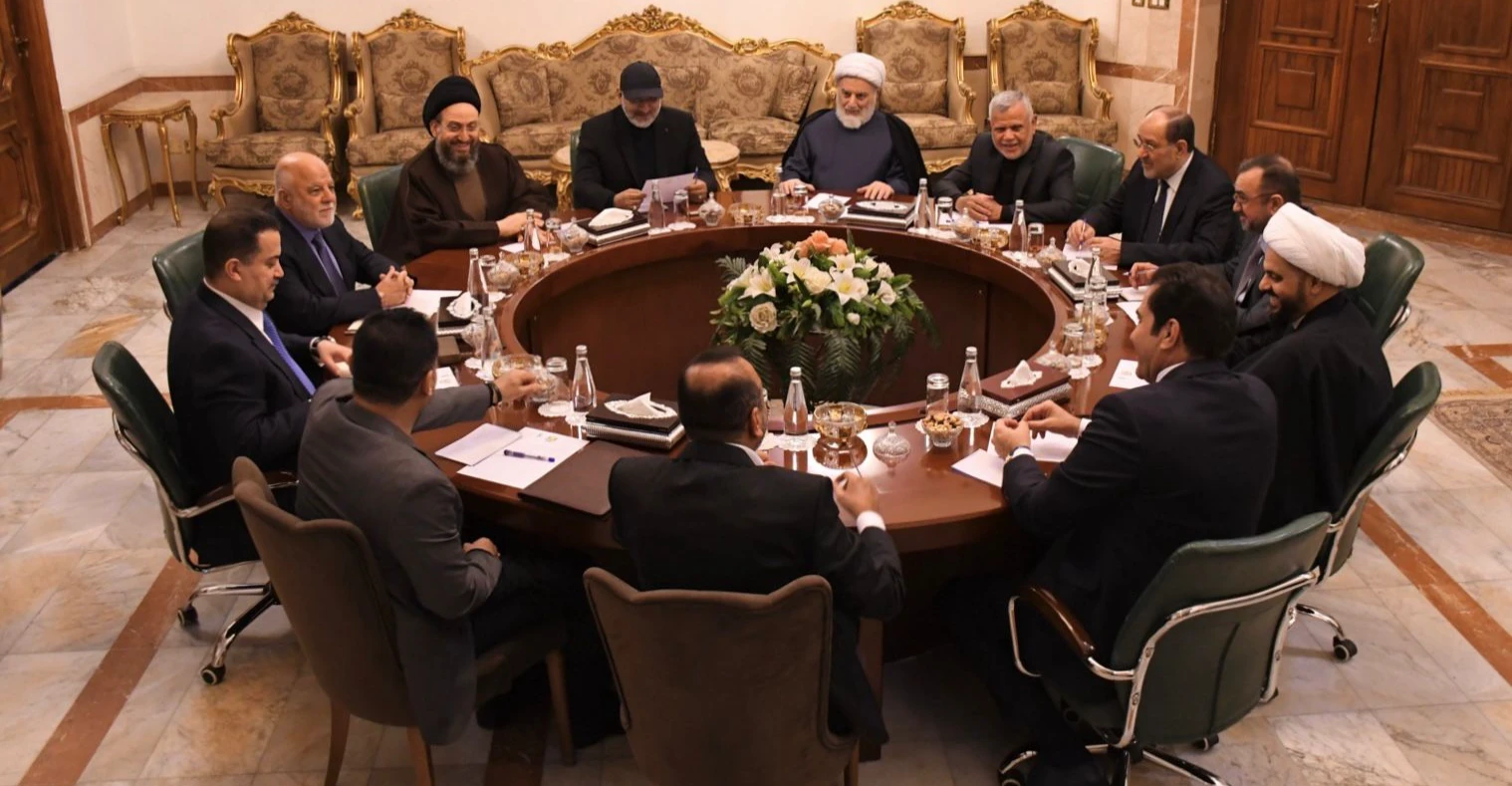
This comes amid renewed debate on institutionalizing the framework, after its periodic meeting was unable to be held last Monday due to the absence of a number of its leaders, and it turned into a consultative meeting, coinciding with differing positions on the proposal to move from the format of meetings and understandings to an entity that has a clear organizational structure, leadership and decision mechanisms, according to an informed source who spoke to Shafaq News Agency at the time.
The head of the Supreme Islamic Council of Iraq, Humam Hamoudi, had previously proposed institutionalizing the framework by forming something like a “leadership council” that includes the leaders of the forces involved in it, with the aim of organizing decision-making mechanisms, coordinating positions, and moving from periodic meetings to a more stable institutional formula.
But the proposal, according to the source, faced reservations from the leader of the State of Law Coalition and former Prime Minister Nouri al-Maliki, who believed that building a fixed structure might open the door to disputes over leadership, its powers and voting mechanisms, and would restrict the framework’s flexibility in dealing with crises, noting that the majority of forces now tend to maintain the current formula.
Coordination framework, not a political party
In this context, Hassan Fad’am, a leader in the “Wisdom” movement led by Ammar al-Hakim, which is part of the coordinating framework, believes that the discussion about institutionalizing the framework stems, in part, from an inaccurate understanding of its nature, stressing that it is not a party or a political alliance in the organizational sense, but rather a meeting that includes Shiite parties, each of which retains its ideology, project and independence of decision.
Fadaam told Shafaq News Agency that the framework represents a space for coordinating positions and agreeing on common issues, similar to the meetings of the State Administration Alliance, which includes political forces from different components, and in which national files and the problems of the country and the region are discussed, with the aim of reaching common understandings.
He adds that the parties within the framework meet under this umbrella to reach an understanding on certain issues and to manage the affairs of the country, without this meaning that they merge into a single political entity or abandon their individual characteristics.
Disagreement over institutionalization
However, this formula, which supports the nature of the framework’s work, is viewed by other parties as a matter of debate regarding its ability to continue, especially with the proposal to transform it into an institution with a clear structure, which revealed a divergence within its components.
In this regard, independent politician Abu Mithaq al-Masari says that the project to institutionalize the coordination framework is ambitious, but it has not gained the consensus of its forces, noting that there is an objection from key parties, including the State of Law Coalition led by Nouri al-Maliki, which believes that moving to an institutional formula may complicate decision-making mechanisms and distance the framework from the goal for which it was established.
Al-Masari adds to Shafaq News Agency that the framework does not necessarily undertake to discuss all contentious issues between its components, but rather focuses in part on coordinating positions that are agreed upon in advance, while its leadership structure includes 12 leaders, among whom decisions are made according to the voting and majority mechanism.
He points out that the framework has witnessed voting experiences on important issues, including the selection of the prime minister, which contributed to overcoming some complications and accelerating understandings, considering this flexibility to be one of the strengths of the current formula.
Al-Masari warns that full institutionalization may bring back bureaucracy to the framework’s work, through official procedures, correspondence, and organizational routine, adding new complications to the decision-making process instead of facilitating it, which pushes some of its components to prefer the continuation of the status quo.
According to this view, the problem is not limited to the disagreement over the form of the organizational structure, but extends to the nature of the powers that will be granted to the unified leadership, and the extent to which the parties are committed to its decisions, given that each party retains its political weight and its own calculations.
Party flexibility
From another perspective, Aqeel al-Rudaini, spokesman for the “Victory” coalition led by former Prime Minister Haider al-Abadi, one of the main components and pillars that make up the coordination framework, rules out the transformation of the latter into a unified political entity at the present time, attributing this to the multiplicity of parties within it and the difference in their political visions, despite their success in finding a formula for consensus and communication among themselves.
Al-Rudaini tells Shafaq News Agency that the current formula gives each party the freedom to express its opinion and vote or abstain from voting, and even to not attend meetings or object to some positions, without this necessarily leading to the collapse of understandings between the components of the framework.
He adds that having an umbrella that includes more than ten parties makes it easier to communicate and negotiate with other political forces, especially Sunni forces, instead of each party entering into separate negotiations, noting that this coordination allows for agreement on major issues, the formulation of public policies, and support for the government and state institutions.
Despite the absence of a political merger or a unified internal system so far, Al-Rudaini points to the formation of multiple committees to develop the framework’s work and enhance its role in supporting the Prime Minister’s office, given that the head of government comes from the forces within it, and what this requires in terms of coordination and consensus among them.
Conflict of interest
In a broader reading of the obstacles facing the project, researcher and academic Alaa Najah believes that the coordination framework has turned into a coalition umbrella that includes multiple political parties, movements and currents, which makes forming an independent entity with unified leadership a difficult task, in light of internal disputes and intersections with the rest of the Iraqi political forces.
Najah told Shafaq News Agency that the problem is not only related to the difference in political visions among the components of the framework, but also to the divergence of their interests and the connections of their leaders to other alliances and understandings within the political scene, as well as the dispute over the distribution of influence and positions and the form of state administration.
He adds that each party has its own calculations and priorities, which makes reaching a unified leadership capable of making binding decisions for everyone complicated, especially when those decisions conflict with the interests of some parties or their political alliances.
Najah points out that some forces maintain a wide margin of flexibility in dealing with the other parties, and avoid taking decisive positions that restrict their options, for fear that merging into a rigid institutional entity will reduce their ability to maneuver politically.
In conclusion, the essence of the dispute over institutionalization lies in the extent of concessions that parties should make in favor of a unified entity, since giving up part of the independence of decision-making, influence, and political affiliations represents a challenge to any project to reorganize the framework.
shafaq.com
