Al-Shourja and “Jamila” close their shops… The rise in the dollar’s price strikes at the heart of Iraq’s economy
Al-Shourja and “Jamila” close their shops… The rise in the dollar’s price strikes at the heart of Iraq’s economy
2026-10-07
 Shafaq News – Baghdad
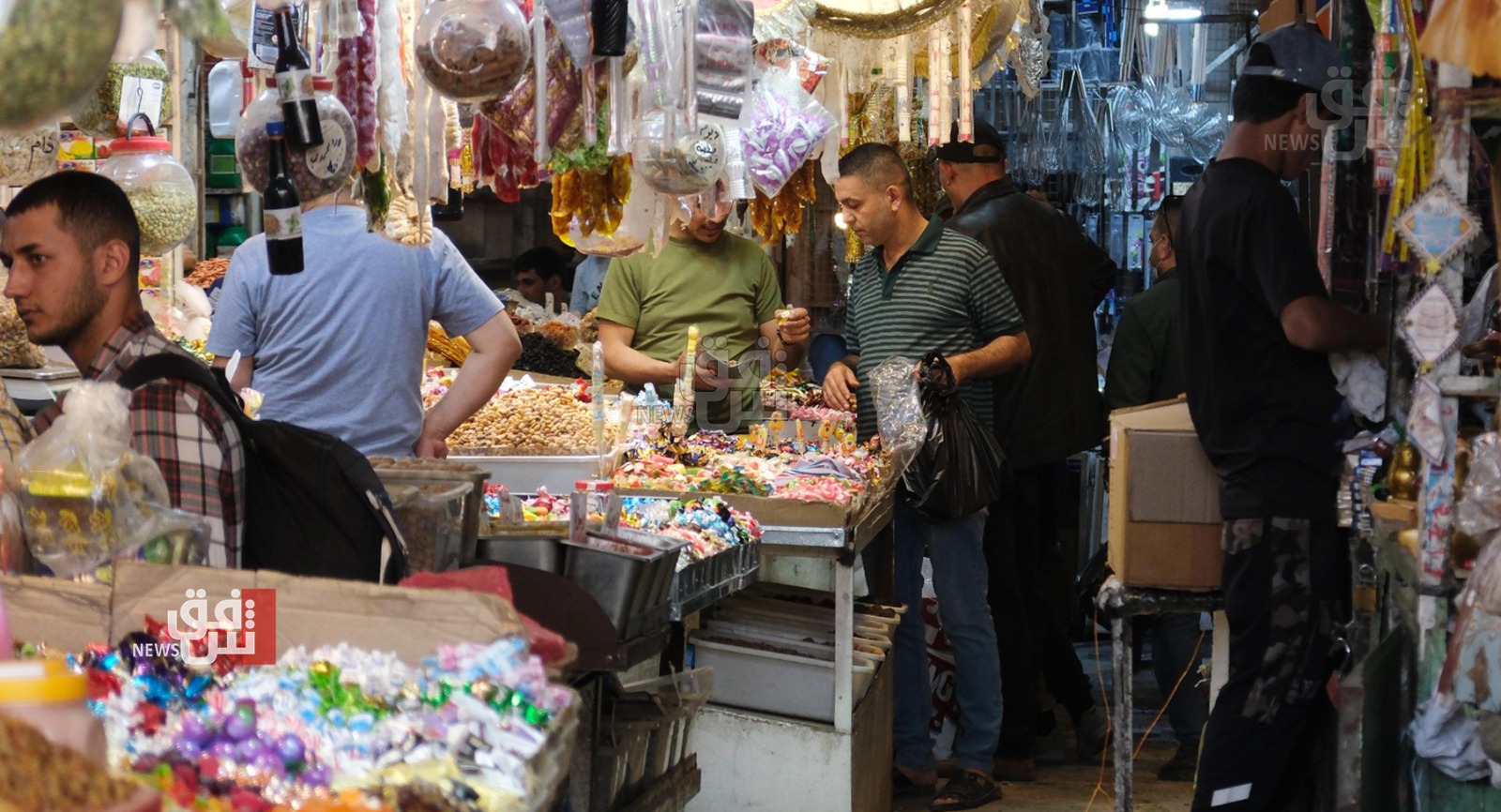
Traders’ warehouses and shops in the Al-Shourja market, “Alwa Jamila,” and a number of money exchange and transfer companies closed their doors on Wednesday, following the Iraqi Central Bank’s decision to raise the official exchange rate of the US dollar against the Iraqi dinar from 1320 dinars per dollar to 1520 dinars.
The Al-Shourja market in the center of Baghdad is the largest and most important economic center for various goods, including food, household goods, clothing, cigarettes, and other daily necessities for the lives of citizens in Baghdad and the provinces. The “Jamila wholesale market” is the main source of dry and agricultural food products and is the main supplier of these to the capital and neighboring provinces.
Shafaq News Agency correspondents reported that large and small traders were forced to close their doors this morning in Al-Shourja and Jamila after the Central Bank surprised them by raising the price of the dollar, leaving them confused about how to calculate the exchange rate of the dollar against the Iraqi dinar.
Iraqi traders rely on a calculation process in their buying and selling operations, which is the value of the Iraqi dinar against the US dollar, with which they import their goods and make financial transfers.
Our correspondents noted that the Central Bank’s decision confused traders and markets, forcing them to halt their financial transactions until the situation stabilizes and it is confirmed whether the new dollar exchange rate will continue to be adopted or whether there will be a reversal of it in the coming days.
It should be noted that many large traders have goods worth billions of dinars stored in their warehouses, which they had previously imported before the dollar exchange rate changed today, and they will exploit this change to raise the prices of their goods, according to a number of small traders and shop owners whom our correspondents met.
On Wednesday morning, the Central Bank of Iraq issued a circular that included setting the exchange rate of the dollar at 1500 dinars per dollar as the purchase price from the Ministry of Finance, 1510 dinars per dollar as the selling price to banks, and 1520 dinars per dollar as the selling price from banks and non-bank financial institutions to the end beneficiary.
This is based on the decision of the Iraqi Council of Ministers in its regular session held yesterday, Tuesday, to amend the exchange rate of the US dollar against the dinar, based on an emergency recommendation submitted by the Minister of Finance and the Governor of the Central Bank.
Thus, the Central Bank has raised the exchange rate of the dollar against the dinar to the public by 20,000 dinars per 100 dollars, after it had been adopting a selling price of 1,320 dinars per dollar (132,000 dinars per 100 dollars).
Following this decision, Iraqi and foreign gold prices recorded a significant increase in local markets in the capital, Baghdad, and in Erbil, the capital of the Kurdistan Region.
The repercussions of the decision extended to the real estate sector, as Sardar Azad, a real estate expert in Erbil, confirmed that the recent rise in the exchange rate of the US dollar against the Iraqi dinar has led to a state of stagnation in the real estate market, expecting that it will be followed by a rise in the prices of investment residential units.
Azad told Shafaq News Agency, “The sudden rise in the dollar exchange rate and the instability in the markets have directly affected the sector; they initially led to a complete halt in buying and selling, and will later lead to an increase in the prices of housing units built by investment companies.”
He explained that “on the first day of the exchange rate increase, no real estate transactions or trading operations were recorded in the city of Erbil, due to the ambiguity of the situation and the lack of clarity for citizens and traders in the market.”
Azad added that “the expected rise in the prices of housing units under construction is due to two main reasons; the first is that all construction materials and supplies used in building projects are offered and sold in US dollars, which has increased their costs. The second reason is that units sold on an installment system now incur additional costs, which is directly reflected in the final price.”
The Iraqi Contractors Union, for its part, called on Prime Minister Ali al-Zubaidi to postpone the implementation of the decision on the exchange rate of the dollar against the dinar, warning of its financial repercussions on government sector contracts and projects.
The Federation said in a letter addressed to the Prime Minister, which was received by Shafaq News Agency, that contracting companies are still bearing the effects of the previous exchange rate adjustment under Cabinet Resolution No. (301) of 2021, while the financial dues resulting from that adjustment have not yet been disbursed.
He pointed out that the repercussions of the decision to raise the exchange rate are not limited to existing contracts, but also include contracts that are still in the study or referral stages and have not yet entered into contracting, which may lead to the conclusion of contracts that do not correspond to the actual costs of implementation.
Economic experts also warned of the repercussions of the decision. Economic expert Mohammed Al-Hassani told Shafaq News Agency that these decisions “harm all segments of the population,” indicating that the employee loses, according to his estimate, 30% of the value of his salary, while the citizen’s loss in the ability to purchase materials rises to more than 70% due to customs tariffs and transportation costs.
Thus, according to Al-Hassani’s estimate, the citizen loses about 50% of his monthly income, considering that these measures represent a deduction from citizens’ incomes, and warning of their repercussions on the poor and middle classes.
For his part, economist Ali Daadoush, speaking to Shafaq News Agency, warned of the rising exchange rate in the market, saying that the price “has now started to rise,” and believing that the difference between the official rate and the parallel market will increase.
Daadoush added that the decision will affect the local market, predicting “unbridled and significant inflation” and a rise in food prices, calling on the government to take decisions to limit price increases, including reducing customs duties, with the aim of achieving balance and preventing price increases in the local market.
In this context, a trader, speaking to Shafaq News Agency, predicted that the price of the dollar in the parallel market would rise to between 190,000 and 200,000 dinars per 100 dollars, attributing this to the increased demand for foreign currency, especially from people who have obligations that they are forced to pay.
The trader, who did not want to give his name, said that when the government makes a decision to raise the official dollar exchange rate, it must also bear the responsibility of controlling the parallel market, explaining that the decision does not stop at the exchange rate on paper, but is directly reflected in prices and the citizen’s livelihood.
In this context,
The Economic Observatory “Eco Iraq” warned in a statement received by Shafaq News Agency of the widening gap between the official and parallel exchange rates, and the resulting increase in import costs, decline in purchasing power, and the impact of this on the prices of goods and services, calling for controlling speculation and enhancing the flow of foreign currency through official channels.
In an official statement received by Shafaq News Agency, the Baghdad Chamber of Commerce warned that any change in the exchange rate is a direct “influential factor” in import costs and the prices of goods and services, especially since a wide segment of traders are bound by financial obligations and commercial contracts with companies and suppliers outside Iraq, stressing that the matter requires providing a stable and clear environment that enables the private sector to plan and make its decisions on sound economic foundations.
Al-Hamdani added that the current stage requires a comprehensive study of the implications of the decision, taking into account the conditions of local markets and the purchasing power of citizens, as well as the obligations of traders, importers and various economic sectors.
As a result, parliamentary circles moved to hold an emergency session to discuss the decision to raise the dollar exchange rate and to compel the government to reverse it, amid warnings of the repercussions of the decision on the citizen and the Iraqi market.
Member of Parliament Ibtisam Al-Hilali said in a statement to Shafaq News Agency that she rejects the Cabinet’s decision to change and raise the exchange rate of the dollar against the Iraqi dinar, noting that the decision will have repercussions and a direct impact on the Iraqi economy and market.
Al-Hilali added that if the government wanted to address the financial crisis, the exchange rate should have been set at 1,400 dinars per dollar or less, in order to control the market and limit its impact on food prices, which would directly affect citizens.
For her part, MP Suzan Al-Saad told Shafaq News Agency that she, along with a number of MPs, submitted an “urgent” request to the Speaker of Parliament to discuss the decision to raise the dollar exchange rate.
Al-Saad called for the House of Representatives to dedicate Wednesday’s session to discussing the decision and its economic repercussions, particularly its impact on citizens’ purchasing power and the stability of markets and prices, stressing the need to examine the details of the decision and its implications for the living and economic situation in the country.
shafaq.com
