Those who expose corruption face more persecution than the corrupt themselves.
Those who expose corruption face more persecution than the corrupt themselves.
2026-08-27 02:51
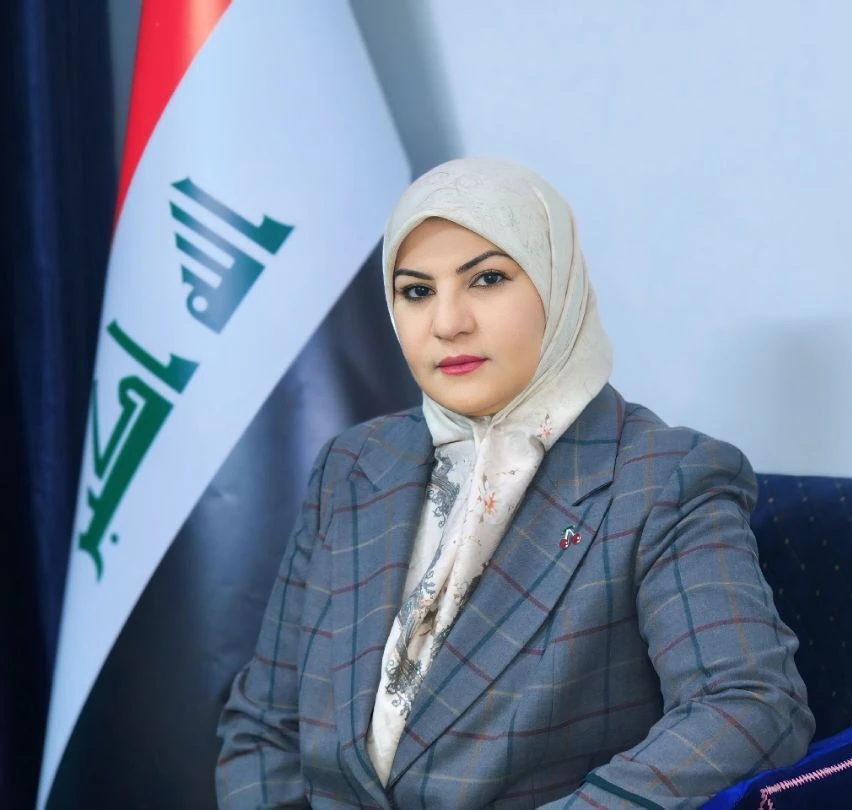 Dr. Duha Al-Sadkhan
In societies plagued by corruption, the battle is not always between the corrupt and the law; sometimes it becomes a battle between those who expose wrongdoing and those who want to keep it hidden. Even more dangerous is when the voice of accountability becomes the accused, while questioning public funds, stalled projects, and environmental pollution is treated as a crime.
Corruption doesn’t begin with stealing money alone.
Corruption is not just about embezzlement or bribery. It can be in a project that is awarded but not completed, a road that is paid for but not built, a treatment plant that stops, or an environmental file that is neglected despite its impact on the health of citizens.
Published data on Iraq reveals that the number of stalled projects during the years 2018–2023 amounted to 5,345 projects, with a total value of approximately 33.27 trillion Iraqi dinars, according to data attributed to the Integrity Commission.
These figures do not mean that every stalled project is necessarily a case of corruption, but they do mean that there is a huge amount of public money and projects that need to be monitored, held accountable, and the reasons for the delays identified.
Iraq still faces a major challenge in combating corruption.
According to the 2025 Corruption Perceptions Index issued by Transparency International, Iraq scored 28 out of 100 points and ranked 136th out of 182 countries, despite improving by two points from the previous year.
The number here is not just an international ranking; it is a message that fighting corruption requires stronger institutions, more effective oversight, and an environment that allows citizens, journalists, employees, and members of parliament to ask questions without fear.
But what happens to those who ask?
Herein lies the most serious problem.
Instead of the question being:
Who is responsible for the stalled project?
The question becomes:
Why are you talking about this issue? Who is behind you? And why are you damaging the reputation of the governorate?
Instead of investigating the causes of pollution in an area, some people start attacking the person who spoke about the pollution.
Instead of scrutinizing a contract or project, the issue turns into a campaign against the person who exposed it.
Thus, the battle shifts from fighting corruption to silencing those who speak about it.
In Iraq, the Iraqi Association for the Defense of Journalists’ Rights documented 85 violations against journalists and media outlets during 2025, noting the use of threats and legal complaints in cases including the publication of reports on suspected corruption. Another human rights report documented 182 violations of press freedoms during the same year.
Why does society sometimes fight against those who expose corruption?
Because corruption, when it lasts for a long time, is no longer just an individual practice, but can create around it a network of interests, beneficiaries, and defenders.
Some of those who defend the corrupt may be directly benefiting, but there is another group who defend him because of political, regional, or partisan affiliation, and they treat the exposure of corruption as if it were an insult to their group.
And here the most dangerous operation takes place:
The corrupt person becomes “a son of the region,” and the one who exposes his corruption becomes “an enemy of the region.”
This is a dangerous logic, because the province is not protected by covering up mistakes, but by protecting public funds and the rights of its people.
What about pollution that kills slowly?
There are issues that should not be treated as political disputes.
When there is polluted water, harmful emissions, hazardous waste, or a stalled environmental project, the issue directly concerns human health.
Data from the Iraqi Central Statistical Organization and Geographic Information Systems indicates that 11,125 cases of various types of viral hepatitis were recorded in Iraq in 2024. While pollution cannot be solely attributed to these cases, the figures underscore the importance of addressing health and environmental issues seriously and not underestimating their significance.
Therefore, when an official, deputy, journalist, or citizen talks about pollution, the correct question is not: Why are you raising this issue?
but rather:
Is this information correct?
What is the source of the pollution?
Who is responsible?
What are the government procedures?
When will the damage be repaired?
Don’t make exposing corruption a social crime.
The most dangerous thing that can happen in any country is for citizens to fear the corrupt more than they trust the law.
Even more dangerous is when society reaches a stage where it says:
“Don’t speak, you won’t be able to change anything.”
This situation creates the ideal environment for corruption to continue.
Because corruption doesn’t always need someone to defend it; sometimes it’s enough for silence, fear, and indifference to prevail.
Censorship is not defamation
It is essential to distinguish between accusing someone of corruption without evidence and exercising the right to scrutinize and ask questions.
We are not calling for anyone to be convicted before an investigation, nor for suspicions to be turned into judicial rulings.
But we demand the citizen’s right to ask:
Where did the money go?
Why did the project stop?
Who referred the contract?
Who carried it out?
Why was there no accountability?
Who is responsible for the harm done to the citizen?
This is not an insult.
This is censorship.
final word
Iraq does not need to silence the voices that expose the flaws, but rather it needs to protect these voices within the law, and to turn information and suspicions into impartial institutional investigations.
If the file is correct, then the person responsible for it should be held accountable.
If the accusation is false, let the investigation declare it so.
But if we fight those who ask the question before we look for the answer, then that is the real problem.
Do not make the one who exposes corruption the accused, and the one who demands the protection of public funds the one whose intentions are questioned.
Nations are not built by remaining silent about wrongdoing, nor are they protected by covering up corruption.
The principle we must believe in is:
The one who exposes corruption is not an enemy of the state; rather, it is the state that protects him that needs reform.
shafaq.com
