Exclusive: Qaani draws a red line in Baghdad: No limit on the weapons of the factions, and no clash with the state.
Exclusive: Qaani draws a red line in Baghdad: No limit on the weapons of the factions, and no clash with the state.
2026-08-11
 Shafaq News – Baghdad
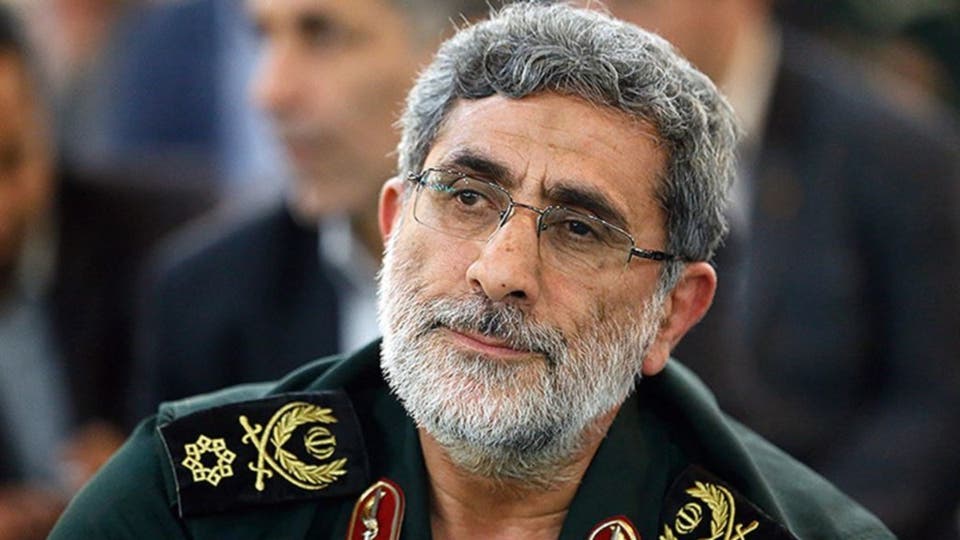
The commander of the Quds Force in the Iranian Revolutionary Guard, Ismail Qaani, drew a red line against handing over weapons to the state by Iraqi factions, and stressed the need to avoid armed confrontation with security forces, during a visit he made to the capital, Baghdad, before returning to Tehran.
An informed source told Shafaq News Agency that Qaani held a series of meetings yesterday with Iraqi political and security leaders, including leaders in the coordination framework and armed factions, to discuss the issue of restricting weapons to the state, in addition to security and economic developments related to the region.
He explained that the faction leaders raised a direct question during the meetings regarding the position on the issue of handing over weapons, and Qaani responded by refusing to hand them over at the present stage, calling for not proceeding with this option at the present time.
According to the source, the commander of the Quds Force warned the factions at the same time against engaging in an armed confrontation with the Iraqi government if the latter resorted to force to dismantle its arsenal, stressing that any clash would have repercussions that go beyond the issue of weapons and could open the door to a wider internal crisis.
He pointed out that the Iranian message was that it was necessary to seek a political settlement with the government instead of confrontation, while preserving the factions’ weapons at the current stage and not handing them over voluntarily.
In another meeting with leaders within the coordination framework, Qaani, according to the source, stressed the need to exert political pressure on the government in order to reach a settlement formula that would prevent the handover of weapons at the present time, thus preventing the outbreak of conflict between the state and the factions.
An informed source had previously reported that Qaani had arrived in Baghdad at the head of a high-level military and security delegation, in an unannounced visit that included meetings with leaders in the coordination framework and armed factions, including the leader of the Badr Organization, Hadi al-Amiri.
According to the information, Qaani’s talks in Baghdad focused on two main issues; the first concerns the issue of the factions’ weapons and the future of their existence outside the framework of the official military command, and the second is discussing the possibility of allowing Iraq to export its oil through the Strait of Hormuz, in light of the repercussions of regional tensions on navigation and energy.
Qaani’s move comes at a time when the Iraqi government is pushing to restrict weapons to the state, while these efforts are facing opposition from armed factions that see handing over their arsenal in the current circumstances as a threat to their political and security position.
The issue of armed factions is one of the most sensitive issues facing the Iraqi government, with the approach of September 30, which the main political forces have set as the deadline for restricting weapons to official institutions .
The State Administration Coalition, which includes the most prominent Shiite, Sunni and Kurdish political forces, stressed during its meeting on August 5 the need to restrict weapons to the state, and considered the parties that carry out activities that threaten the security of the country outside the framework of official institutions as “outlaws and must be fought .”
The coalition warned that any armed activity outside the framework of the state after September 30 would be dealt with according to the anti-terrorism law .
Following this, the Iraqi security and military forces raised their level of readiness throughout the country, and the leave of a number of commanders and officers was cancelled, while the security services began to implement field movements and practices in anticipation of any emergency or friction that might develop into an armed confrontation .
Last week, Baghdad witnessed hours of security tension coinciding with threats by armed factions to retaliate against Saudi Arabia after strikes targeted Popular Mobilization Forces sites, before it ended with contacts and a dawn meeting between Prime Minister Ali Faleh al-Zubaidi and Badr Organization leader Hadi al-Amiri, which led to a mutual calming and opened the way for diplomatic action to address the crisis .
Al-Amiri later called on the “Islamic Resistance” factions to postpone any military response to Saudi Arabia and to prioritize “Iraq’s higher interest,” but he returned and stressed during a meeting with a number of Popular Mobilization Forces leaders the importance of maintaining a high level of readiness .
The plan to restrict weapons does not have a unified position among the armed factions. While some forces have expressed a willingness to reorganize their military and security relationship with the state, other factions, including Kataib Hezbollah, Harakat al-Nujaba and Kataib Sayyid al-Shuhada, have announced their refusal to give up their military capabilities, and have linked any discussion about their weapons to the end of the presence of foreign forces and ensuring the protection of Iraq from external attacks .
The September 30th date also coincides with the deadlines related to ending the military presence of the international coalition in Iraq, which some factions use as a basis for linking the future of their weapons to the withdrawal of foreign forces.
shafaq.com
