White House: Hormuz is open and Iran has not exported oil since the resumption of the embargo
White House: Hormuz is open and Iran has not exported oil since the resumption of the embargo
2026-08-29
 Shafaq News – Washington
White House adviser Stephen Miller said on Saturday that the Strait of Hormuz is open to the United States, noting that Iran has not exported any oil through its shores since the resumption of the US embargo last month.
Miller added, according to US media, that “the Iranian naval and air forces, radars and military command structure are finished,” considering that what US President Donald Trump achieved in Iran represents “the greatest military achievement in the history of modern warfare.”
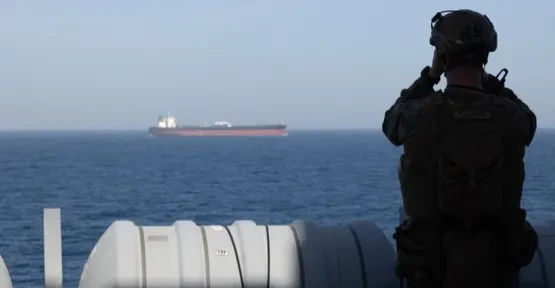
In this context, the White House announced that US forces had removed Iranian mines from international shipping lanes in the Strait of Hormuz, noting that about 1,500 ships carrying approximately 750 million barrels of oil had passed through the strait under US protection.
These statements come at a time when Tehran continues to assert restrictions on navigation in the Strait, while the Iranian Revolutionary Guard recently announced that it has “complete control” over the Strait, rejecting the American narrative regarding its reopening.
Recent reports have also shown a discrepancy between the American narrative and ship tracking data, as data from specialized companies indicated the difficulty of verifying some of the figures announced by Washington regarding the volume of oil passing through the strait.
Iranian oil exports had declined significantly after the United States reimposed a blockade on ships linked to Iran on July 13, with China’s imports of Iranian oil reaching about 534,000 barrels per day in August, according to preliminary data.
New information has emerged about the behind-the-scenes events of Iran’s closure of the Strait of Hormuz at the beginning of the US-Iranian war. US and Israeli officials said that the former commander of the Iranian Revolutionary Guard’s naval force, Major General Ali Reza Tangsiri, ordered the deployment of sea mines inside the main international shipping lane, a move that raised the level of confrontation and threatened global energy traffic.
According to a report by Axios correspondent Barak Ravid, two Israeli officials said that Tanksiri was behind the move to close the strait during the early days of the war.
During the first 72 hours, Iran announced the closure of the Strait of Hormuz and warned that it would attack tankers attempting to pass through it. But behind the scenes, American and Israeli sources say that Tangsiri issued a far more dangerous order: to plant mines within the “traffic separation system,” the main international shipping lane used by vessels to transit the strait.
The report did not present an Iranian response to this account, nor did it provide independent evidence to prove that Tangsiri personally issued the order.
shafaq.com
