US recommendation to al-Sudani: Extending UNAMI’s mandate will save Iraq from Israeli strikes.
US recommendation to al-Sudani: Extending UNAMI’s mandate will save Iraq from Israeli strikes.
2025-04-01 05:40
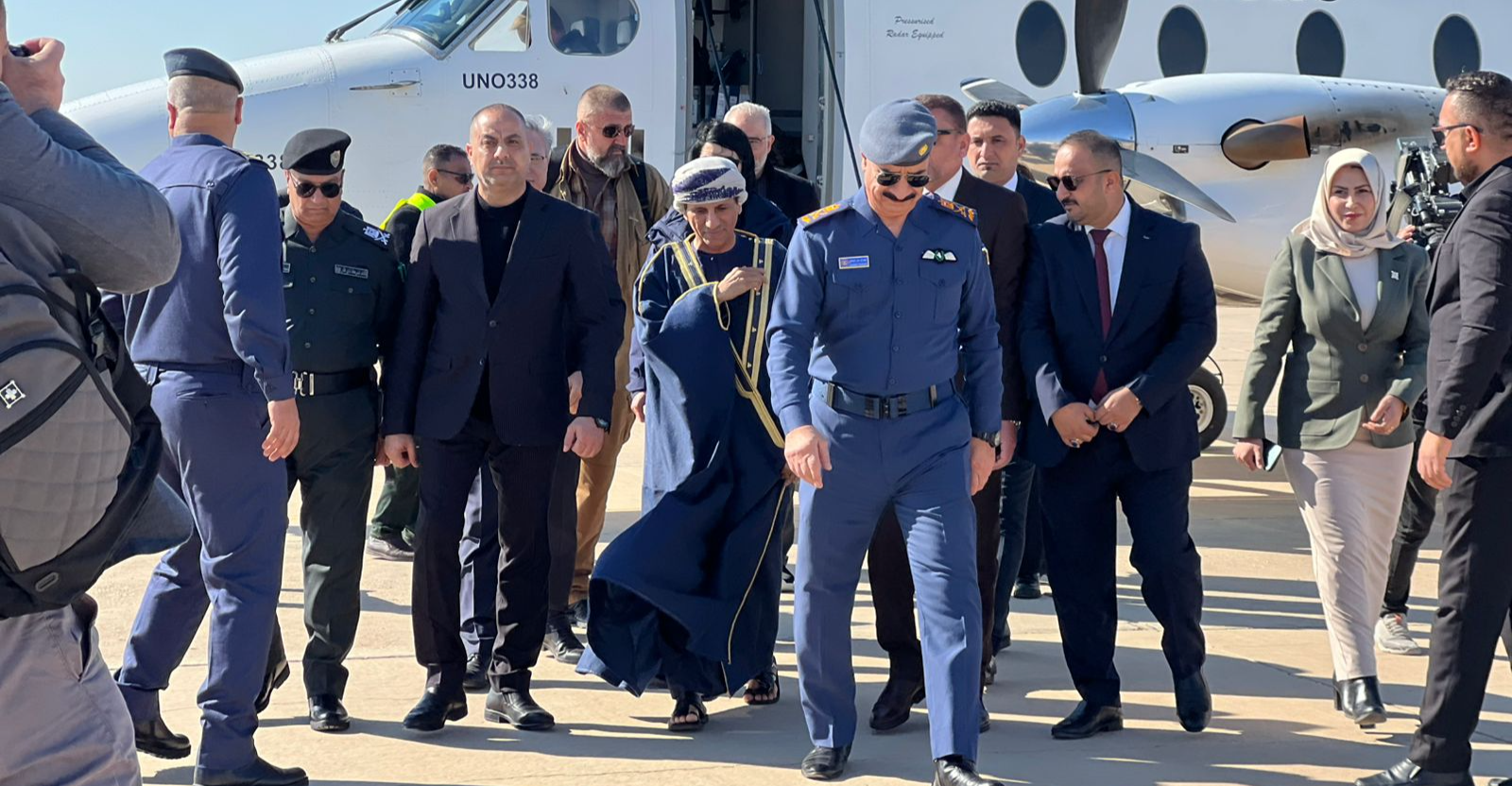 Shafaq News/ The American Wilson Institute called on Iraq to extend the mandate of the UNAMI mission, which is supposed to officially end at the end of 2025. UNAMI was established pursuant to Security Council Resolution 1500 in August 2003 to support the Coalition Provisional Authority led by Paul Bremer and the Iraqi Governing Council. While its mission is described as “purely political,” the growing regional tensions compel Baghdad to consider the possibility of extending it.
A report by the American Institute, translated by Shafaq News Agency, indicated that “the decision to end UNAMI’s 22-year mission came before the escalation of regional tensions, after its mandate was renewed annually at the request of the Iraqi government, and it reports to the Department of Political Affairs in New York.”
The US report noted that “Security Council Resolution 1770 of 2007 significantly expanded UNAMI’s role to include promoting political dialogue and reconciliation, electoral assistance, promoting human rights and judicial reform, and communicating with neighboring countries . ”
The report explained that “Iraqi Prime Minister Mohammed Shia al-Sudani decided at the beginning of his term, with broad support from his ruling coalition, that UNAMI’s role was no longer necessary, a move that primarily reflects a desire to enhance stability with the significant improvement in the security situation and the relative stability of the political scene.” It noted that “the government sought to eliminate the idea of dependence on international aid and emphasize Iraq’s ability to address its internal and external conflicts independently, without mediation by UNAMI.”
According to the report, as developments in the region accelerated at a pace that exceeded the assumptions of the Security Council resolution, “the security landscape that UNAMI was preparing to leave behind was reshaped. The assessment of threats to peace and security in Iraq revealed concerns about the potential resurgence of ISIS activity and the spread of armed groups. However, it did not fully anticipate the extent of the repercussions of the conflict in Gaza, as it only referred to “the state of uncertainty regarding the impact of the current regional escalation on Iraq.”
Israeli attack
The Wilson Institute report noted that the escalation of violence between Israel and Iran during the second half of last year, which also witnessed the conflict between Israel and Hezbollah and unprecedented ballistic missile strikes by Iran on Israel, led to “exacerbating fears that Israel might expand its attacks to include Iraq, targeting pro-Iranian armed factions, which are part of the ‘axis of resistance’.”
The report spoke of intensive political and diplomatic efforts by the Iraqi government, which pressured armed groups to halt drone attacks on Israeli targets, or through regional mediation. The new UN Special Representative to Iraq, Mohammed al-Hassan, was a key figure in these efforts, having arrived in Iraq in October 2024, when the violence of the war in Lebanon was at its peak .
The report continued that while Hassan was primarily tasked with overseeing the transition and liquidation of UNAMI, he soon found himself managing a serious geopolitical crisis .
UNAMI mission
According to the US report, while Iraq has demonstrated an increasing ability to maintain internal peace and security, whether through negotiations with Erbil regarding revenue sharing, organizing long-delayed local elections in the disputed Kirkuk province, or negotiating a bilateral security arrangement with the United States to prevent the return of ISIS, the risk of regional instability remains high.
The report noted that “Iraq’s diplomatic efforts to strengthen political and economic relations with its neighbors, through promoting the “Development Road” project and hosting the next Arab League summit in May, reflect Iraq’s growing confidence on the international stage .”
He believed that maintaining the presence of a neutral third party such as UNAMI, which has direct access to the Security Council, would be strategically beneficial. The report explained that as Iraq seeks to achieve balance amid complex regional dynamics, a mission with a clear and limited mandate could serve as a stabilizing factor, helping to defuse external tensions before they escalate into direct threats .
In addition, the report stated that through the presence of UNAMI, Iraq will gain diplomatic leverage in managing external pressures and will also gain an organized platform for communicating with key international stakeholders to ensure that its interests are effectively represented at the global level .
In addition, the report noted that the Iraqi leadership seeks to assert its sovereignty and reduce any perception that it is dependent on external parties. It added that the challenge lies in balancing this goal with the reality of regional instability, as even a minor escalation could have far-reaching repercussions .
He explained that a controlled role for the United Nations, with a decisive focus on external mediation, would enhance Iraq’s diplomatic immunity and promote stability without compromising national independence .
The report concluded by warning that, with Iraq on the verge of being drawn into the regional turmoil of last year, Iraqi leaders must assess the merits of maintaining UNAMI beyond the December 31 deadline, focusing on protecting Iraqi stability and preventing external crises from spilling over its borders.
The Wilson Institute report concluded that “Iraq’s ability to confront these challenges will be determined by its future as a sovereign and stable state in an increasingly unstable region.”
shafaq.com
