Two international organizations warn of an “environmental disaster” off the coast of Oman.
Two international organizations warn of an “environmental disaster” off the coast of Oman.
2026-08-06
 Shafaq News – Follow-up
Two organizations, one Canadian and one Dutch, warned on Thursday of an “environmental disaster” threatening a marine reserve off the southern coast of Oman, due to an oil spill from a tanker that was attacked more than a month ago.
A maritime security company reported that the tanker was hit by explosions last June, the causes of which were unclear, according to Agence France-Presse.
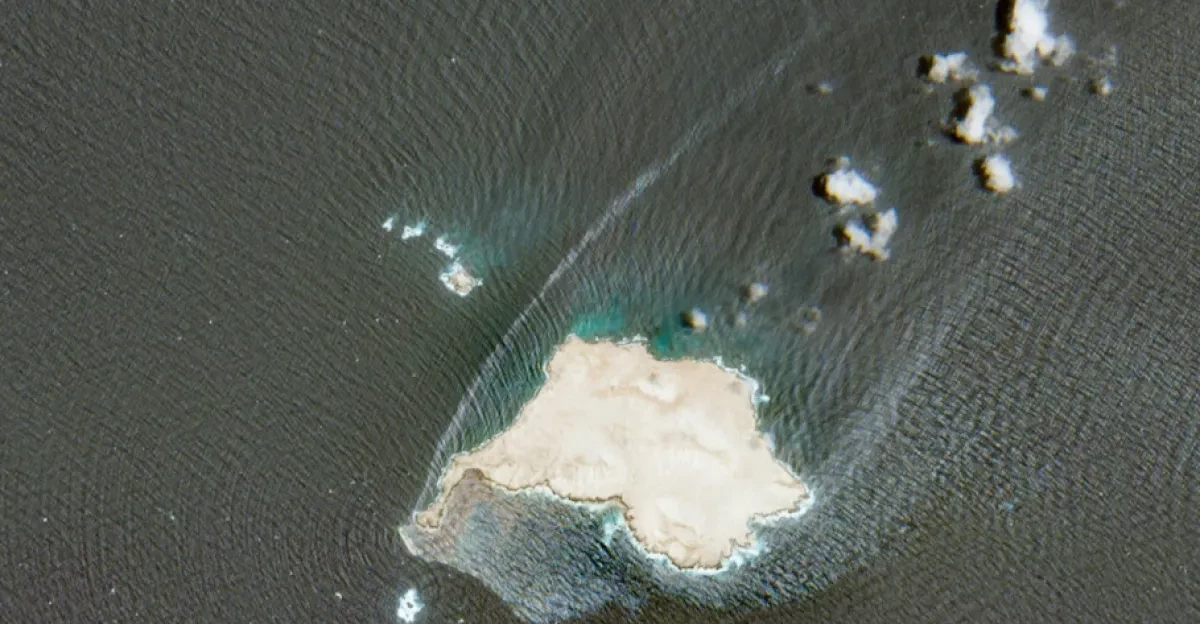
Satellite images seen by AFP showed a patch consistent with the shape of an oil spill in the vicinity of Oman’s Qibla Island, following the grounding of a tanker that was carrying about one million barrels of Russian oil.
Nina Noel, a member of the Canadian environmental organization Greenpeace, said that “the oil spill from the grounded tanker Caroline Bezingie has expanded enormously.”
She warned that “the continued oil spill and the ship remaining stuck in a hard-to-reach location threaten a wider environmental disaster.”
The tanker is believed to be part of a “shadow fleet” used by Moscow to circumvent Western sanctions on its oil exports, and includes older vessels, some of which face criticism over maintenance, insurance and safety standards.
Wim Zwijnenburg, a member of the Dutch international peace organization PAX, confirmed that “additional quantities of crude oil are leaking from the tanker, leading to pollution of the island’s coastal areas and the surrounding marine environment.”
The island of Qibliya is located in the Arabian Sea off the coast of Dhofar Governorate, east of the grounding site. This area is far from the range of attacks on ships related to the war in the Middle East, specifically in the Strait of Hormuz.
The Caroline Bezingie loaded its maximum capacity of one million barrels of crude oil from a Russian terminal on the Black Sea on May 11, and was still loaded with oil when its last signal was detected, according to the Kpler maritime tracking website.
Zwijnenberg, an open-source environmental researcher, warned that “if the ship were to break apart completely, it could cause a regional environmental disaster.”
The two spokespeople from the organizations reported that the area of the spill had expanded, reaching approximately 600 square kilometers, based on satellite images dating back to August 4th.
Noel noted that “images analyzed on July 24 showed an estimated leak area between 3 and 20 square kilometers.”
She warned of “severe and far-reaching” environmental consequences following the grounding of the tanker, noting that “even relatively small oil spills could remain trapped in marine sediments for years, weakening the ability of the protected marine ecosystem to withstand the impact.”
She added that “oil pollution in the Hallaniyat Islands threatens coral reefs, seagrass meadows, and coastal areas that support endangered sea turtles, migratory seabirds, and marine mammals.”
Omani authorities did not respond to AFP’s request for comment by the time of publication.
In 2025, Oman established a marine reserve around the Hallaniyat archipelago, where Qibliya Island is located, to protect the delicate ecosystems in an area that includes diverse marine life, such as rare sea turtles.
The incident comes at the height of the autumn tourist season in Dhofar, which is one of the most prominent tourist periods in the Sultanate, as the governorate attracts large numbers of visitors during this time due to the moderate weather and green nature.
Zwijnenberg stressed that “rapid intervention and the recovery of the oil tanker are crucial to preventing the situation from worsening.”
British maritime security firm Vanguard told AFP that explosions occurred on the tanker as it sailed off the coast of Mukalla in Yemen on June 6, causing water to enter several sections of it and the main engines to stop working at that time.
The tanker sent its last signal of its location off the coast of Yemen on June 11, according to maritime tracking websites seen by AFP.
Later, a stranded ship appeared near the island of Qibliya between June 18 and 24, according to satellite images from the European Copernicus program seen by AFP.
Its dimensions, shape, and color matched previous satellite observations of the tanker “Caroline Bezingie” before it stopped transmitting signals.
In response to a question about the incident, the International Maritime Organization said, “We are closely monitoring the situation and are in contact with the Omani authorities,” adding that it is “providing assistance” to the Sultanate.
The Omani and Yemeni coasts witnessed repeated attacks targeting oil tankers in the midst of the war, but these attacks were concentrated in the Strait of Hormuz starting last February, in addition to the Red Sea, Bab al-Mandab and the Gulf of Aden starting from late July last year.
Noel noted that the tanker “Caroline Bezingy” once again highlighted “the serious environmental risks associated with Russia’s shadow fleet, which circumvents sanctions by using old, poorly maintained oil tankers, endangering coastlines and marine ecosystems.”
Experts have previously warned of the dangers of large oil spills that could be caused by the sailing of dilapidated tankers within this fleet.
shafaq.com
