Türkiye plans to extend new gas and oil pipelines to Iraq.
Türkiye plans to extend new gas and oil pipelines to Iraq.
2025-04-13 02:55
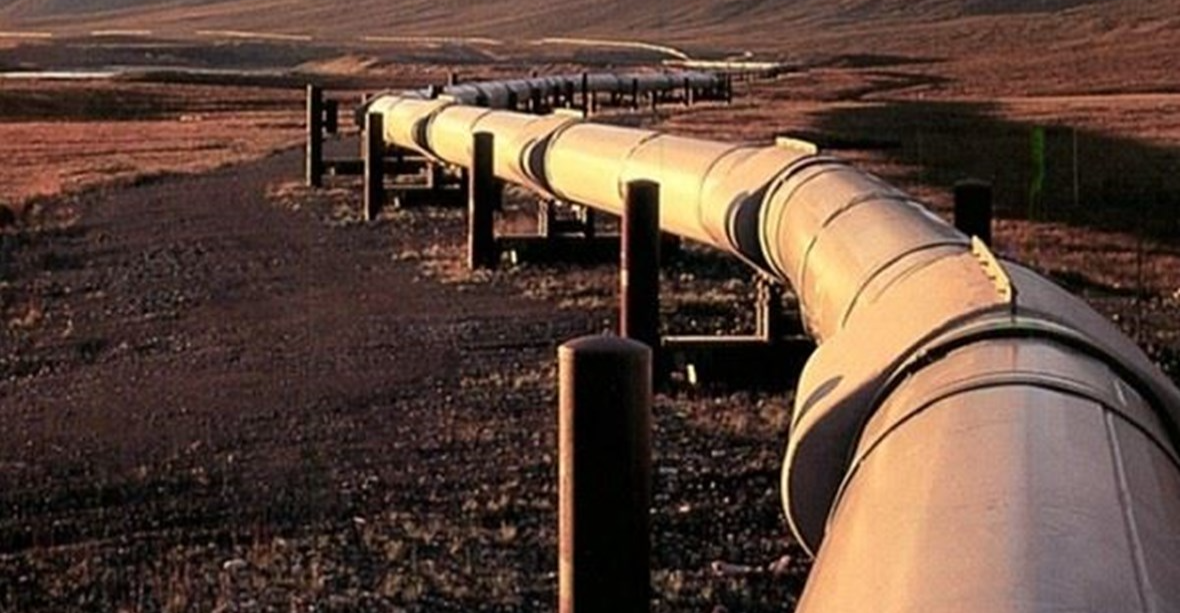 Shafaq News/ Turkey has proposed building new pipelines to transport oil and natural gas from Iraq’s resource-rich Basra region to the Mediterranean port of Ceyhan, a move aimed at enabling Baghdad to export greater quantities of its crude oil to markets and bolstering Ankara’s efforts to become a major regional energy hub.
These plans, revealed by Turkish Energy Minister Alparslan Bayraktar in an interview with Standard & Poor’s Global Commodity Insights, are part of an extension of the ambitious development road project, which aims to connect Asia to Europe via a network of railways and roads passing through Iraq.
According to the plan, goods, gas, and crude oil will move from Basra north to Haditha, before heading towards Silopi in southern Türkiye.
Eser Ozdil, a nonresident fellow at the Atlantic Council, said that Turkey’s international pipeline projects aim to ensure energy security, diversify sources, and enhance energy diplomacy.
He added, “Despite the recent entry of the Sakarya gas field into production, and expectations that the Jabar oil field will reach 100,000 barrels per day, Türkiye will remain heavily dependent on imports in the coming years.”
Bayraktar explained that a “preliminary agreement” had been reached between Turkey and Iraq regarding pipelines, in addition to a new electricity transmission line, expecting studies to be completed “soon” and a “framework energy agreement with Iraq reached in the coming months.”
He pointed out that a pipeline is already operating between Silopi and Ceyhan, but “its lack of connection to the Basra fields limits its ability to reach production of 1.5 million barrels per day.”
The proposed route is slated to connect with the previously planned 2.25 million barrels per day (bpd) Basra-Haditha pipeline, which received Iraqi government approval in January. This project raised concerns among some opponents of reviving a controversial alternative pipeline through Jordan, but Turkey has proposed an alternative route.
Bayraktar emphasized that “expanding the Basra-Silopi pipeline is extremely important for Iraq to sustainably export crude oil, providing it with an alternative route and easier access to Mediterranean markets.”
This route also includes a transfer point from Baiji, Iraq, to Fishkhabur, a Kurdish city near the Turkish border, where the existing pipeline sustained significant damage from ISIS attacks. Data from Commodity Insights shows that this section of the pipeline has been repaired but has not yet been restored to service.
However, moving forward with these projects may require resolving the years-long dispute between Baghdad and Ankara over a pipeline.
Negotiations are ongoing to reopen the Iraq-Turkey pipeline, which has been closed for more than two years. Tensions have escalated following the discovery of Turkish crude oil flowing through it, prompting the Iraqi Oil Ministry to pledge to take “urgent action,” deeming the move a violation of the pipeline agreement.
Bayraktar told Platts, a subsidiary of Commodity Insights, that the dispute was an “internal Iraqi matter” prior to the discovery of the crude oil flow, stressing that Ankara “is not concerned and does not intend to interfere in discussions regarding the resumption of flows.” He explained that resolving this dispute “is not a condition for the construction of new pipelines.”
Regarding gas, Bayraktar emphasized that the Turkish gas pipeline extends to the Iraqi border and can transport 5 billion cubic meters of gas in both directions. He noted that “the gas pipeline from Basra to Silopi will benefit the region,” adding that Turkey plans in the near term to supply Iraq with the natural gas needed to generate electricity until local gas fields are developed.
Commodity Insights data shows a planned gas pipeline from Silopi to Ceyhan. In the long term, Bayraktar expects Iraq to begin exporting gas to Turkey and other countries via Turkish territory, providing Ankara with a new source of revenue from transit fees. The losses from the closure of the Iraq-Turkey pipeline are estimated at up to $1 billion, according to Platts estimates and oil company sources.
Iraq has significant gas reserves, but is currently focusing on meeting domestic demand through efforts to capture large quantities of flared gas, with the goal of ending this practice by 2028. In 2023, Iraq flared an amount of gas roughly equivalent to its annual domestic consumption.
Questions remain about the compatibility of Türkiye’s plans to export Iraqi gas with Baghdad’s efforts to achieve self-sufficiency.
In addition to the pipeline projects, Türkiye has announced its intention to double the amount of electricity exported to Iraq and construct an additional electricity transmission line between the two countries.
These moves came after Bayraktar’s visit to Iraq in mid-March, which followed the cancellation of long-standing US waivers that had allowed Iraq to import electricity from Iran, which accounted for approximately 3% of Iraq’s total electricity production.
The future of Iranian gas imports remains unclear, even though they represent approximately 30% of Iraq’s electricity generation capacity. Baghdad is seeking alternative sources in the event that the US policy of “maximum pressure” against Tehran continues, which could threaten Iraqi energy supplies.
Türkiye has pledged $17.9 billion to the development road project, taking advantage of the opportunity to advance its interests by increasing electricity and energy supplies to Iraq. Bayraktar said, “We proposed to our Iraqi counterparts to expand this project to include crude oil, natural gas, and electricity pipelines.”
However, the project has been criticized for bypassing the Kurdistan Region in northern Iraq. A spokesperson for the regional government told Platts, “We are doing our best to ensure that the road also passes through Kurdistan,” adding that passing through the region would reduce costs and save time, and that “there is no clear motive for bypassing it.”
The 740-mile-long Grand Faw Port in southern Iraq is the focal point of the development road project. Scheduled for completion by 2028, it will become one of the largest ports in the world. Pro-Iranian groups are known to have a presence in the south of the country and have interfered in the port’s development phases.
Ozdil, of the Atlantic Council, concluded by saying, “Geopolitical developments and the economic crisis in Iraq represent the most significant risks to the implementation of the proposed projects. However, they are feasible if political and financial support is provided by Turkey, Iraq, Qatar, the UAE, the World Bank, and the European Union.”
shafaq.com
