The vacancy of the position of Speaker of the Iraqi Parliament… An internal Sunni conflict or the involvement of other parties?
The vacancy of the position of Speaker of the Iraqi Parliament… An internal Sunni conflict or the involvement of other parties?
4-5-2024
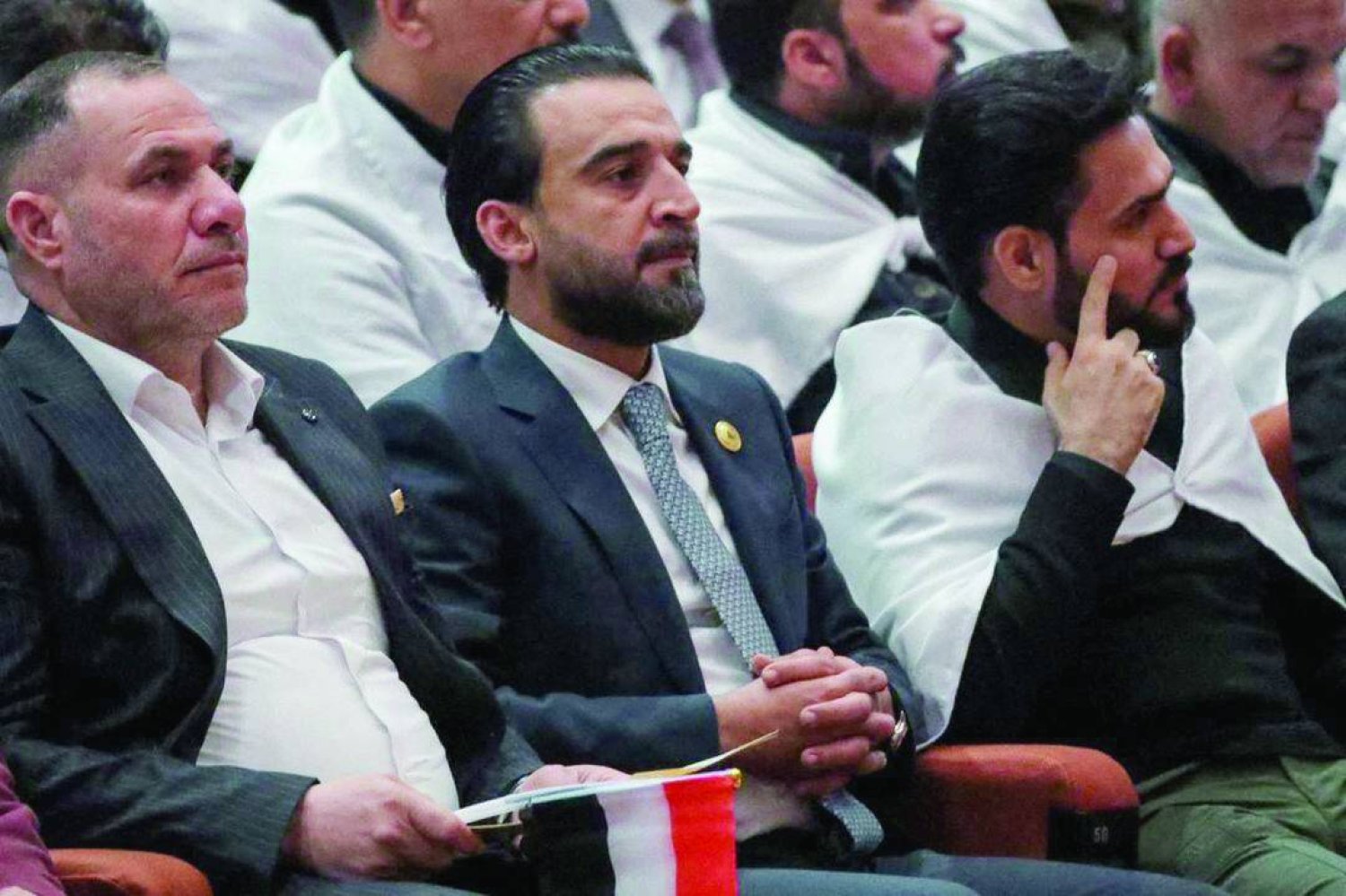 More than four months have passed since the removal of the Speaker of the Iraqi Parliament, Muhammad al-Halbousi, and the position is still contested by conflicts and disagreements, whether between Sunni forces or with their counterparts from the forces of the Shiite coordination framework.
While observers said that the Sunni forces were experiencing a political conflict that obstructed the nomination of a new speaker of Parliament, a Sunni representative accused the “coordination framework” of deliberately delaying the decision of the position, which the framework denies and indicates that there is no consensus regarding Al-Halbousi’s replacement.
Political analyst Ahmed Al-Sharifi attributed the failure to decide the position of Speaker of Parliament to “the political conflict between Sunni forces,” saying that this conflict “is deep and is not only related to the issue of the position of Speaker of Parliament, but rather relates to the extent of the strength and influence of those parties and the extent of the precedence and dominance of any party over the other, which is ( Those parties) who determine who has influence during the next stage; That is why we find the conflict very intense.” He said, in an interview with the Arab World News Agency, that “the Sunni-Sunni conflict certainly served some parties in the coordination framework, by handing over the presidency of Parliament to a person close to them, and they (those parties) can pass any Something you want through the majority that the framework has within Parliament and the Presidency of the Council, which proceeds according to what the framework desires.”
Since Al-Halbousi was removed from his position by decision of the Federal Court, his first deputy, Mohsen Al-Mandalawi, temporarily assumed the presidency of the Council and managed all parliamentary sessions that witnessed votes on several laws.
Al-Halbousi had accused Al-Mandalawi of deliberately obstructing the election of the Speaker of Parliament, and confirmed that he insisted on remaining president in violation of the law. The political analyst expected that “the further continuation of the crisis and the deepening of the Sunni-Sunni dispute will push some regional parties to play the role of mediation between those parties, and work to resolve the issue of the presidency of Parliament for fear of the Sunni component losing this position due to conflict and disagreement, which served the political coordination framework.” In mid-November, the Iraqi Federal Court suddenly terminated Al-Halbousi’s membership, after examining a lawsuit filed against him by MP Laith Al-Dulaimi, while Al-Halbousi described the court’s decision at the time as “strange.”
Presenting the candidate and obstructing the vote.
In addition, the leader of the Sovereignty Party, Hassan al-Jubouri, said that “delaying the decision to choose the Speaker of Parliament is not only borne by the Sunni political forces, but rather the coordination framework bears part of this responsibility.” The three Sunni forces that achieved the parliamentary majority, namely (Al-Azm), (Sovereignty), and (Decision), presented their candidates and called more than once for the election session to be held, but there is obstruction by some of the framework forces.”
Al-Jubouri revealed, in an interview with the Arab World News Agency, “a political effort and movement to elect the Speaker of the House of Representatives, with ongoing dialogues with all parties in order to achieve this, but the matter remains subject to consensus and agreement between all parties, and the dialogues are continuing.” And it continues.”
He added: “The position of Speaker of Parliament belongs to the Sunni component, and this issue must be resolved and the sole sovereign position returned to the Sunni component. The continuation of the crisis may give negative messages about deliberately marginalizing the constituents politically and confiscating their only sovereign position.”
The position of Parliament Speaker is the share of Sunni Arabs, according to the prevailing political custom since the formation of the Iraqi political system after 2003, while the positions of Prime Minister and President of the Republic go to Shiites and Kurds, in order.
Since the issuance of a judicial decision to remove Al-Halbousi, a dispute has flared up between the Sunni forces to choose his replacement, while the other forces are clinging to their conditions that they place on the alternative without pressure, since the other two positions are decided, which puts the politicians of the Sunni component under pressure.
But the representative of the Coordinating Framework, Arif Al-Hamami, for his part, denied any desire on the part of the framework forces to “continue the crisis of choosing the new Speaker of Parliament, so that this position remains far from the Sunni component, as some imagine, or are trying to promote for that.”
Efforts to bring viewpoints
closer. Speaking to the Arab World News Agency, Al-Hamami attributed the obstruction of the election of the Speaker of Parliament to “internal Sunni conflict and disagreement, as they hinder the resolution of this step,” noting that “the coordination framework has worked over the past months to bring viewpoints closer together.” Among the Sunni blocs, with the aim of presenting one candidate to represent them so that the issue can be resolved easily. But the struggle over the position delayed the decision until now.”
Al-Hamami believes that “the election of the new Speaker of Parliament will be postponed until after Eid al-Fitr, because so far there are no consensuses or agreements regarding the date of the election session or the arrival of the Sunni political parties to a compromise candidate.” The dispute is continuing and escalating, and there are no immediate solutions to this crisis, according to the data.”
During last March, former Parliament Speaker Muhammad al-Halbousi, who heads the “Taqaddum” Party, conducted a tour of the leaders of the coordination framework for the agreement on “selecting a new speaker of the House of Representatives in accordance with political entitlements and agreements,” where he met separately with Nouri al-Maliki, leader of the coalition. “The State of Law”, Hadi Al-Amiri, leader of the “Al-Fatah” coalition, and Ammar Al-Hakim, leader of the “Al-Hikma” movement.
On March 10, during a celebration of the centenary of the founding of the first parliament in Iraq, President Abdul Latif Rashid called on the political forces and parliamentary blocs to elect a new speaker of the House of Representatives.
Last January, Parliament failed to elect a president from among two prominent candidates, namely MP Shaalan Al-Karim from the “Taqaddum” Party, MP Salem Al-Issawi from the “Sovereignty” Party, and the candidate of the “Azm” Alliance, former Speaker of Parliament Mahmoud Al-Mashhadani.
Last Monday, the Federal Supreme Court rejected the lawsuit to cancel the Parliament session “first round” for electing the Speaker of Parliament, which showed the lead of the candidates Shaalan Al-Karim and Salem Al-Issawi, which means obliging Parliament to resume the second round of electing its Speaker according to the previous results, that is, between Shalan Al-Karim and Salem Al-Issawi. .
For his part, independent MP in Parliament Kazem Al-Fayad believes that “the decision to elect the Speaker of Parliament will be in the hands of the influential forces controlling the House of Representatives; This file depends on the quota agreements that brought Iraq to its current situation.”
Al-Fayyad, during his speech to the Arab World News Agency, did not express optimism about clinching the position, and explained that “the political dispute continues over the presidency of the House of Representatives, and this conflict is deepening more day after day, and therefore we are witnessing divisions within the Sunni political blocs and parties, and this means “The crisis will last for a long time and there will be no immediate solutions.”
He added: “The dispute and struggle over the presidency of the House of Representatives affected the work and performance of the House, even though the position is managed by the First Representative and has all the powers. But this conflict has negative effects on legislative and even oversight work. Therefore, we are in favor of quickly resolving this crisis during the coming period.”
rawabetcenter.com
