Sudani’s concession to Maliki: 3 possible scenarios behind the sudden decision
Sudani’s concession to Maliki: 3 possible scenarios behind the sudden decision
2026-01-11 | 03:40
 Alsumaria News
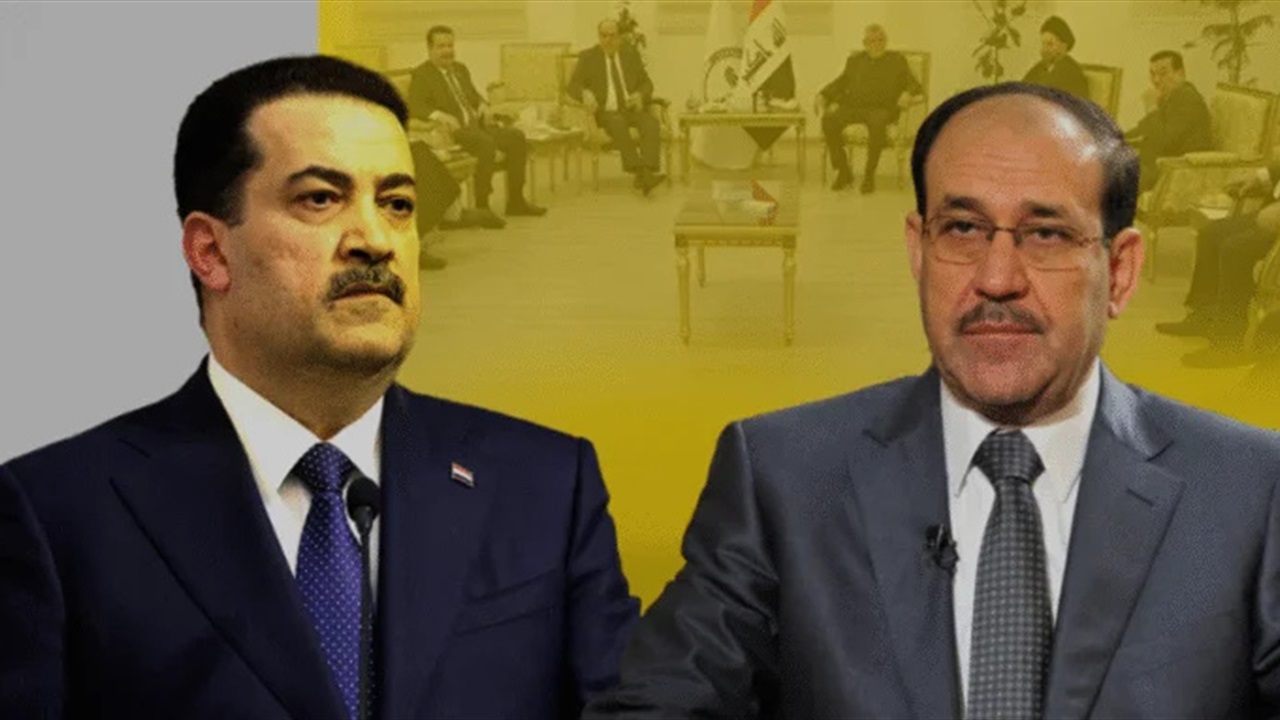
There were no prior indications of the loud political announcement that resonated in the past few hours. This came after a clear political stalemate that had gripped the coordination framework, stalling on two poles: the leader of the State of Law Coalition. Nouri al-Maliki and leader of the Reconstruction and Development Coalition Mohammed Shia Al-Sudani The decision came Sudanese By withdrawing in favor of Maliki As an unexpected surprise, it still needs explanations.
While the postponed coordination framework meeting, described as a “crucial meeting,” was still underway, information leaked to the political scene, primarily through sources, about the withdrawal. Sudanese In favor of Maliki As the sole candidate of the Coordination Framework for the Prime Ministership, a number of members of the State of Law Coalition later confirmed this information by offering congratulations to their leader. This development came after private meetings between Maliki and Sudani at the suggestion of the Coordination Framework itself. The leaders of the Framework found themselves stuck in an awkward position between two main poles at the Framework table. They could not publicly choose one of them and exclude the other for fear of embarrassment, and neither Sudani nor Maliki would back down from his position. Therefore, the Framework chose to throw the ball into the court of the two competing poles, which is tantamount to a self-dissolution of the Coordination Framework Committee that was formed previously and whose responsibility was to interview the candidates, which later settled on 9 candidates.
Suddenly, before the framework meeting concluded, the media was informed of al-Sudani’s concession to al-Maliki. This unexpected concession contradicts the Reconstruction and Development Coalition’s consistent pronouncements and insistence on al-Sudani’s candidacy for a second term. Therefore, every unexpected development requires explanation, especially since this concession and al-Maliki’s nomination come at a time when American rhetoric regarding the demands placed on the next government has intensified.
“The factions’ trust”… Reassurance in exchange for weapons.
Maliki is generally viewed as close to the factions and the official sponsor of the Shiite forces’ unification and coordination framework in particular. Therefore, the initial impression is that Maliki’s nomination completely contradicts the demands of “monopolizing weapons in the hands of the state or dismantling the factions.” However, in reality, at this critical stage, the factions and the Shiite political equation in general have only two options: the first is direct confrontation with US And not taking into account opinions or requirements Washington This is a major gamble, and the economy will be its first casualty before any discussion of other security repercussions. The other option is to submit to American demands regarding the disarmament of militias and the dismantling of armed groups. While the factions might reluctantly accept this option to salvage the political equation, they will then need a prime minister they trust. If the militias relinquish their weapons, retreat, and refrain from participating in the government and ministries, it could give the incoming prime minister a strong opportunity to weaken them. Therefore, they will need a prime minister they trust, and this is the first option for the coordinating framework, which might push them to choose Maliki as prime minister. He is perhaps the only one capable of disarming militias through understanding rather than confrontation, due to the factions’ trust in him.
The economic crisis is known to be one of the most pressing and worrying issues facing the next government. The financial crisis and the decline in oil prices are the primary concerns. Therefore, the next government is viewed as a “crisis government,” not a welfare government. This means that spending must be reduced, fees and taxes imposed, and many expenditures halted, or subsidies reduced for many issues that directly affect citizens’ lives.
Therefore, given that al-Sudani has recently been known to be moving towards imposing fees and taxes, this means that the rejection of his actions will be twofold if he proceeds with further harsh economic decisions. Hence, the coordinating body understands that saving the next government means not keeping al-Sudani, who will be forced to impose more harsh economic measures. However, the same decisions could come from al-Maliki, who was known for his “generous” spending during his government due to high oil prices. Therefore, any taxes or fees he imposes will not be received by the public as “deliberate” decisions attached to the prime minister’s personality, as al-Sudani’s was, but rather as urgent and necessary measures that must be taken. On the other hand, al-Sudani’s concession to al-Maliki is seen as a political maneuver. It seems that al-Sudani wanted to absolve himself of responsibility for any potential political deadlock, but he insists that…Prime Minister’s Office The coalition should not opt for a compromise candidate, a conviction now circulating within the Coordination Framework, which believes the current phase requires a “tried and tested” prime minister, not a newcomer trying their luck. Therefore, while al-Sudani insists on granting the premiership to a candidate with a political bloc, rather than a compromise candidate, and in order to break the deadlock, he decided to concede to al-Maliki. However, this placed the Coordination Framework in opposition to al-Maliki’s long-standing position, as well as the Sadrists’ stance, international opinion, and some partners, particularly certain Sunni forces with a negative view of him, in addition to some factions within the coalition. Iraqi street
It seems that this maneuver aims first to establish the principle that “the premiership belongs to whoever has a political bloc” and to close the door to compromise candidates. After that, if Maliki does not succeed in overcoming these obstacles, the framework will then have to return to Sudani on the grounds that he did what he had to do and conceded, but circumstances did not allow Maliki to reach the position .
alsumaria.tv
