Removing zeros from the Iraqi dinar: A long-awaited economic reform or a risk of inflation?
Removing zeros from the Iraqi dinar: A long-awaited economic reform or a risk of inflation?
2026-08-16
 Alsumaria News–
Economically, the issue of removing zeros from the Iraqi currency has resurfaced, following statements by the Minister of Communications. Mustafa Sand The issuance of a decision regarding changing the currency and removing zeros from it, in a development that has reopened one of the most controversial monetary issues in Iraq Amid economic and public questions about the truth of the decision, the entity that issued it, and the date it will come into effect.
The minister’s statement, which was circulated by local media on August 15, came without clear details regarding the nature of the decision or the authority responsible. Time table To implement it.
Other reports quoted him as saying that the decision to remove zeros and change the currency had been finalized, and that the move could help bring hoarded funds out of the banking system and back into the economic cycle.
However, the paradox that caught the attention of experts is that the government had denied, last July, any official intention to change the currency or remove three zeros from the Iraqi dinar, asserting that the circulating news on this matter was not based on official decisions.
This raises the most important question: if the decision to remove zeros had indeed been made, why hadn’t the government and official monetary and financial authorities announced it clearly? Are we facing a new decision, a reactivation of an old project, or is what was issued merely a decision to proceed with preliminary studies and procedures?
The issue
of removing zeros is not new to the Iraqi economy, as the Central Bank of Iraq had previously prepared a project to restructure the currency and remove three zeros from the dinar, with the aim of addressing the problem of inflation in monetary figures, facilitating accounting and banking operations, and reducing the costs of handling cash.
Documents published on the official website of the Central Bank of Iraq reveal a study titled “Restructuring the Iraqi Currency – The Project to Remove Three Zeros and the Costs of Cash Transactions,” confirming that the project has been officially under consideration for years and is not a recent development.
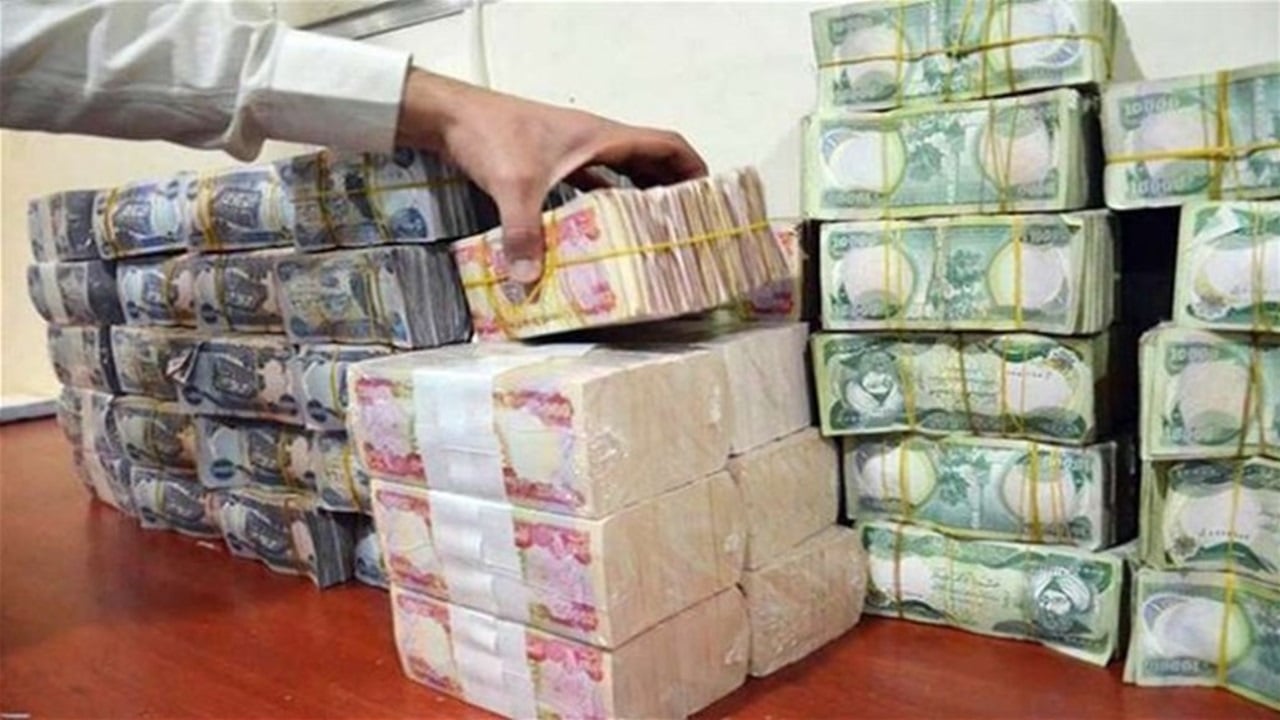
According to previous studies, removing zeros effectively means renaming monetary values, so that, for example, a 1,000-dinar note would become a single dinar of the new currency, while theoretically preserving the real value of savings, prices, and wages if the conversion process is carried out in a balanced and well-considered manner.
Therefore, removing zeros does not automatically mean that citizens will become wealthier or that the dinar will gain greater purchasing power; rather, it is primarily a restructuring of the monetary unit and a simplification of the numbers.
Why hasn’t it been implemented? Iraq What is the status of the project so far?
Economic experts believe that the main obstacle to the project was not only technical, but also related to the economic, monetary, and political conditions that Iraq has experienced in recent years.
The project requires a comprehensive process of replacing the old currency, reorganizing bank accounts, and modernizing the banking system. Electronic systems Accounting standards, preparing banks, government institutions, and the private sector, as well as launching a broad public awareness campaign to prevent manipulation and price gouging during the transitional phase, are all crucial.
The success of the process is also linked to the stability of the economy, monetary policy, and the exchange rate, as removing zeros cannot replace addressing inflation, weak production, or market imbalances.
The Central Bank itself indicates that the issue of currency restructuring and zero removal was part of monetary studies that addressed the problems of dealing with large sums of money and the costs of managing cash, meaning that the matter was considered a long-term project, not a sudden measure. Is it
a final decision, or just a return to the project?
While the Minister of Communications speaks of a decision being issued and the currency change and zero removal issue being settled, the official data published and available from monetary authorities still requires clear clarification as to whether this is a final decision to implement it or a decision to proceed with the project and preparatory procedures.
This clarification is all the more important given previous government statements denying the existence of an official decision in this direction.
Experts believe that such matters cannot tolerate ambiguity, as even the mere circulation of news about a currency change can influence the behavior of citizens, merchants, and investors, opening the door to speculation or the exploitation of public fears to drive up prices or convert savings from one currency to another.
Therefore, any announcement of such a significant step should come from the relevant monetary and financial authorities, and should include clear details about the replacement mechanism, the exchange rate, the dual trading period, and the fate of deposits, loans, salaries, contracts, and prices.
Does removing zeros reduce inflation?
Economically, removing zeros does not, in itself, reduce inflation.
While monetary changes can make figures easier to use, they do not address the underlying causes of rising prices.
If prices are rising due to increased demand, higher import costs, weak domestic production, or imbalanced fiscal policy, changing the currency’s design will not resolve these issues.
For this reason, economists warn against presenting the removal of zeros to the public as a direct solution to the dinar’s devaluation.
If a commodity cost 1,000 dinars before the removal of zeros, and its price becomes one dinar after the currency change, the real value of the commodity does not change simply because the unit of account has been altered.
The same applies to salaries, savings, and debts, unless the change is accompanied by other policies that affect the real value of the currency.
Where do the risks lie?
According to previous economic analyses, the greatest concerns relate to the transitional phase.
Some traders and speculators may exploit the public’s lack of understanding of the conversion mechanism to raise prices or inflate them, especially if there is no strict market oversight.
Furthermore, switching from one currency to another requires meticulous procedures to prevent counterfeiting, money laundering, and tax evasion, in addition to the necessity of establishing a clear timeframe for replacing the old banknotes.
There are also risks related to public confidence. Without a broad official awareness campaign, some citizens might resort to converting their savings into dollars or gold out of fear, which could create additional pressure on the exchange market.
Economists have already warned of the psychological effects and potential market instability of implementing the removal of zeros without adequate economic and social preparation.
And what about hoarded cash?
Supporters of the project raise another point, concerning the large amounts of cash held outside the banking system.
The Minister of Communications…Mustafa Sand The implementation of this step is linked to the possibility of bringing hoarded funds out of the banking system and back into the economic cycle.
Experts believe that changing the currency could present an opportunity to reorganize the money supply, especially if accompanied by clear banking procedures that facilitate easy currency exchange and encourage depositors to deal with banks.
However, the success of this depends on the details of implementation, and changing the currency alone cannot be considered sufficient to bring funds back into the banking sector.
Will the decision lead to the collapse of the dinar?
Specialists reject the direct link between removing zeros and currency collapse, because removing zeros is a mathematical and monetary process that differs from devaluing the currency.
But the real danger arises if the process is carried out in unstable economic conditions, or if it is perceived by the public as a devaluation of the dinar.
On the other hand, implementing it within a comprehensive monetary plan, and with relative stability in prices and the exchange market, could make it a regulatory step that contributes to simplifying transactions and reducing the cost of managing cash.
Studies indicate Central Bank of Iraq The argument that currency inflation burdens calculations, settlements, and digital systems is one of the justifications for the currency restructuring project.
International experience shows that it’s not a magic bullet.
Iraq is not the only country to have discussed removing zeros; various nations have resorted to renaming their currencies after periods of high inflation.
However, international experience demonstrates that the success of the process is not linked to the number of zeros removed, but rather to the accompanying economic policies.
Iran, for example, implemented a monetary reform in 2015 that included removing four zeros from its currency, with a lengthy preparatory and transitional period. Critics of the move warned that removing zeros alone does not restore the currency’s real strength unless the causes of inflation are addressed.
This example presents Iraq with the same question: Is the goal to change the form of the dinar, or to address the factors that determine its real strength?
The citizen is at the heart of the equation.
For the Iraqi citizen, the issue is not about the number of zeros on a banknote, but rather the value of what that note can buy.
The citizen wants to know: Will prices decrease? Will purchasing power increase? Will salaries change? What will happen to savings? Will the dollar remain influential in the market?
Economists emphasize that the answer cannot be reduced to simply removing zeros.
Successful monetary reform requires banking reform and regulation. The financial plan aims to stimulate local production, improve the investment climate, reduce dependence on the oil economy, and bolster confidence in the banking system.
Amidst supporters and opponents, the decision requires transparency.
Ultimately, the project to remove zeros from the Iraqi dinar is not new; it is a matter that the Central Bank of Iraq has officially studied and which has remained under consideration for years, subject to postponement and revisiting.
Between pronouncements and denials, citizens find themselves facing a sensitive monetary issue that requires official information, not speculation.
Experts do not view removing zeros as inherently good or bad; its success or failure depends on timing, economic conditions, implementation mechanisms, market oversight, the independence of monetary policy, and the government and central bank’s ability to protect citizens during the transitional phase.
Thus, the most pressing question is no longer simply: Will Iraq remove zeros from the dinar? It has become: Does Iraq possess the economic and institutional environment necessary to make removing zeros a successful monetary reform, rather than merely a change in the appearance of the numbers?
alsumaria.tv
