Message from Mojtaba Khamenei and the Islamabad negotiations
Message from Mojtaba Khamenei and the Islamabad negotiations
4-10-2026
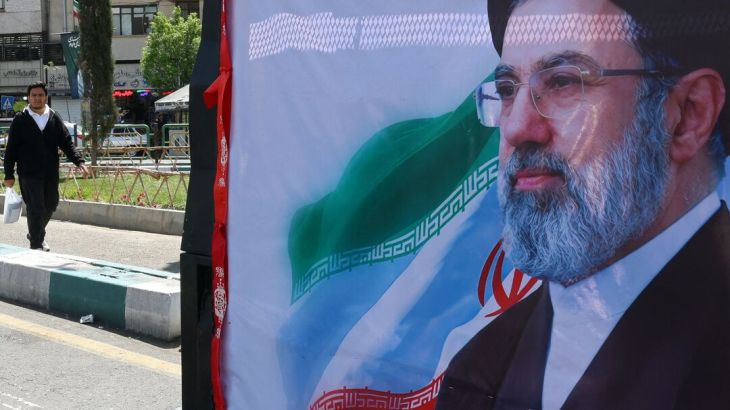 International and regional attention is focused on the Pakistani capital, Islamabad, closely following the first moments of the US-Iranian negotiations after both countries agreed to attend the joint meeting through official intervention and field mediation by Pakistani Prime Minister Shehbaz Sharif, and US President Donald Trump announced his agreement to suspend and halt military operations against Iran in exchange for the full and direct opening of the Strait of Hormuz and the start of negotiations to reach an agreement and a common vision, which received direct approval from Iranian Supreme Leader Mojtaba Khamenei.
Saturday, April 11, 2026, was set as the date for the negotiation session, with all parties in attendance. The American and Iranian proposals were discussed, each addressing a different issue. The American delegation, headed by Vice President J.D. Vance and including Steve Wittkopf and Jared Kushner, presented its preconditions, focusing on dismantling the nuclear program and all related aspects, including halting enrichment activities, surrendering the 440 kg stockpile of 60% enriched uranium, neutralizing ballistic missiles, ceasing arms support for armed factions and militias, and ending interference in the internal affairs of regional states. The Iranian proposal, to be discussed by the Iranian delegation headed by Mohammad Bagher Ghalibaf, Speaker of the Iranian Parliament, and including Foreign Minister Abbas Araqchi and several military and security leaders, included guarantees against any future military action by the United States and Israel, the lifting of sanctions, and the release of frozen assets. In return, Iran would halt its nuclear activities and restore its political and regional standing. The proposal also included provisions for discussing the neutralization of ballistic missiles, which Tehran considers essential for its national security and territorial integrity. I tested it in the last military confrontation, and the issue of dismantling the networks of armed factions and their military structure contradicts the Iranian strategic doctrine based on influence and regional expansion, which is represented in exporting the principle of (Guardianship of the Jurist).
In recent weeks, Iran has adopted the Strait of Hormuz as its primary focus in the military confrontation, considering it a valuable bargaining chip to use against the United States and to influence future negotiations. This is due to its impact on global energy markets, trade, and international interests, as 20% of the world’s oil production passes through it via hundreds of tankers and ships, along with 13% of the basic needs of the world’s nations, including food, goods, and fertilizers. This was emphasized by the new Supreme Leader, Mojtaba Khamenei, in his message to the Iranian people on the evening of April 9, 2016, when he stated, “We will work to move the management of the Strait of Hormuz to a new stage,” and that Iran has become a “superpower.” Iranian officials, regardless of their political orientations and affiliations, have realized that protecting their regime is only possible with a nuclear weapon that serves as a continuous deterrent, especially after the assassination of Supreme Leader Ali Khamenei and the nullification of the fatwa he issued against producing any nuclear weapons, which had previously acted as a barrier to decisions issued by the Iranian parliament.
The US administration followed the Iranian positions and official statements, which led US President Donald Trump to direct the military leadership to keep all its formations and units in the Arabian Gulf region and to be on high alert and to announce that they would not leave their places and locations until a real agreement is reached with Iran.
The decision to stop the fighting is a temporary truce that does not mean a return to another confrontation, but rather a suspension of military operations only, and the possibility of a new escalation of existing field activities, in the event of Iranian intransigence in not opening the Strait of Hormuz and allowing the passage of tankers and ships carrying oil, gas and other basic materials, and not responding to the American conditions that will be put forward by the American negotiating delegation, and knowing the truth of the Iranian positions and the extent of their sincerity, and a field test of the intentions of the Iranian officials.
Both the American and Iranian sides have a genuine desire to stop the fighting, each with its own reasons and goals. President Trump seeks a comprehensive ceasefire and a permanent agreement that will help him face American public opinion, which has begun to suffer from rising fuel prices, and prepare for the US midterm elections in November, in which the Republican Party seeks to confirm its political presence and support for President Trump’s leadership and stop the pressures he is facing due to the high costs in the energy markets, the rise in oil and gas prices and their effects on global markets and major companies. The American administration is keen to avoid prolonging the military confrontation and to ensure the success of negotiations and reaching a comprehensive agreement that determines the future of American-Iranian relations, with President Trump committed to his principles of preventing Iran from continuing its nuclear activities, enriching uranium to high levels and surrendering its stockpile of uranium.
The Iranian position aligned with the American view through the message that (Mojtaba Khamenei) addressed to the Iranians, stating that “negotiations do not mean the end of the war and we will not leave the aggressors unpunished.” He emphasized that Iran is “determined to avenge its late leader and we will not leave those involved unpunished.” To counter any potential outcomes of the initial stages of the negotiations, Supreme Leader Mojtaba issued a veiled warning to the Gulf Cooperation Council (GCC) countries, telling them, “You are witnessing a miracle, so be on the right side and beware of the false promises of the enemies.” This confirms the reality of Iranian positions, which address others with a tone of political arrogance and condescension, disregarding political relations and good neighborliness, and deepening the state of distrust among all parties.
Iran still views the American negotiations with suspicion and distrust, fearing a third deception like the one that preceded the June 2025 confrontation and the recent dialogues that ended with the start of the military confrontation on February 28, 2026. Therefore, it is trying to reassure its people and political factions that going to the negotiations does not mean final acceptance of any agreement except through fundamental points that take into account their rights and the steadfastness of their positions. It is thus seeking to avoid taking full and direct measures to open the Strait of Hormuz, which is still closed and ships and vessels are piling up, except for some tankers that the Iranian authorities want to pass through in an attempt to obtain any gains related to managing the strait and collecting joint financial fees that may be with the American side for opening the strait and facilitating the passage of goods, and adopting this as a first and phase principle for the success of the upcoming negotiations, which will not necessarily be the end of the military confrontation, but rather the beginning of a transitional phase that frames the path of a political and military settlement and achieving the link between regional security and the global economy.
Iranian Studies Unit
rawabetcenter.com
