Kurdistan Presidency: Baghdad is responsible for protecting oil facilities after September 30
Kurdistan Presidency: Baghdad is responsible for protecting oil facilities after September 30
2026-09-21
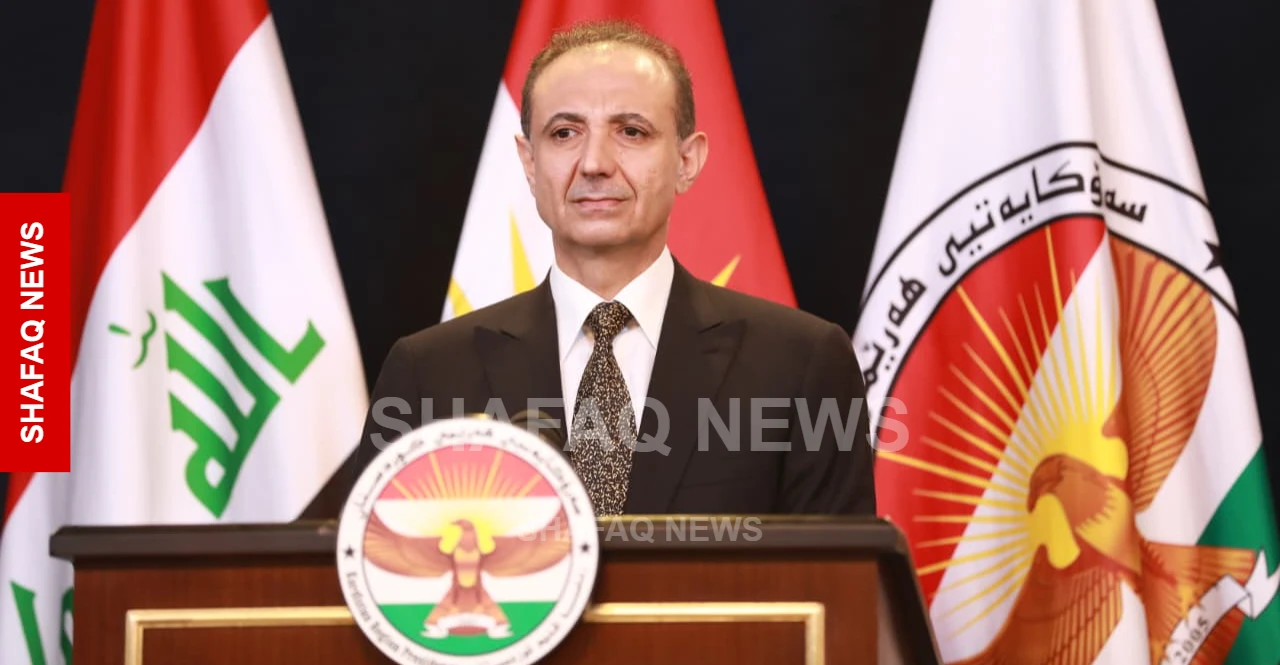 Shafaq News – Erbil
On Monday, the spokesperson for the Kurdistan Region Presidency, Dilshad Shahab, confirmed that the federal government will bear a great responsibility for defending Iraq, including the Kurdistan Region, after September 30, particularly in the airspace, noting that protecting the region’s oil facilities is part of this responsibility.
Shahab said in a press conference, attended by a correspondent from Shafaq News Agency, that the protection of oil facilities by air in the Kurdistan Region comes in accordance with the agreement between the regional government and the federal government, noting that a major part of Iraq’s revenues comes from the region.
He explained that the threats to oil facilities in the region have had a significant and negative impact on the Iraqi economy, stressing that the issue is not only related to the Kurdistan Region, but to the Iraqi economy as a whole.
He added that the President of the Kurdistan Region and the regional government made it clear to the federal government that Kurdistan would support the protection of these oil facilities.
He noted the arrival of federal delegations to the Kurdistan Region and to the oil facilities, indicating that there is an agreement in principle with the federal government regarding the protection of the oil facilities, but he clarified that he does not know the remaining military details.
Regarding military support, Shihab said that the support provided by the coalition forces during the past period came within the agreement with the federal government, and that the date for the end of the coalition forces’ mission will come sooner or later, explaining that there is a strategic agreement between Iraq and the United States, which includes a part related to military matters.
He added that it is possible that in the future the coalition forces will not be present in their current form, but military support is not limited to a military presence on the ground.
He continued: “We heard from senior military leaders that Iraq still needs international support because of the many threats in the region,” noting that unifying the Peshmerga forces was a prerequisite for the coalition forces to continue their support.
Regarding relations between the Kurdistan Democratic Party and the Patriotic Union of Kurdistan, Shihab said that he is not directly involved in this matter, but he believes that, when comparing the current situation to what it was a month ago, there has been an improvement in relations, with an exchange of views and some meetings, as well as a cessation of mutual media attacks.
Regarding the formation of the Kurdistan Regional Government, Shahab indicated that there was a “good atmosphere,” stressing the need to activate the parliament, and considering that the current developments represent “good hope” for the formation of the government.
The September 30th date coincides with the deadlines related to ending the international coalition’s military presence in Iraq.
In September 2024, Iraq and the United States agreed to end the military mission of the US-led international coalition against ISIS in Iraq, as part of a phased plan to move the security relationship between the two countries from the framework of the coalition to a bilateral partnership.
The first phase of the mission ended in September 2025, while forces remained in the Kurdistan Region to support operations against the organization in Syria, with the final phase to be completed by the end of September 2026.
The international coalition was formed in 2014 to assist Iraqi forces in confronting ISIS, which at the time controlled large areas of Iraq and Syria. The mission of the coalition forces later shifted primarily to training, advising, and intelligence support, while Baghdad asserts that its forces are now capable of assuming responsibility for security and pursuing the organization’s cells.
shafaq.com
