Integrity Commission identifies flaw in liquefied gas transport and recommends an alternative strategic pipeline
Integrity Commission identifies flaw in liquefied gas transport and recommends an alternative strategic pipeline
2026-01-22 00:41
 Shafaq News – Baghdad
On Thursday, the Federal Integrity Commission called on the Iraqi Ministry of Oil to adopt emergency plans to ensure the stability of liquefied gas supplies and maintain prices, especially during times of increased demand, at a time when the ministry had previously denied the existence of any crisis in this sector.
The Integrity Commission said in a statement received by Shafaq News Agency that the Prevention Department team conducted visits to the Ministry of Oil and met with the Undersecretary of the Ministry for Gas Affairs, as well as visiting the Pipelines Company and the General Company for Gas Filling and Services, indicating that the delegation stressed the need for the Ministry to resort to providing immediate alternatives by allocating tankers to transport gas products from the southern warehouses to the filling stations and government and private factories in Baghdad and the governorates directly, noting that there is no alternative carrier to deal with crises in the event of any stoppage of gas pipelines.
In a report, a copy of which was sent to the office of the Prime Minister and the Minister of Oil, the Authority pointed to the limited transportation capacity of the Oil Products Distribution Company and the age of its tanker trucks, which leads to its inability to cover all consumption axes and resorting to using tanker trucks to secure the requirements of the factories, even though they are intended to enhance the quantities supplied. It called for finding future plans that include increasing the storage capacity in warehouses and factories to deal with emergencies and increased consumption, especially in cold weather and prolonged power outages.
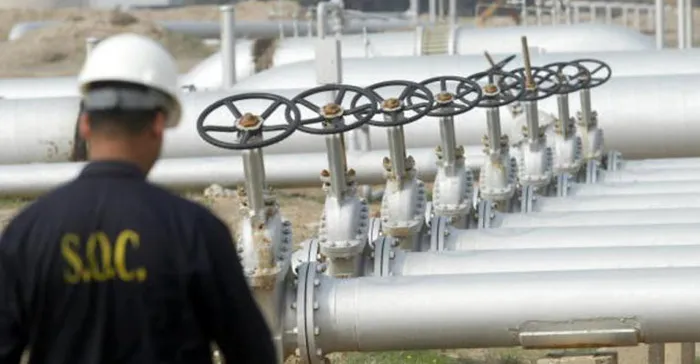
The report recommended studying the possibility of establishing a parallel or strategic alternative pipeline to ensure the continuity of supplies in case the main route is disrupted, indicating that the Oil Pipelines Company carries out the process of transporting liquefied gas from the South Gas Company to Baghdad Governorate via special pipelines extending from the south to the north, and delivering it later to the warehouses and filling plants of the General Company for Gas Filling and Services via the pipeline or tanker trucks, noting the export of gas that is surplus to the need outside of Iraq by ships.
The report addressed the 306 government and private gas filling plants throughout Iraq, including 48 plants in Baghdad, through which more than 1,040,000 gas cylinders were filled by the General Company for Gas Filling and Services for the period from 2/1/2026 to 8/1/2026, while the number of supply agents reached 7,840 agents in Baghdad and the governorates, explaining that sales of liquid gas witnessed a growth of 26% in the years 2024 and 2025.
The report suggested that the Ministry of Oil urge the Oil Products Distribution Company to update its land transport fleet with vehicles of sufficient capacity and numbers to meet the growing demand for future transport and to avoid any disruptions that may occur during the transport of the required quantities. The report also noted that the team observed street vendors hoarding cylinders and obstructing their distribution in order to raise prices and make illicit profits.
Earlier, the Ministry of Oil announced that gas cylinders are readily available in the markets, confirming that there is no crisis in this vital sector.
Some areas of Iraq had previously witnessed a shortage of liquefied gas cylinders, which the ministry denied, saying it was a “fabricated crisis,” stressing that “the situation in the markets is stable and gas is continuously available.”
shafaq.com
