Hours later… Shafaq News outlines scenarios following Trump’s deadline for Iran
Hours later… Shafaq News outlines scenarios following Trump’s deadline for Iran
2026-04-07
 Shafaq News – Baghdad/Tehran
Hours separate us from the deadline set by US President Donald Trump for reaching an agreement with Iran that would lead to the reopening of the Strait of Hormuz, amid an accelerating US-Israeli military escalation, conflicting political moves, and growing fears of an expansion of military operations in the ongoing war between the two sides for 39 days.
Observers believe that the “deadline” policy adopted by Trump, the latest extension of which ends today, Tuesday, at 8:00 PM Eastern Time, and Baghdad time tomorrow night, Wednesday, at 3:00 AM, is an attempt that includes the military, political and psychological aspects together to push Tehran to make concessions.
Gap between Washington and Tehran
In this context, political researcher Suhad Al-Shammari believes that this deadline carries dangerous implications, explaining that “the deadline may open the door to mediations in the coming days, but at the same time it is an indication that the United States is heading towards escalation, and perhaps targeting infrastructure, especially power generation stations.”
Al-Shammari told Shafaq News Agency that the gap between the two sides is deep, given Iran’s insistence on its right to enrich uranium, while Washington seeks to impose strict conditions, noting that the chances of reaching an agreement appear limited in light of the escalating tension.
For its part, the Iranian side rejects this deadline in principle, as Iranian political analyst Saeed Shawardi asserts that “Iran sees this deadline as illogical, because it is based on imposing conditions by force, in exchange for the threat of destroying sources of life, which Tehran considers war crimes.”
Shawardi adds, to Shafaq News Agency, that Iran will not succumb to these pressures, and that its option will remain “defense and retaliation,” noting that the war demonstrated the cohesion of the Iranian interior, contrary to American expectations.
Military and political moves
According to military assessments, the United States has already begun field movements indicating the possibility of carrying out large-scale strikes, including the deployment of strategic bombers and the movement of long-range missiles, in addition to imposing restrictions on aerial photography.
These moves suggest the possibility of a “limited but geographically broad air operation” aimed at weakening Iranian infrastructure without being drawn into a full-scale war.
Despite the escalation, diplomatic efforts are still underway, with Reuters news agency revealing a Pakistani-led initiative that includes a two-stage plan involving an immediate ceasefire, the reopening of the Strait of Hormuz, and then reaching a final agreement within a period of 15 to 20 days.
However, this initiative faces significant obstacles, as the agency quoted an Iranian official as saying that his country refused to reopen the strait in exchange for a temporary truce, reflecting the continued lack of trust between the two sides.
In contrast, regional parties are emphasizing strict conditions for any settlement, with Anwar Gargash, advisor to the President of the United Arab Emirates, stressing the need to guarantee freedom of navigation in the Strait of Hormuz, in addition to controlling Iran’s nuclear and missile programs.
Tehran also expresses concerns that strikes will continue even if an agreement is reached, especially in light of the Israeli escalation.
A different analytical reading
In this regard, political analyst Majashaa Al-Tamimi offers a different interpretation, considering that the Iranian response will not be direct or immediate, but rather gradual and complex.
Al-Tamimi told Shafaq News Agency, “Iran will rely on absorbing pressure through multiple tools, diplomatic, economic and military, while using its allies in the region to raise the cost of confrontation without entering into a full-scale war.”
According to Al-Tamimi, Tehran will seek to maintain a delicate balance between avoiding economic collapse and preventing a major escalation, while keeping the door to negotiation open.
This is also the view of international reports which indicate that the deadline is not only external, as internal American factors play an important role in light of political pressures related to energy prices and the upcoming American elections.
Reports confirm that the US administration is trying to balance showing firmness and avoiding a long war, which makes the decision to escalate or de-escalate also linked to internal considerations.
A deadline amidst the fire
Hours before the deadline expired, developments on the ground were present, as the United States and Israel launched intensive raids on sites inside Iran, targeting vital areas and infrastructure.
According to Iranian media, these strikes resulted in the death and injury of dozens, including victims in Alborz province and the vicinity of the capital Tehran, in addition to targeting civilian facilities and vital installations, including airports and petrochemical complexes.
The strikes also hit the city of Shiraz and military sites in the northwest of the country, while explosions were heard in various parts of Tehran.
Signs of preparation for worse scenarios began to emerge inside Iran, as authorities in the city of Mashhad announced the complete suspension of train traffic, following Israeli warnings of a possible targeting of transport infrastructure.
Tehran has also deployed air defense systems around the capital, a move that experts see as a clear indication of the expectation of new strikes.
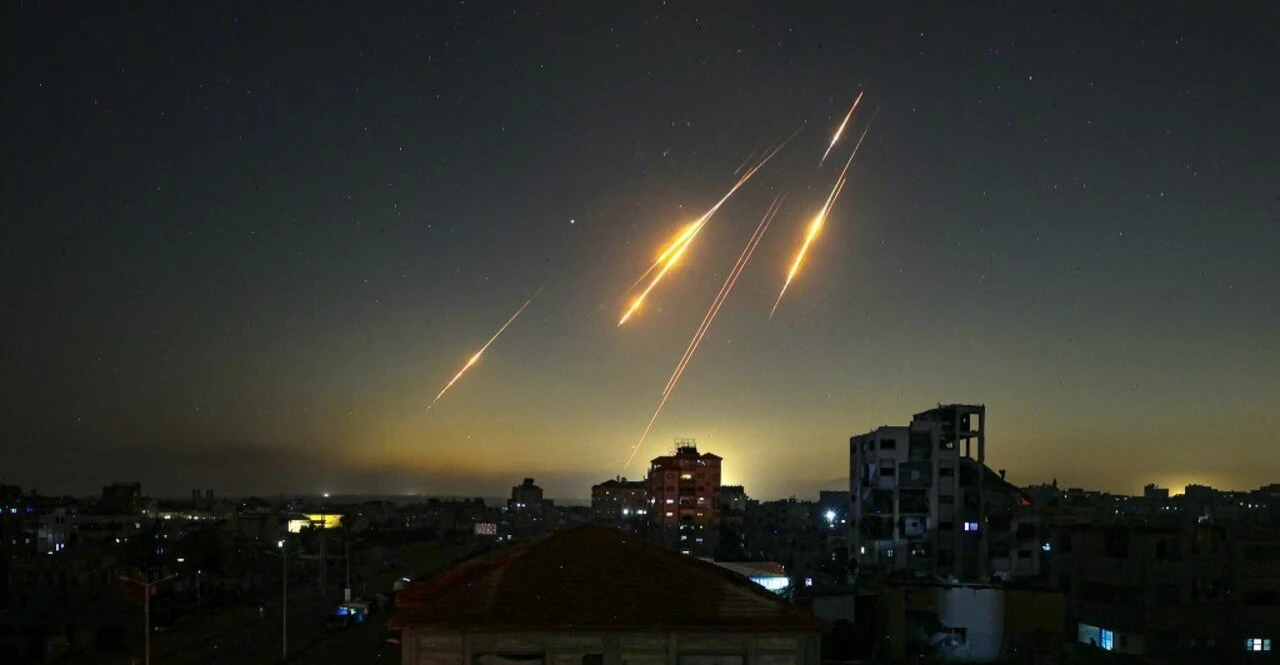
The repercussions of the escalation were not limited to the Iranian interior, as its impact extended to the region, with Israel instructing its residents to use shelters, amid assessments of a possible Iranian response, coinciding with the fall of Iranian missiles on the city of Haifa, which resulted in the death of two people, while reports spoke of targeting that affected the United Arab Emirates, Iraq and Kuwait.
On February 28, Israel and the United States launched a sustained attack on Iran, killing hundreds, including Supreme Leader Ali Khamenei. On March 2, the war expanded regionally to include Lebanon after Hezbollah entered the conflict.
Iran responded to the American-Israeli attack, resulting in widespread repercussions in the countries of the region, including Iraq, Israel, Jordan, Kuwait, Bahrain, Qatar, the UAE and Saudi Arabia.
shafaq.com
