Former Peshmerga Secretary General reveals new details about the withdrawal of coalition forces from Iraq
Former Peshmerga Secretary General reveals new details about the withdrawal of coalition forces from Iraq
2026-09-22
 Shafaq News – Sulaymaniyah
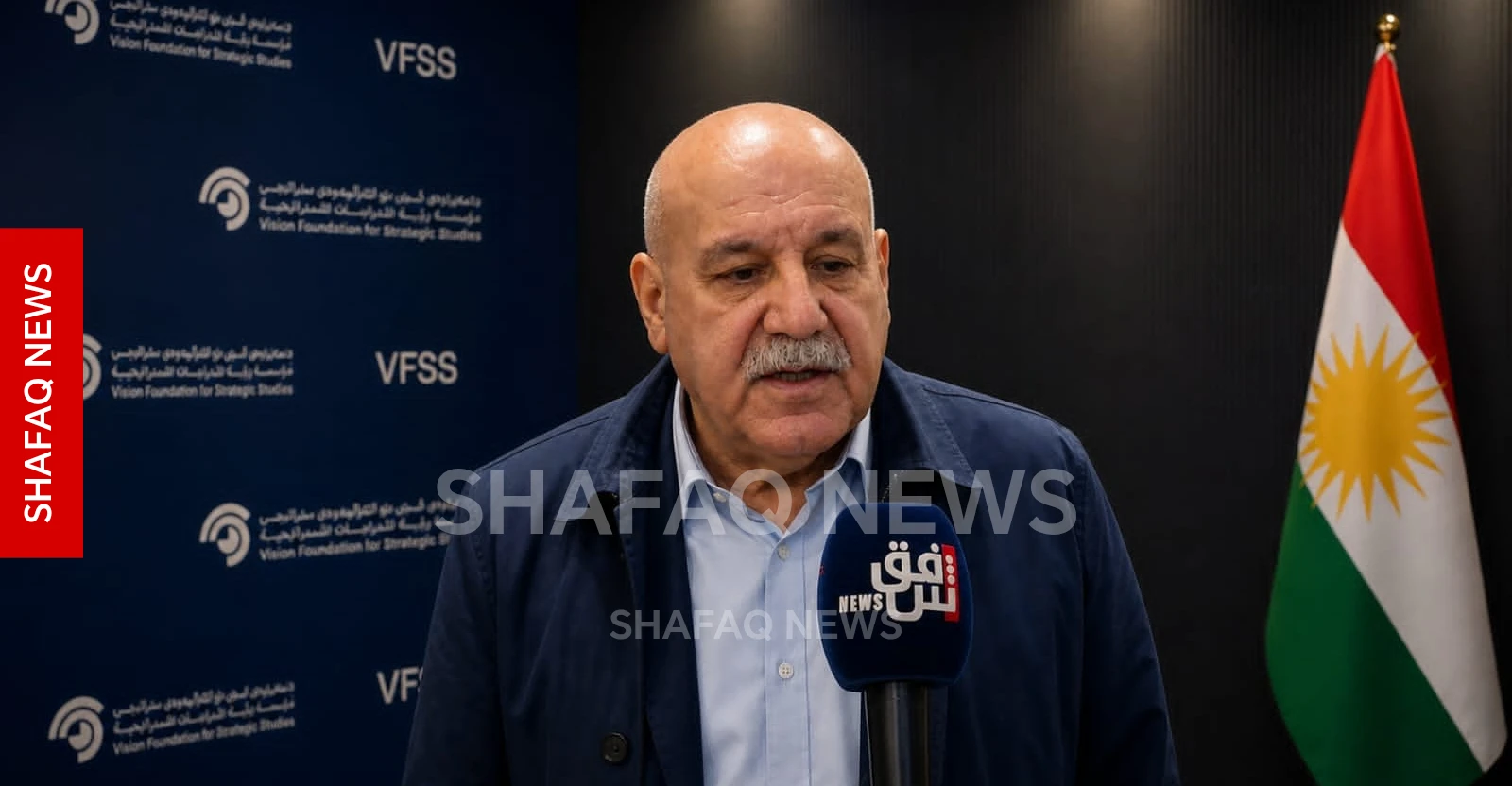
The former Secretary-General of the Ministry of Peshmerga, and security expert, Jabbar Yawar, revealed on Monday evening that the end of this month will witness a complete withdrawal of the international coalition forces, including the American forces, from Iraqi territory, noting that the implementation of the withdrawal process began in two phases since September 2025.
Yawar told Shafaq News Agency that the first phase included the withdrawal of multinational and coalition forces, primarily American forces, from central and southern Iraq, while it was decided that the withdrawal process from the remaining areas would be completed by September 30, 2026.
He explained that the failure to fully implement the withdrawal during the first phase came at the request of the international coalition to keep part of its forces in order to support operations related to Syria, noting that the Syrian situation at the time and the fears of terrorist organizations’ movements towards the region prompted the coalition to keep forces capable of intervening and confronting any potential threat.
He added that the fall of Bashar al-Assad’s regime and the change in power in Syria led to a change in the security equation, explaining that the new leadership in Damascus has relations and alliances with the United States and a number of Western countries, which, according to Washington and the international coalition, has reduced concerns related to borders, crossings and terrorist movements.
Yawar added that these changes made the international coalition see no need to continue the presence of its forces in the Kurdistan region for purposes related to protecting Syria or confronting the dangers that threatened it during the previous stage.
Post-withdrawal existence
Regarding the form of the foreign presence after the end of the coalition’s mission, Yawar explained that the agreement concerns the withdrawal of military forces, but it does not mean the end of the presence of military advisors, indicating that these will continue their work within the diplomatic frameworks in embassies and consulates.
He noted the possibility of one or more advisors at the US Embassy in Baghdad and the US Consulate in Erbil, as well as military advisors from other countries that participated in the coalition, such as France and Germany, working within their countries’ embassies and consulates.
Yawar stressed that the end of the coalition’s military presence does not mean that the United States is abandoning Iraq or the Kurdistan Region, noting that Washington has broad strategic interests in the Middle East and bases and interests in a number of countries in the region, and therefore its presence and influence will continue, but not necessarily in the form of the current military deployment.
Conflict with China and Russia
Yawar believes that one of the main reasons for the continued American interest in the Middle East is related to the oil and energy file, considering that Washington seeks to maintain its influence over energy sources and routes, while at the same time limiting their access to its international competitors, foremost among them China.
He said that, according to his interpretation, the United States is seeking to reduce the flow of oil and energy from Iraq, Saudi Arabia, Iran and Qatar towards China, within the framework of the escalating strategic competition between the two powers.
He added that the importance of the Middle East to the United States is linked, in his view, to two main axes: the first is the ongoing conflict and competition with Russia, and the second is the attempt to limit energy supplies heading towards China, which makes the region retain its strategic importance for Washington even after the end of the coalition forces’ mission in Iraq.
Confining weapons to the state
Regarding the issue of restricting weapons, Yawar said that the government of Prime Minister Ali Faleh al-Zaidi obtained the approval of the Coordination Framework Forces and the State Administration Coalition, as well as the approval of the House of Representatives for the government program that included restricting weapons to the state and withdrawing them from factions outside the framework of official institutions, in addition to combating corruption.
He added that since assuming power, al-Zaydi has been working on these two axes, noting that the Peace Brigades have handed over their weapons to the state and are now operating within the official military system, as are the forces affiliated with Asaib Ahl al-Haq.
He pointed out that this came in parallel with measures in the anti-corruption file, which included the arrest of a number of deputy ministers and members of parliament and the recovery of sums of money to the state treasury.
He indicated that there are a limited number of factions that have not yet surrendered their weapons, but have entered into negotiations with the government, expressing his belief that these factions will reach an agreement with the state to surrender their weapons and join the federal defense system.
Yawar pointed out that these factions will not be able to continue in a state of conflict with the Zaidi government for a long time.
Supporters of al-Zaydi
Regarding al-Zaydi’s ability to implement the disarmament project of the factions, Yawar said that the Prime Minister enjoys popular and political support from the Coordination Framework and the State Administration Coalition, in addition to the support of the President of the Kurdistan Region, Nechirvan Barzani, the regional government, President Masoud Barzani, the President of the Patriotic Union of Kurdistan, Bafel Talabani, and the Kurdish political forces.
He pointed out that al-Zaydi also enjoys international support from major powers in his steps related to restricting weapons, considering that investing in this internal and international cover would help him implement his government program more quickly and at a lower cost.
Yawar warned that the continued threat to American interests in the region by some armed factions could lead to a strong American response, recalling previous attacks that targeted American sites and bases in Iraq and the Kurdistan Region, and the subsequent American strikes that targeted sites and interests belonging to those factions.
He said the United States had previously responded strongly to those attacks, targeting faction positions from Nineveh to Basra, causing losses in personnel, weapons and equipment.
He pointed out that the continued influence of any armed faction on American interests will keep the possibility of a response alive, in conjunction with the Iraqi government’s efforts to end the issue of weapons outside state institutions and integrate armed forces into the official security and defense system.
The head of the parliamentary Reconstruction and Development bloc, Bahaa al-Araji, revealed yesterday, Sunday, that American forces will remain in Iraq to protect the American embassy, diplomatic missions and American interests, noting that this is different from the presence of the international coalition.
Al-Araji told Shafaq News Agency that Iraq agreed with the United States that September 30 would be the date for the withdrawal of the international coalition forces, but some do not distinguish between the presence of the US-led international coalition and its withdrawal, and the American presence designated to protect the embassy, diplomatic missions and American interests.
He explained that there is a difference between the presence of the international coalition led by the Americans and their withdrawal, and the American presence to protect diplomatic missions in Iraq.
September 30, 2026, is the date set for the end of the international coalition’s military presence in Iraq, which some factions use as a basis for linking the future of their weapons to the withdrawal of foreign forces.
The issue of armed factions is one of the most sensitive issues facing the Iraqi government, with the approach of September 30, which the main political forces set as a deadline for restricting weapons to official institutions, before they backtracked and confirmed that there is no specific date for restricting weapons, according to the security advisor, Qasim al-Araji.
shafaq.com
