Expert: The Iraqi banking sector faces tough reform, not collapse.
Expert: The Iraqi banking sector faces tough reform, not collapse.
2026-09-07
 Shafaq News – Baghdad
Economic expert Manar Al-Obaidi said on Monday that the Iraqi banking sector is not going through a phase of collapse, but rather a process of “sorting, reforming and restructuring” that may be harsh, but is necessary to prepare the sector for a phase of greater growth.
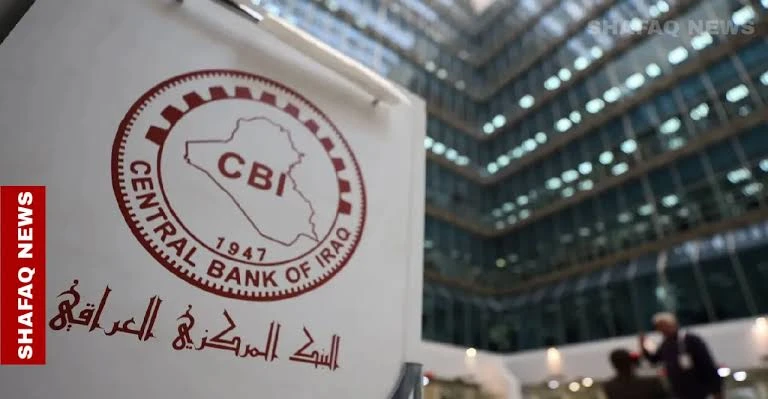
Concerns have recently increased after the Central Bank of Iraq decided to place Al-Taif Islamic Bank under guardianship for 18 months, following the detection of serious violations that affected its financial position. This sparked demonstrations and protests by depositors in front of the bank’s branches in Baghdad and Basra to demand their money, while these events further deepened the erosion of Iraqis’ confidence in banks.
Al-Ubaidi said in a post followed by Shafaq News Agency that his monitoring of the data and indicators of Iraqi banks for more than five years showed that the banking sector is practically divided into three categories, foremost among them the leading banks that were able to develop their systems, management and services and approach international standards, and build real trust with customers and depositors, noting that their number does not exceed about five banks.
He explained that the second category consists of medium-sized banks, some of which have an opportunity to grow and move to the leading category, provided they develop governance, capital, technical systems, risk management and compliance, while others may decline if they do not move at the required speed.
As for the third category, according to Al-Obaidi, it is the small banks, which are the weakest link and the most vulnerable to change during the next stage, suggesting that some of these banks will face limited options including mergers, restructuring, or exiting the market.
He stressed that these developments “are not necessarily an indication of the sector’s collapse,” explaining that banking is no longer limited to licenses, branches, and receiving deposits, but requires real capital, governance, risk management, compliance, advanced technological infrastructure, the ability to protect depositors’ funds, and dealing with a financial system more connected to international markets.
He pointed out that the crises facing some banks may affect public confidence in the short term, but the essence of what is happening is “a sorting, reforming and reshaping process of the Iraqi banking market.”
He added that some institutions “will not be able to continue in the current form,” but the banking sector itself, in his opinion, is about to enter a major growth phase driven by the increasing need of the Iraqi economy for financial services.
Al-Obaidi pointed out that the trade, import, payments, transfers, corporate services, liquidity management, credit, guarantees and digital services sectors all need a more efficient and developed banking sector, stressing that the next stage will witness a shift in confidence from weaker banks to stronger ones, and from traditional services to digital ones.
He concluded by saying that Iraq will still need government, commercial and Islamic banks, “but not necessarily all the banks that exist today in the same form, size and model,” stressing that the real question for the next stage is “which banks will be able to survive and gain the trust of the market?”
shafaq.com
