Exclusive: The framework is heading towards the religious authority regarding the formation of the government, and the latter “remains silent”.
Exclusive: The framework is heading towards the religious authority regarding the formation of the government, and the latter “remains silent”.
2026-01-08 09:16
 Shafaq News – Baghdad
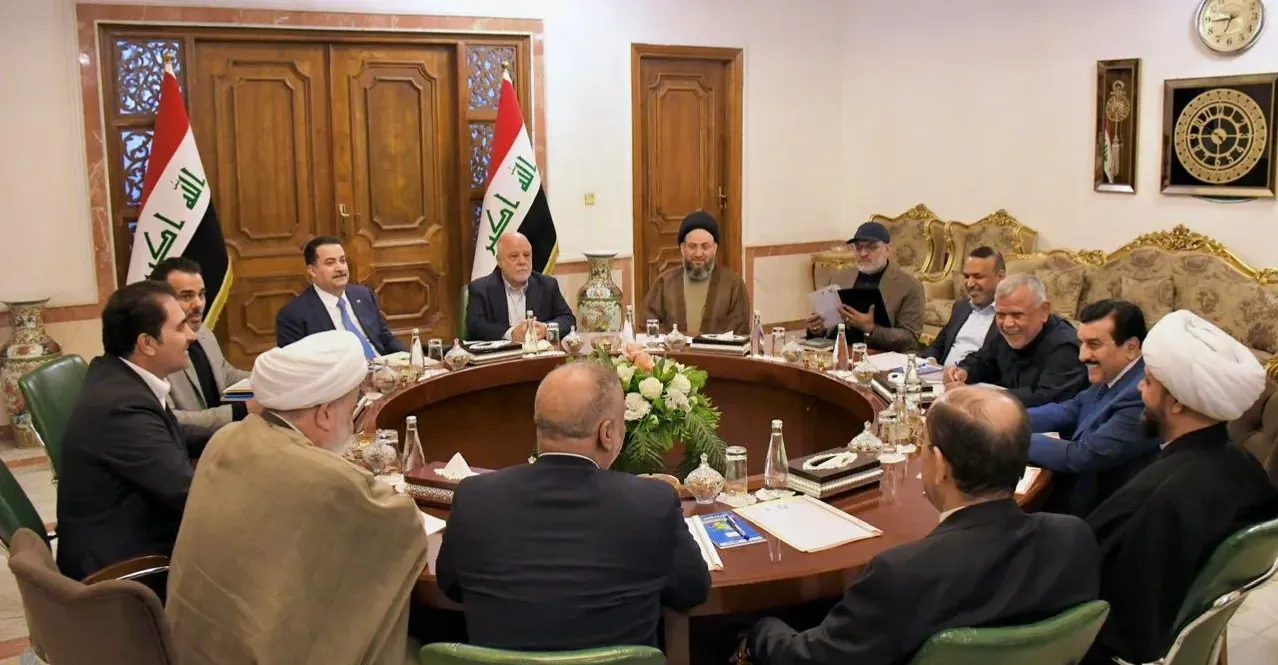
An informed source revealed on Thursday that leaders within the coordination framework had directed inquiries to the supreme religious authority in Najaf about a month ago regarding the process of forming the government and the names of potential candidates for its leadership, without receiving a response so far.
The source told Shafaq News Agency that “some leaders of the Coordination Framework, with the launch of government formation talks three weeks ago, and in light of the circulation of names of bloc leaders and former prime ministers as candidates for the position, contacted the religious authority in Najaf by sending inquiries related to the candidates.”
He added that “the religious authority has not yet responded, and the possibility of not responding remains, in line with an approach it has followed for years based on not interfering in political affairs and not receiving political figures.”
The coordination framework is experiencing internal disagreements regarding the candidates for the premiership, and recent discussions have focused on a shortlist that includes the head of the State of Law Coalition, Nouri al-Maliki, the outgoing Prime Minister, Mohammed Shia al-Sudani, and the head of the Victory Coalition, Haider al-Abadi, as the most prominent, along with the head of the intelligence service, Hamid al-Shatri, and the head of the Accountability and Justice Commission, Basim al-Badri.
Multiple sources did not rule out the possibility that the framework would put forward a compromise candidate – whose identity has not yet been announced – to head the new government.
The Marja’iyya’s decision not to receive politicians, which has been in place since 2015, is linked to a protest stance against the ruling class’s failure to combat corruption and improve services, while avoiding granting any meetings that could be interpreted as political endorsement of any party.
The Marja’iyya’s tightening of its grip on reducing its meetings with politicians came in the context of the 2015 wave of protests against corruption and deteriorating services, when it called for serious reforms and accountability for those obstructing them, before later leaning towards a policy of not receiving officials, while maintaining limited meetings with representatives of the United Nations as an international channel.
shafaq.com
