Exclusive: Iraq after September 30: A partnership independent of Iran and the possibility of an American return
Exclusive: Iraq after September 30: A partnership independent of Iran and the possibility of an American return
2026-09-20
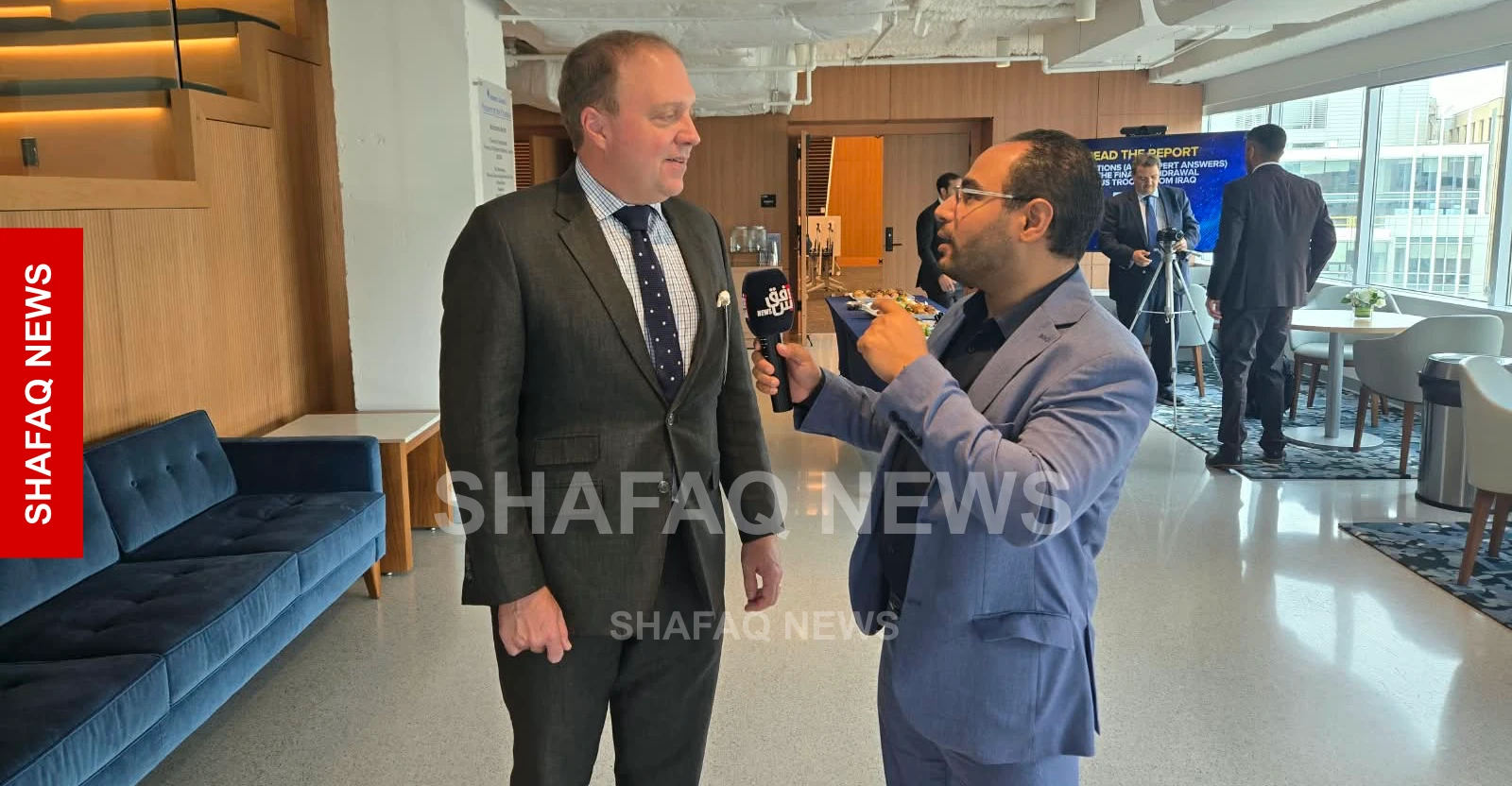 Shafaq News – Washington/ Mustafa Hashim
Andrew Tabler, a researcher at the Washington Institute and a former official at the US National Security Council, confirmed on Sunday that the future of relations between Baghdad and Washington is heading towards establishing a direct strategic and bilateral relationship, stressing that Iraq’s stability and its ability to control its territory will be a key factor in the continuation of this partnership.
Tabler told Shafaq News Agency in an exclusive interview that the United States “needs a strategic relationship with Iraq,” explaining that the challenge is related to the Iraqi government’s ability to achieve stability and work with Washington to curb Iranian influence, keep ISIS weak, and achieve common interests.
He added that the existence of an Iraqi government that does not pursue these interests, whether in Baghdad or Washington, could lead to a deterioration in relations, but he believes that the relationship “will remain strong for the time being.”
Between the neighbor and regional powers
Regarding the possibility that Iraq’s economic relations with Iran, Turkey, Russia and China will become warmer after the American withdrawal, Tabler said that Iraq is “a country surrounded by the world,” and it is natural for it to build strong relationships with everyone.
But he noted that Washington’s most sensitive concerns are related to Iran and the rise of Islamic extremism such as ISIS, warning that Iraq getting too close to Iran would put it in “future trouble with Washington,” and expressing his hope that the Iraqi government would continue to balance these interests.
Kurdistan after the withdrawal
Regarding the impact of the American withdrawal on the Kurdistan Region, Tabler said that things “will become more difficult” given that the region is a very close partner of the United States, but he stressed at the same time that the Kurdish forces are among the best trained in Iraq.
The US official called on the Iraqi government to view these forces as a “strong and essential ally” in combating extremism and keeping Iranian influence at bay.
Oil and pipeline security
Regarding the flow of Iraqi oil, particularly with its growing role as an alternative route for exporting Gulf oil via pipelines, Tabler saw pipelines as a way to bypass the Strait of Hormuz, but this requires strong security arrangements.
He said that “armed militias cannot spread and control the joints of the state and expect that no acts of sabotage will occur, and that no one will invest in these projects unless security is strong and stable,” considering that achieving this seems difficult in light of the factions’ unwillingness to disarm, according to his assessment.
Disarmament and a radical solution
Regarding the solution, Tabler stressed the need to find an Iraqi leadership that would put in place a radical solution to the problem of weapons outside the control of the state, and not just a temporary settlement.
He explained that temporarily halting attacks while building infrastructure such as pipelines does not prevent the possibility of them being targeted in the future, or the emergence of other groups, calling for all weapons to be placed under the control of a unified government, or for strong, local security forces that represent Iraq’s diversity to be maintained to ensure stability.
Return of US troops
Regarding the possibility of US forces returning to Iraq if the security situation deteriorates in the future, Tabler said that it is “possible,” but he expressed doubt that it would happen in the short or long term.
Regarding the ability of Iraqi forces to maintain security on their own, he said that this is possible if coordination and training with the United States continues after the withdrawal, warning that ignoring this or internal political disputes could jeopardize the security situation.
After the international coalition
Regarding the future of the security partnership between Iraq and the United States after the end of the international coalition’s mission, Tabler suggested “a direct bilateral relationship between the two countries.”
He added that the most important question is the impact of the end of Operation Inherent Resolve on the United States’ ability to monitor and keep ISIS weak, noting that Kurdish forces fought alongside the United States in the Kurdistan Region and northern Syria throughout the campaign against the organization.
He questioned what formula Washington would adopt in the future to work with Kurdish forces after the end of the coalition’s mission.
Regarding the possibility of American forces remaining at the embassy or consulate, Tabler concluded by saying that some forces would remain to protect the embassy and consulate, considering this a normal matter, but he indicated that the large numbers that were present during and after the war would withdraw completely.
shafaq.com
