Exclusive: Behind the scenes of Trump’s closed-door negotiations with Iran: Escalation is part of the game
Exclusive: Behind the scenes of Trump’s closed-door negotiations with Iran: Escalation is part of the game
2026-06-14
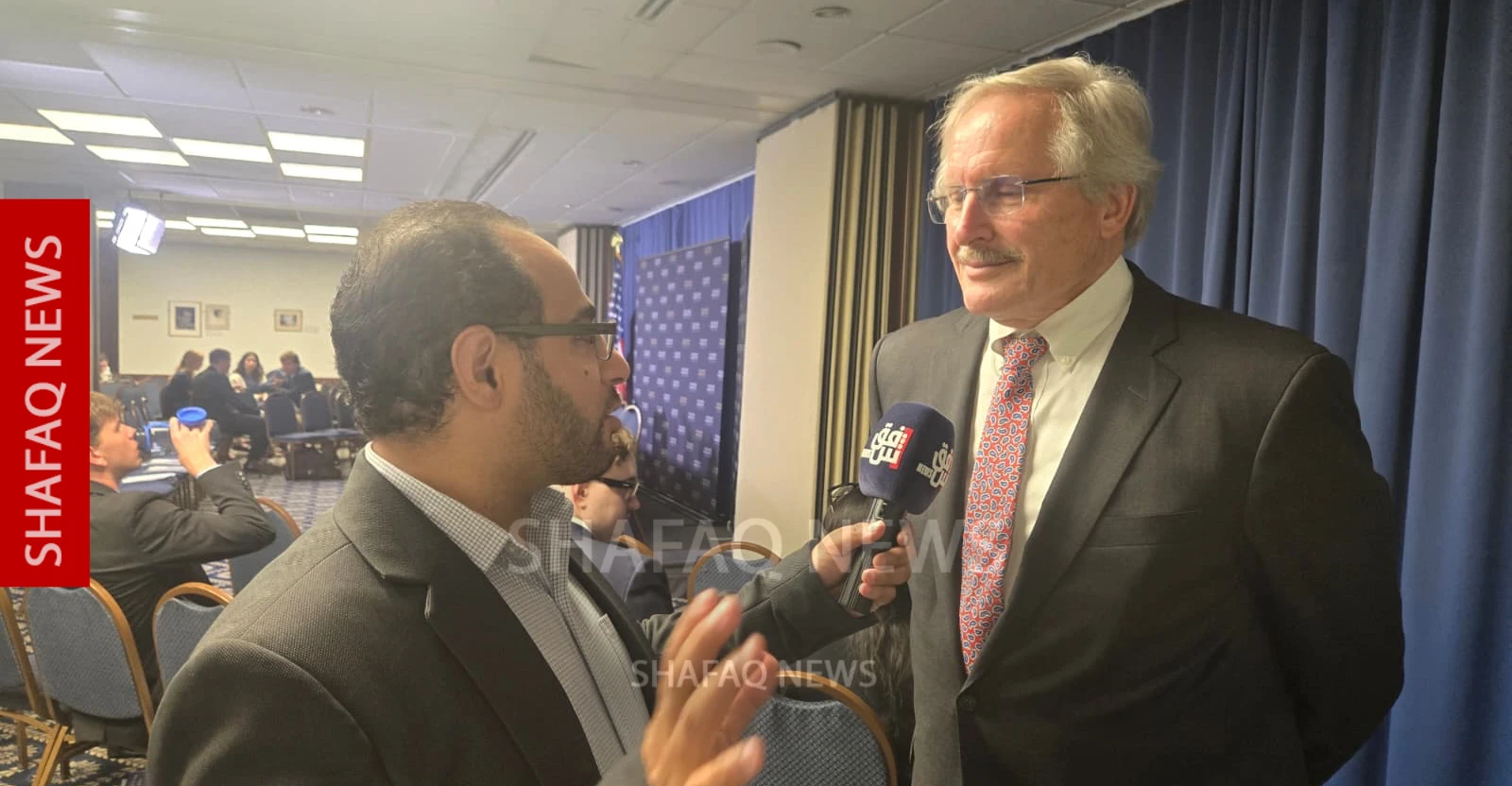 Shafaq News – Washington/ Mustafa Hashim
Former US Ambassador to Tajikistan, Robert Kikuta, revealed on Sunday that there are unannounced negotiation tracks between the United States and Iran taking place away from the mutual media statements, considering that what appears to the public does not necessarily reflect everything that is going on behind the scenes.
Kikuta, who previously held diplomatic posts in Baghdad, Kabul and Sana’a, said in an exclusive interview with Shafaq News Agency that US President Donald Trump is “currently engaged in a negotiating process, and there are procedures and measures being taken by both sides to help move the negotiations forward.”
He added that Iran and the United States are each trying, in their own way, to shape the diplomatic landscape to serve their interests, noting that the apparent discrepancy in Trump’s positions between talking about reaching an agreement soon and threatening escalation “is part of the nature of complex negotiations.”
Kikuta explained that negotiations need time, but at the same time they face pressures related to urgent international issues that require quick solutions, noting that what the public sees in public does not always match what happens in closed meetings.
He explained that “the negotiations have a public aspect and another that takes place behind closed doors, and both tracks work in parallel to reach an agreement,” adding that this explains part of the apparent contradiction in the political discourse during the negotiation stages.
Speaking about the concept of diplomacy, the former US ambassador said that “diplomacy does not mean kindness, but rather working to promote the interests of the state through dealing with other countries,” considering that Trump’s desire to achieve quick results is understandable and consistent with the aspirations of a large part of the American public opinion.
Kikuta declined to delve into Trump’s domestic motivations or the influence of political and economic considerations on him, stressing that he is no longer part of the current US administration and does not wish to speculate on the president’s intentions or speak on behalf of the government.
Two essential conditions
Regarding the future of any potential agreement between Washington and Tehran, Kikuta identified two key issues that he believes form the basis of stability in the region.
He explained that the first issue concerns nuclear non-proliferation, stressing that Iran possessing a nuclear weapon is “unacceptable” to the United States and a number of other countries.
He added that Iran’s repeated talk of fatwas prohibiting nuclear weapons does not completely dispel concerns, given the continued indications that lead the international community to believe that Tehran is still seeking to retain this option.
The second issue concerns the freedom of maritime navigation and restoring the smooth flow of traffic in the Gulf, indicating that the Gulf represents an international waterway no less important than the Bab al-Mandab Strait, the Strait of Malacca, or the Turkish and Danish straits.
He stressed that freedom of navigation in the Gulf is essential for the continued flow of oil, gas, chemicals, fertilizers and commercial goods, which makes the stability of this maritime corridor an international priority.
Arab and Gulf countries
In concluding his remarks to Shafaq News Agency, Kikuta pointed out that the media focus is often on Iran, while the impact of the crisis on the Arab Gulf states is ignored.
He explained that there are six Arab countries that are directly affected by any disruption to navigation or regional security, given the impact this has on their economies and trade.
When asked whether those countries were preparing to take precautionary measures in the event of a new confrontation, Kikuta declined to comment, noting that he had not visited those countries recently and did not have sufficient data to assess their current preparedness.
Washington and Tehran are expected to sign a preliminary agreement later today to reduce regional tensions and secure waterways, following a wave of maritime tensions that erupted in late February and resulted in severe disruptions to shipping in the Strait of Hormuz, which hampered global energy supply chains.
Until recently, an Iranian official told Reuters that Tehran had agreed not to possess nuclear weapons, according to the memorandum of understanding it was preparing to sign with the United States.
According to Reuters, talks are underway between Washington and Tehran regarding a mechanism to reduce the stockpile of enriched uranium within sixty days of the signing of the anticipated agreement between the two sides, which also includes reducing regional escalation and securing waterways, following a wave of maritime tensions that resulted in severe disruptions to shipping in the Strait of Hormuz, causing disruptions to global energy supply chains.
shafaq.com
