Collaborated with Assad and is internationally sanctioned.. Syria hands over the printing of its new currency to a Russian company.
Collaborated with Assad and is internationally sanctioned.. Syria hands over the printing of its new currency to a Russian company.
2025-08-23 03:53
 Shafaq News – Damascus
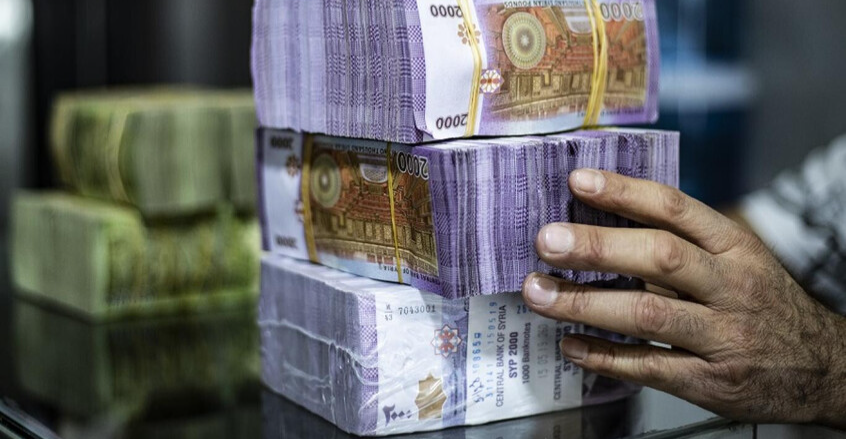
Syria is preparing to issue new banknotes on December 8, following a decision to remove two zeros from the currency. This move aims to restore confidence in the lira and enhance monetary stability.
The Governor of the Central Bank of Syria, Abdul Qader Hasriyya, stated in a post on LinkedIn that “changing the currency represents a fundamental pillar in the path of economic reform,” noting that “the new lira will be a symbol of freedom and a key to stability.”
He explained that “removing the two zeros will help the economy and boost citizens’ confidence,” noting that “the lira has improved by 35% since the fall of the former regime, as a result of economic reforms, declining inflation rates, and the lifting of sanctions on the banking sector.”
He pointed out that “the Central Bank seeks to join the SWIFT financial system and re-engage with the international banking system,” stressing that “restructuring banks and granting licenses to local and foreign banks will form the basis for attracting investment.”
He also noted that the design of the new currency will reflect Syrians’ aspirations for a more stable economy.
According to Reuters, the Syrian monetary authorities will launch an awareness campaign before launching the new currency on December 8, coinciding with the first anniversary of the fall of Bashar al-Assad’s regime. Dual circulation of the two currencies will continue until December 2026.
The agency explained that the current 10,000 lira banknote will become 100 lira in the new format.
In this context, a responsible source at the Central Bank stated, “The Syrian government signed a contract with the Russian company Goznak to print the new banknotes during an official Syrian delegation’s visit to Moscow in late July .”
Conflict of opinions
In contrast, economic expert Karim Al-Asaad believes that “the issuance of the new currency represents a historic step that will restore the prestige of the Syrian pound.”
Al-Asaad added, during his interview with Shafaq News Agency, that “the recent improvement in the exchange rate and the anticipated integration with the global banking system via SWIFT open the door to a phase of true monetary stability.”
Meanwhile, political economy researcher Hani Diab told the agency that “this step is more formal than substantive,” explaining that “removing the two zeros does not change the difficult economic reality.”
He warned that cooperation with a sanctioned Russian company could raise doubts about the new currency and hinder Syria’s return to global financial markets.
Who is Goznak?
Goznak is a Russian state institution founded in 1818 and transformed into an independent company in 1919. It specializes in printing money, government bonds, stamps, passports, and checks.
In 2008, it was classified as a strategic institution, and then became a public joint-stock company in 2014. The company deals with a number of countries around the world in the field of currency issuance, giving it a prominent international standing.
However, in 2022, the European Union imposed sanctions on the company for allegedly undermining Ukraine’s sovereignty by printing passports and documents in the occupied territories.
It has also been placed on sanctions lists by Britain, Switzerland, and the Netherlands. In June 2024, the US Treasury Department blacklisted Goznak, accusing it of supporting the Russian Federal Security Bureau and participating in the printing of counterfeit Libyan currency worth more than $1 billion, exacerbating Libya’s economic crisis.
Goznak’s cooperation was not limited to these issues. It had previously dealt with the former Syrian regime. In 2014, it printed hundreds of millions of Syrian 1,000-lira banknotes, with a total value of approximately 60 trillion Syrian pounds, at a printing cost of approximately $6 million.
shafaq.com
