Choosing the “powerful one”… Is Iran heading towards extremism or openness to the world?
Choosing the “powerful one”… Is Iran heading towards extremism or openness to the world?
3-25-2026
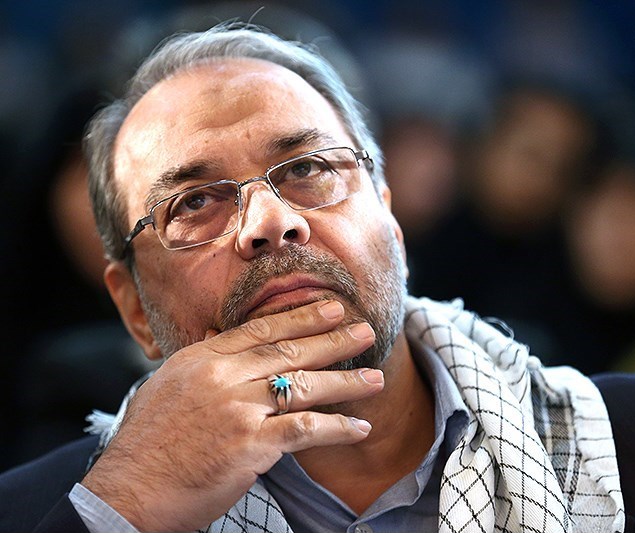 The appointment of Mohammad Baqer Zolghadr as Secretary of Iran’s Supreme National Security Council comes amidst escalating tensions between the US, Israel, and Iran, including attacks targeting Revolutionary Guard bases, facilities, and leadership. This coincides with Supreme Leader Mojtaba Khamenei’s initial approval of direct negotiations to find political solutions leading to an agreement on the future relationship with the United States, the dismantling of Iran’s nuclear program, the cessation of ballistic missile development, and the overall situation in the Strait of Hormuz, including the establishment of an international body to manage it.
The significance of Zolghadr’s political and security post lies in its direct connection to political and intelligence decision-making centers and key offices linked to the Supreme Leader. This appointment is particularly noteworthy as it places responsibility on someone with extensive security and military experience in managing strategic files related to Iran’s national security and its ideological and political project of expansion and influence. Furthermore, it underscores the Iranian leadership’s need for a figure capable of resuming political leadership and filling the void left by the assassination of Ali Larijani by Israeli intelligence on March 18, 2016. Larijani’s death
was a significant loss, as he played a prominent role within the Iranian leadership structure.
When a military security figure assumes the responsibility of overseeing the Supreme National Security Council, it signifies their undertaking of the fundamental tasks that protect the regime. These tasks include formulating general national security strategies and defense policy, maintaining coordination with all military departments and institutions, and defining the frameworks for managing files related to the nuclear program and regional and international relations.
The selection of Mohammad Baqer Zolghadr reflects a realistic view of the Iranian regime’s inclination to rely on the security approach in managing the state and implementing its strategic policies at a critical juncture in Iranian political history, a time when the country is facing a broad Israeli-American military confrontation.
Zulfiqar was born in Fars, southern Iran in 1954. He worked before the assassination and special operations committees that were called the “Security Fundamentalist Group.” He assassinated one of the Iranian advisors in Ahvaz during the reign of the Shah of Iran. He worked in the revolutionary committees and joined the Iranian Revolutionary Guard during the Iran-Iraq War. He then took over the responsibility of training in the Guard formations and played his role as an assistant for mobilization affairs in the General Staff of the Armed Forces. He ended up as the deputy commander-in-chief of the Revolutionary Guard. He is seen as a leading military and security figure with extensive experience and as one of the participants in the formation of the political and security pyramid of Iran since 1979.
The appointment of Mohammad Baqer Zolqadr as head of the Iranian security establishment represents the dominance of the Revolutionary Guard’s security influence over Iran’s general policy, the future of its regime, and its survival. It also underscores the regime’s commitment to implementing the foundations and pillars of the Iranian project in the Middle East, which have been key features of Iran’s relations with its regional and Arab allies for decades. Zolqadr will also play a crucial role in maintaining the momentum of cooperation with all Iranian security agencies, which are characterized by multiple decision-making centers. This includes unifying the powers of the Quds Force, the Ministry of Intelligence, the Revolutionary Guard’s security apparatus, and police intelligence, preventing any conflict or divergence among them during this critical period as Iran confronts American and Israeli air and missile strikes. Furthermore, he will be responsible for expanding field security efforts to uncover internal cells and security networks operating on behalf of Washington and Tel Aviv, which were influential during the June 2015 confrontation.
By appointing a new head of the National Security Council, the Iranian regime is attempting to demonstrate its continued cohesion in the face of direct deterrence against the United States and Israel, and its high level of preparedness despite significant losses to its military and security systems at all levels. Its priorities include the assassination of Supreme Leader Ali Khamenei and other high-ranking political and security officials.
Many questions arise following the appointment of a new Iranian security official to succeed Ali Larijani. Will there be genuine negotiations, a future agreement, and clear foundations for the future of the Iranian regime, including how the state will be governed and how to deal with any new leadership? This is especially pertinent given the presence of security leaders known for their adherence to a political and intelligence doctrine with strategic dimensions that reflects the true nature of Iran’s regional role. Furthermore, will there be a degree of political equilibrium in light of the American pressure exerted on the Iranian leadership after the military confrontation that has now lasted three weeks?
Military leaders in the Quds Force and the Iranian Revolutionary Guard Corps view negotiating with the administration of President Donald Trump as a sign of defeat and weakness. Any concessions made without leverage or parallel means in the bilateral dialogue may not lead to fair settlements but rather to further political pressure, inflicting significant losses on the Iranian regime with strategic implications at the regional level.
rawabetcenter.com
