CENTCOM announces the arrival of the amphibious assault ship “Tripoli” in the region.
CENTCOM announces the arrival of the amphibious assault ship “Tripoli” in the region.
2026-03-28 08:19
 Shafaq News – Washington
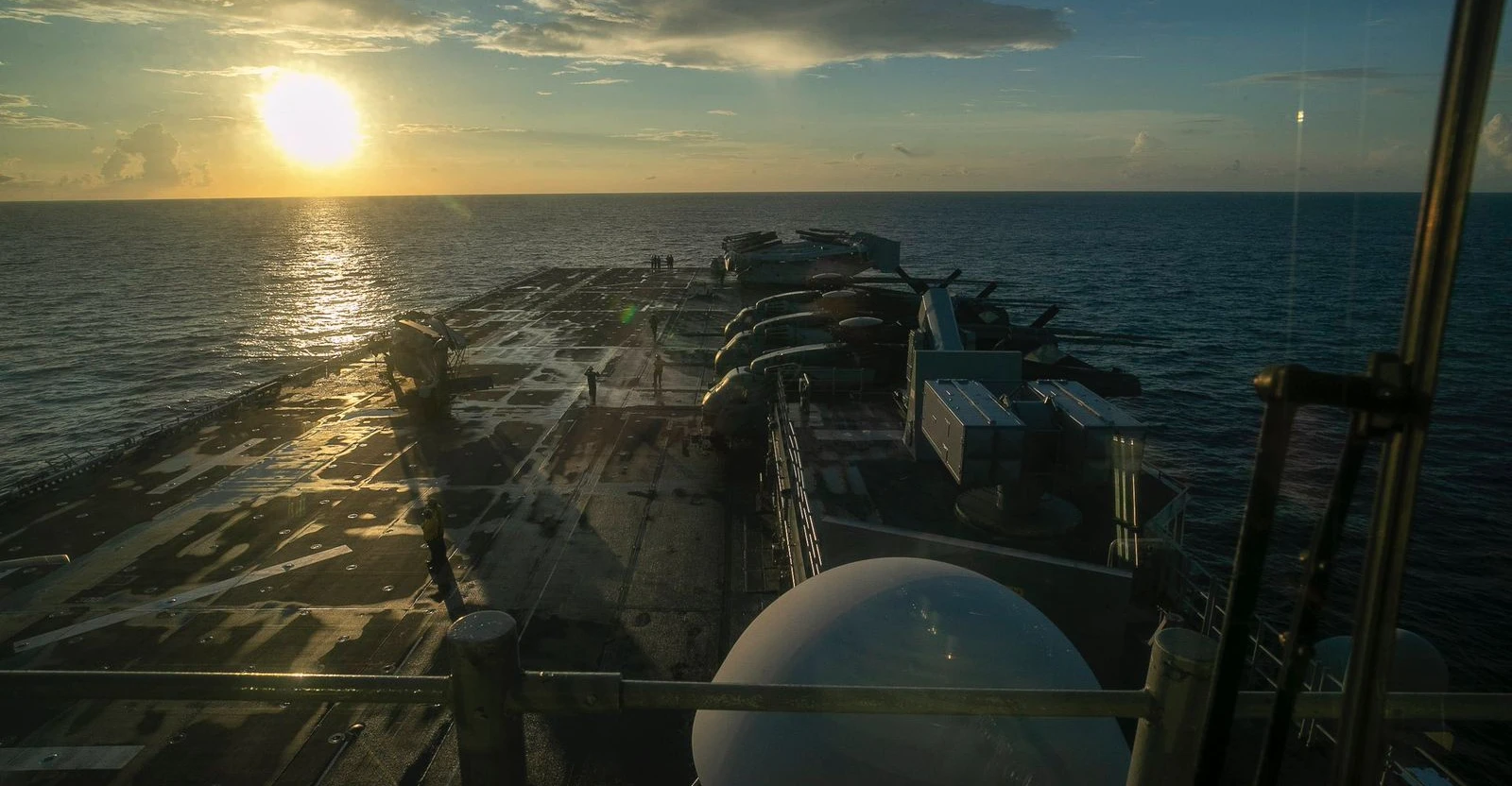
The US Central Command (CENTCOM) announced on Saturday that the amphibious assault ship USS Tripoli, carrying approximately 3,500 sailors and marines, had arrived in the command’s area of responsibility.
CENTCOM stated in a statement received by Shafaq News Agency that “US sailors and marines aboard the USS Tripoli (LHA 7) arrived in the US Central Command area of responsibility on March 27.”
According to the statement, “The America-class amphibious assault ship serves as the command ship for the Tripoli Amphibious Ready Group/31st Marine Expeditionary Unit, which consists of approximately 3,500 sailors and marines, as well as transport aircraft, attack fighters, and amphibious and tactical assault assets.”
CENTCOM is the main combatant command overseeing US operations against Iran. It is one of 11 unified combatant commands under the US Department of War (the Pentagon) and is considered one of the most important and busiest commands due to its geographical location.
Earlier today, the US Central Command (CENTCOM) announced that the era of the Iranian navy threatening global shipping in territorial waters “has ended.”
This comes a day after Iranian local media announced the death of Behnam Rezaei, deputy head of naval intelligence in the Revolutionary Guard, whom Israel said was “responsible” for the operation to close the Strait of Hormuz.
Yesterday, US President Donald Trump said he had told Iran that it must allow ships to pass through the Strait of Hormuz.
Trump stated during an investment forum in Miami, Florida, on Friday that “Iran is negotiating with us and must open the Strait of Hormuz.”
Even today, reports indicate that the near-total halt of shipping traffic through the Strait of Hormuz has continued since the outbreak of war with Iran about a month ago, disrupting the flow of energy supplies from the Gulf states through the vital shipping lane, as ships face additional risks with Iran imposing restrictions on passage and targeting tankers attempting to pass without prior coordination.
The Strait of Hormuz is a key passage for global oil and liquefied natural gas exports, making any changes to transit mechanisms a direct impact on energy markets.
The United States and Israel launched a sustained attack on Iran on February 28, killing hundreds, including Supreme Leader Ali Khamenei. On March 2, the war expanded regionally to include Lebanon after Hezbollah entered the conflict.
Iran responded to the American-Israeli attack, resulting in widespread repercussions in the countries of the region, including Iraq, Israel, Jordan, Kuwait, Bahrain, Qatar, the UAE and Saudi Arabia.
shafaq.com
