Baghdad teeters between East and West… Who will seize Iraq’s “lost treasure”?
Baghdad teeters between East and West… Who will seize Iraq’s “lost treasure”?
2025-04-02 03:32
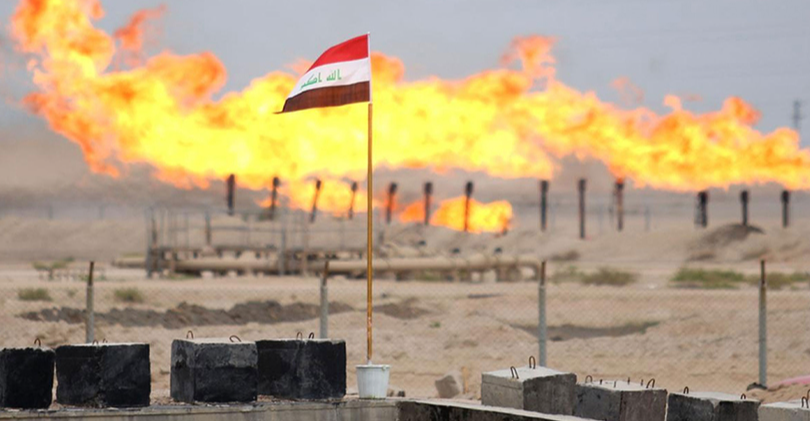 Shafaq News/ The British website Oil Price, which specializes in energy affairs, reported on Wednesday that Iraq is witnessing a conflict between the West on the one hand and China and Russia on the other over its oil and gas resources, placing Baghdad at a critical point between the two parties. The website believes that Iraq could be positioned as a strategic stronghold in the Middle East .
The report, translated by Shafaq News Agency, stated that “after a series of internal meetings within the Iraqi Ministry of Oil over the past two weeks, Iraq has begun talks with several international energy companies to develop gas fields .”
The report quoted a high-level source working with the Iraqi Ministry of Oil as saying, “It has finally become clear that the game is over with the United States and Iran,” noting that “the exemptions Washington had granted Iraq to proceed with importing gas and electricity from Tehran have ended .”
He pointed out that “everyone is now in a frantic race to try to find a way to increase gas production to levels that prevent continuous power outages throughout the year,” adding that “there are good options available to the ministry, but they all have significant political ramifications, so the decisions in the coming weeks will not be easy .”
The report noted that, “Unfortunately for the Oil Ministry, the reality began to emerge following the United States’ decision on March 8 to halt all exemptions that had allowed Iraq to continue importing energy from Iran, which in recent years had provided approximately 40% of its electricity needs. This was part of what the US State Department described as “ensuring that Iran is not granted any degree of economic or financial relief and implementing a maximum pressure campaign against Tehran .”
The report considered that “there are several options available in the gas sector, including taking advantage of huge agreements with strong Western companies such as the British “BP” and the French “Total Energizer”, as they have extensive experience in the gas sector, as is the case with the British “Shell”, which recently announced its goal to become a global leader in the field of gas and liquefied natural gas (LNG) and has significant operations in Iraq, as it is currently working through its joint venture with the “Basra Gas Company”, to collect and use flared gas from fields such as Rumaila, Zubair, and West Qurna, with the aim of helping Iraq achieve energy independence .”
He believed that “European and American companies could help change the rules of the game if Iraq asked them to,” noting that “this country has proven natural gas reserves amounting to 3.5 trillion cubic meters, or about 1.5% of the world’s total reserves, which makes it the 12th largest holder of global reserves,” noting that “estimates show that about three-quarters of Iraq’s proven reserves consist of associated gas .”
According to the report, “Two of Iraq’s major gas fields are Akkas and Mansuriya, and the Ministry of Oil decided last week to accelerate their development. Akkas contains approximately 5.6 trillion cubic feet of proven reserves and is expected to produce approximately 400 million standard cubic feet of gas per day, while Mansuriya contains approximately 4.5 trillion cubic feet of gas and is expected to produce approximately 300 million cubic feet of gas per day at its peak .”
He explained that the Akkas field is being developed by the Ukrainian company UkrZemresur, and the Mansouriya field is being developed by a consortium led by the Chinese Jereh Group and Petro Iraq. He explained that the allocation of either of these two fields for long-term development will have significant geopolitical consequences for Iraq .
The report explained that “Al-Mansuriyah is located near the eastern border with Iran, while the “Akkas” field is very close to the border with Syria,” noting that “along the axis of this area extending from east to west are the cities of Fallujah, Ramadi, Hit, and Haditha, which have a long history of extreme nationalism and fierce opposition to the West.” It added that “at this point, Iraq turns into Syria, and strategic ports such as Baniyas and Tartus, and then Latakia, become easy to reach.” It noted that “before the overthrow of Syrian President Bashar al-Assad, these cities served as global strategic locations for Russia and China .”
The report continued, “These strategic cities are equally strategically important to the West in the geopolitical game, especially since oil and gas companies have the legal right to secure their operations around the world by any means they deem necessary, including deploying large numbers of security personnel around their projects .”
He stated that “Iraq, whether in the south surrounding Baghdad or in the north surrounding Erbil, is located at a critical point between the West and the East,” noting that “since the United States withdrew from the nuclear agreement with Iran in 2018, China and Russia have accelerated their efforts to end any remaining Western influence in Iraq,” adding that “Iraq can be positioned alongside Iran as a strategic stronghold in the Middle East, rich in cheap oil and gas .”
The report quoted a high-ranking political source in Moscow as saying, “Iraq will be a unified country, and by distancing the West from energy deals there, the end of Western hegemony in the Middle East will be the decisive chapter in the ultimate collapse of the West .”
“The current Western policy aims to end all ties Iraq has with Chinese, Russian, and Iranian companies linked to the Iranian Revolutionary Guard Corps in the long term,” the report quoted a senior source working closely with the European Union’s Energy Security Council as saying. “Iraq may choose to work with a mix of Western and Chinese companies to develop the three main gas fields (Akkas, Mansouriya, and Siba) for now, but over time, we believe it will find it necessary to turn to Western companies .”
shafaq.com
