Axios reveals a secret channel between Trump and the Revolutionary Guard, led by Nechirvan Barzani from Erbil.
Axios reveals a secret channel between Trump and the Revolutionary Guard, led by Nechirvan Barzani from Erbil.
2026-08-16
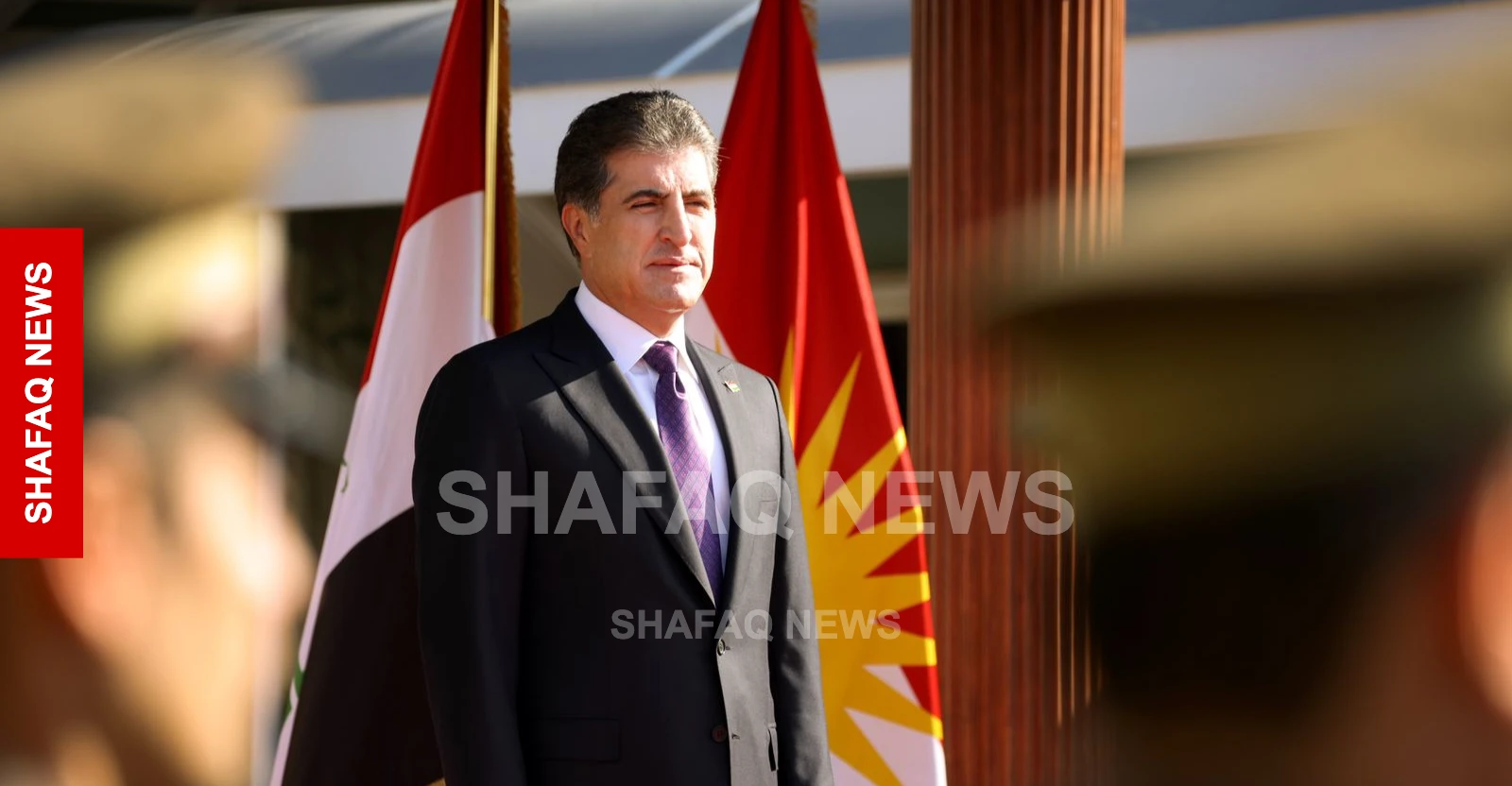 Shafaq News – Washington
A report by the American website ” Axios ” revealed on Sunday a secret communication channel established by the administration of President Donald Trump with the leadership of the Iranian Revolutionary Guard, in which the President of the Kurdistan Region, Nechirvan Barzani, played the role of direct mediator, in an attempt to ascertain the position of the most influential military establishment in Iran regarding the negotiations aimed at ending the war.
According to the report translated by Shafaq News Agency, the US administration faced a fundamental problem in mid-May during its negotiations with Tehran, which was its inability to ascertain whether Iranian Parliament Speaker Mohammad Baqer Qalibaf and Foreign Minister Abbas Araqchi actually had the authority to conclude an agreement, or whether the Revolutionary Guard leadership could overturn what was reached.
According to Axios, citing three sources with direct knowledge of the communications, the White House subsequently decided to open a parallel channel with the leadership of the Revolutionary Guard, and chose Nechirvan Barzani for this task because of his ties to Washington and Tehran and his long-standing contacts with prominent figures within the Iranian regime.
Around May 10, then-US Director of National Intelligence Tulsi Gabbard contacted Barzani and informed him that the Trump administration believed he could help get directly to Iranian Revolutionary Guard commander General Ahmad Vahidi.
According to the sources, Gabbard explained that the call was made with the approval of President Trump and his deputy, JD Vance, and that Washington wanted to know whether Vahidi and the Revolutionary Guard leadership supported the course that Qalibaf and Araqchi were negotiating, or whether they had different conditions and demands.
According to the report, Barzani has long-standing personal ties with Iranian officials, including high-ranking figures in the Revolutionary Guard. He also lived in Iran during the Iran-Iraq War, studied at Tehran University, and speaks fluent Persian.
The President of the Kurdistan Region agreed to convey the American message, but requested that his communication with the commander of the Revolutionary Guard be direct.
On May 14, an Iranian official arrived at Barzani’s office in Erbil carrying an encrypted phone through which a secure call was made between the regional president and Vahidi, according to Axios.
During the call, Barzani asked the Revolutionary Guard commander whether the Iranian military establishment was behind the negotiations being conducted by Qalibaf and Araqchi. According to a well-informed source, Vahidi confirmed his support for the negotiators and that the Guard preferred resolving the crisis through negotiation.
Immediately after the call ended, Barzani informed Gabbard of the content of the Iranian response, and she in turn informed the White House, according to three sources who spoke to the website, including an official in the US administration.
But Erbil’s role did not stop at conveying messages, as the report revealed that the Trump administration later put forward a more sensitive idea, which was to hold a secret meeting between senior American and Iranian officials in Erbil under the auspices of Barzani.
The regional president conveyed the proposal to the Iranian side, which did not categorically reject it, but expressed significant security concerns about holding the meeting in the Kurdistan Region.
According to a source familiar with the communications, Iranian officials feared that Israeli intelligence had a wide network within the region, and that members of the Iranian delegation might be assassinated while in Erbil or while traveling to and from Iran, which ultimately led to the meeting not being held.
This comes in the wake of significant shifts in Iran’s power structure following the assassination of Supreme Leader Ali Khamenei and several other high-ranking officials during the war, and the subsequent rise of the Revolutionary Guard’s influence in national security and foreign policy matters. The most recent of these shifts was the appointment of Ahmad Vahidi as the Guard’s commander-in-chief.
Attempts to reach a new settlement between Washington and Tehran began after the ceasefire on April 8 and a summit held afterward in Islamabad, but the contacts have not yet led to a stable agreement.
Pakistani and Qatari mediators are still exchanging messages between the United States and Iran, but regional sources told Axios that the talks have not made any tangible progress.
The website also revealed that Nechirvan Barzani recently sent messages to the White House in which he again offered to help relaunch US-Iranian negotiations, at a time when disagreements over the Strait of Hormuz and regional security issues continue to hinder any potential settlement.
shafaq.com
