An economic institution warns against the “dollarization” of the Iraqi economy and the deepening of poverty if the dinar is devalued.
An economic institution warns against the “dollarization” of the Iraqi economy and the deepening of poverty if the dinar is devalued.
2026-06-19
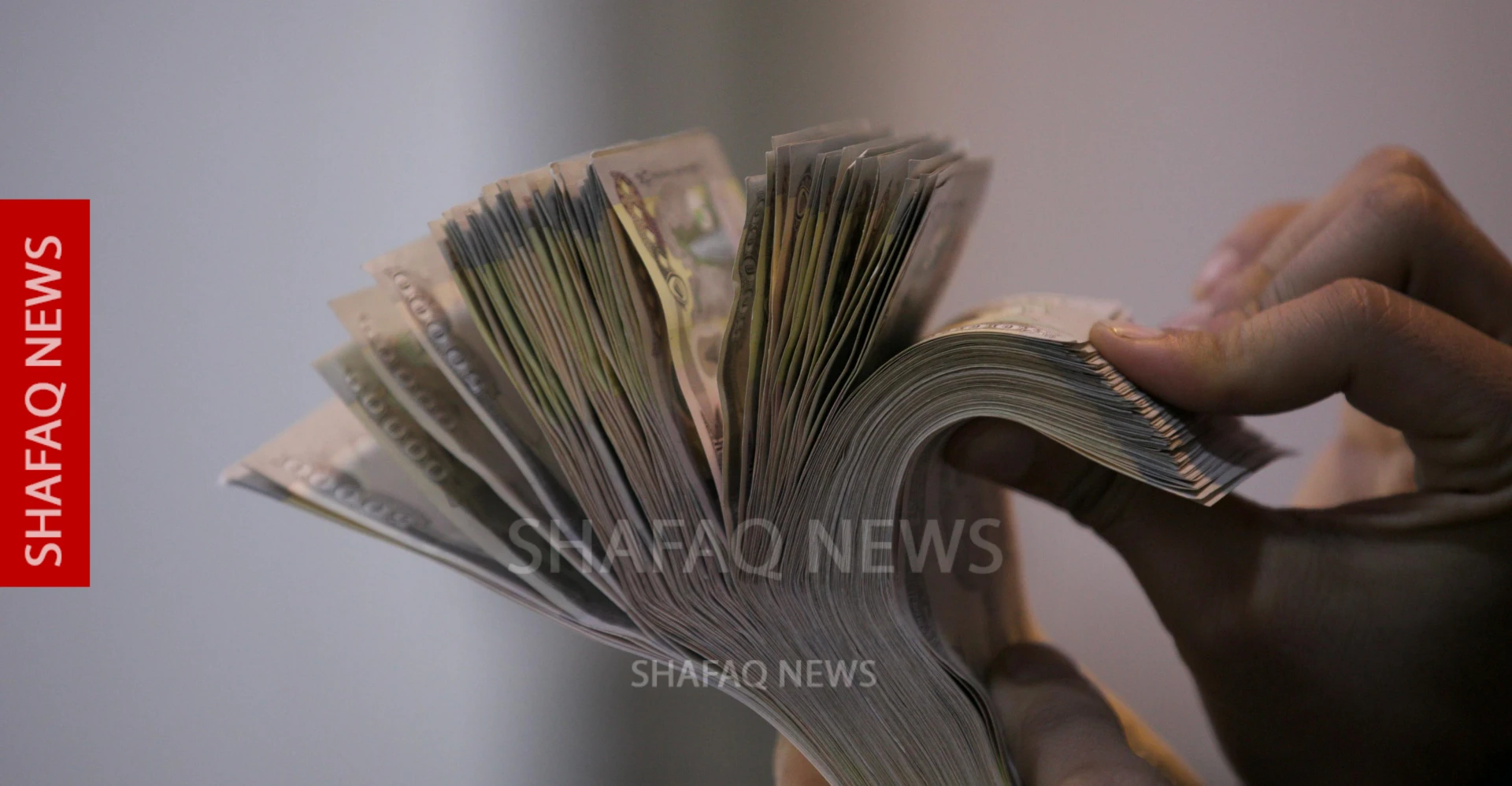 Shafaq News – Baghdad
The “Iraq Future” Foundation for Economic Studies and Consultations warned on Friday of the repercussions of reducing the value of the Iraqi dinar against the US dollar, stressing that the negatives of such a step – if the federal government takes it – will outweigh its temporary benefits to the country’s economy.
These warnings come at a time when political and financial circles are increasingly discussing the possibility of devaluing the local currency as an option to address the current deficit and alleviate pressure on the general budget, especially after government revenues declined sharply to only 10% compared to their previous levels before the recent military conflict in the region and the easing of the Strait of Hormuz.
The report quoted the head of the institution, economist Manar Al-Obaidi, as saying, “Despite the assurances in official reports regarding the stability of monetary policy and its pursuit of stability, it remains necessary to analyze the pros and cons of this approach to assess its real impact on the Iraqi economy and society.”
Partial financial gains
The report explained that those who support the option of reducing the dinar rely on a number of financial and monetary gains; most notably providing a partial financial option that contributes to reducing government expenditures denominated in dinars (such as local salaries), which in turn reduces the overall size of spending in dollars.
Supporters also believe that higher prices for imported goods will enhance the competitiveness of local agricultural and industrial products, as well as protect cash reserves from continuous depletion and reduce the gap between the official exchange rate and the parallel market rate.
Risks of “dollarization” and recession
On the other hand, the institution warned of dire consequences that could squander these gains, most notably a complete loss of confidence in the national currency.
In this regard, Al-Obaidi explained that “the continuous change in the value of the currency at a rate of every two years undermines the public’s confidence in the dinar, which pushes the private sector and citizens to adopt the dollar as the primary currency in daily and commercial transactions.”
He added that this “dollarization” will create a huge demand for hard currency in the parallel market, which may cause the price gap to widen instead of narrowing as a result of the scarcity of official supply, warning that the lack of exchange rate stability will inevitably drive away local and foreign investments that base their feasibility studies on long-term plans.
The report also indicated that devaluing the dinar would automatically increase the cost of government contracts for purchasing goods and services denominated in foreign currency, thus raising the state’s operating expenses and plunging the country into a spiral of “successive reductions” without sustainable financial guarantees.
A wave of inflation and deepening poverty
On the social level, the organization warned that the absence of adequate social protection mechanisms to support vulnerable groups means that the currency devaluation will generate a sharp wave of inflation that will push large segments of citizens below the poverty line, as well as bringing the commercial sector (which represents the largest share of non-oil GDP) into a state of paralysis and stagnation, which will negatively affect job opportunities and exacerbate unemployment rates among young people.
The head of the “Iraq of the Future” Foundation concluded his remarks by saying: “Adjusting the exchange rate alone is not a radical solution, but rather a postponement of a deeper crisis. The real problem lies in three main axes: the continuous inflation of operating expenses, the scarcity of non-oil revenues, and the imbalance in the trade balance. Comprehensive structural reform begins with addressing these roots and not through individual and temporary solutions.”
shafaq.com
