American perspective: The Pahlavi legacy poses an obstacle to unifying the Iranian opposition.
American perspective: The Pahlavi legacy poses an obstacle to unifying the Iranian opposition.
2026-03-06 08:57
 Shafaq News – Washington
Mustafa Hashim
Evan Sacha Sheehan, dean of the School of Public Affairs at the University of Baltimore and an expert on Iranian politics, pointed out on Friday that the legacy of the monarchy in Iran constitutes a “structural and historical obstacle” to unifying the ranks of the opposition, while also noting the similarities between the previous and current Iranian regimes.
Speaking to Shafaq News Agency, Shehan said that there is a “structural similarity” between the former Shah’s regime and the current “Guardianship of the Islamic Jurist” system. The Iranian monarchy, unlike European models, was characterized by excessive centralization and repression, which created a deep divide with the Iranian national components.
He added, “Under the monarchy, the Shah’s hereditary sovereignty was the supreme political principle. In the current system, the Guardianship of the Islamic Jurist occupies a similar position, where sovereignty is vested in an authority above the people and not in the people themselves.”
Sheehan argued that “both frameworks, despite their differing ideological justifications (dynastic versus theocratic), share a single (institutional DNA) that places power in the hands of an unelected individual or entity.”
Sheehan explained that “Iranian nationalities, including Azeris, Kurds, Arabs, and Baloch, still carry bitter memories of the ‘forced cultural homogenization’ policies and security governance that characterized the Shah’s era.”
The expert highlighted key points that make it difficult for Reza Pahlavi to lead a united front, including: the lack of disavowal of violations, as Reza Pahlavi did not issue a clear condemnation of his father’s violations, including the practices of the SAVAK intelligence service.
He continued: There is also a crisis of confidence, as minorities fear a return to strict central rule under a new slogan, which pushes them to demand federal guarantees or to side with other opposition parties.
He concluded his remarks by saying, “Historical perception and collective memories of oppression are not just abstract ideas, but are part of the political consciousness of current generations.”
Since February 28, Israel and the United States have been launching attacks on Iran, killing hundreds of people, including Supreme Leader Ali Khamenei and security officials, while Tehran responds by launching missile and drone barrages towards Israel.
Tehran responds by launching attacks on what it describes as “American interests” in Arab countries, resulting in deaths and injuries and damage to civilian facilities, including ports and residential buildings.
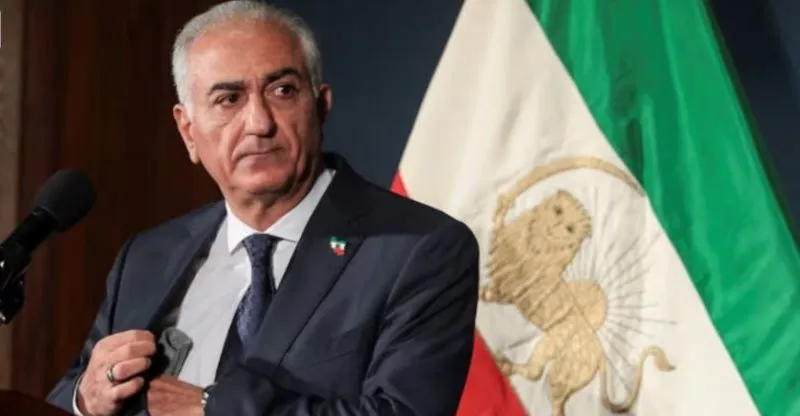
More recently, Reza Pahlavi emerged, just before the start of the American war on Iran, and held meetings in the administration of US President Donald Trump, with the aim of taking over the reins of power in Iran in the event of the regime falling.
Reza Pahlavi recently stated that some political parties and forces in Iran represent, as he described them, separatist currents that pose a threat to the unity of Iranian territory, stressing that the unity of Iran is a “red line” that is not negotiable or inviolable.
He also indicated the need for the army to be prepared to confront what he called separatists in order to protect the unity of the country, stressing that any political change or national demands should not affect Iran’s “territorial integrity,” which some critics interpreted as an exclusionary stance towards the demands of nationalities within the country.
Pahlavi’s statements were met with rejection by Iranian Kurdish parties, who considered them “accusations” and a threat to use the army against their political demands.
shafaq.com
