Al-Kadhimi proposes a new electoral system and invites parties to discuss the commission.
Al-Kadhimi proposes a new electoral system and invites parties to discuss the commission.
2025-04-20 01:52
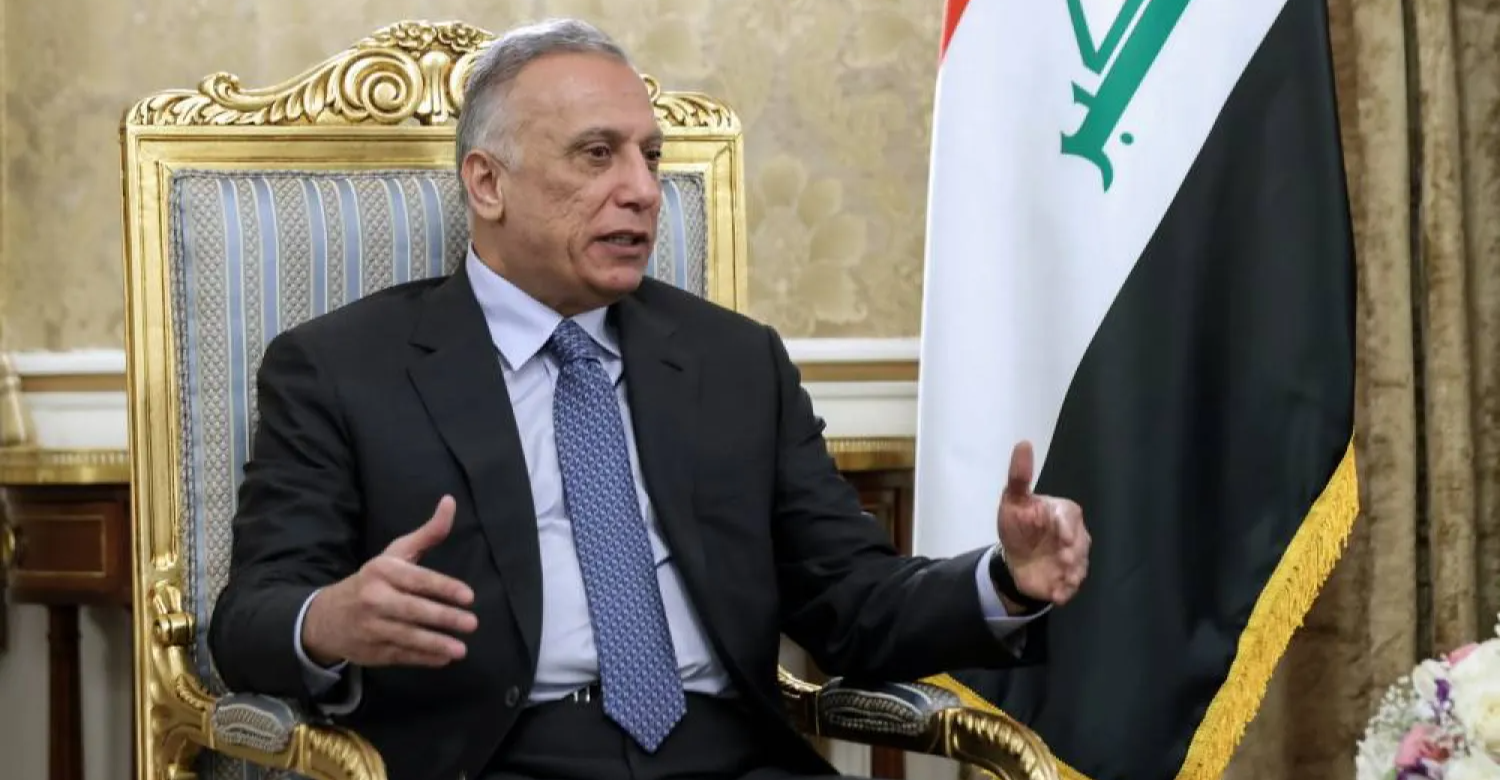 Shafaq News/ Former Prime Minister Mustafa Al-Kadhimi proposed, on Sunday, adopting a fixed electoral system that all governments are obligated to adhere to, provided that it is based on objective criteria. He also called for the independence of the head and members of the Electoral Commission from party affiliation .
Al-Kadhimi said in an article published in Asharq Al-Awsat newspaper, which was followed by Shafaq News Agency, that “the parties make periodic amendments before each electoral cycle in line with the interests of the parties and political forces with the strongest parliamentary opinion,” indicating that “there are several challenges in our electoral system currently, and they can be summarized in three points: the first: the periodic change of laws, the second: the neglect of natural variables, and the third: the absence of fixed rules .”
He added, “If we want to discuss these points quickly, amending the law before each session, based on the desires of the ruling political parties and forces, allows them the ability to reshape the landscape once again, because they are the ones who set the rules of the game to serve their interests. This automatically means a flawed representation of the popular will .”
According to Al-Kadhimi, “ignoring natural variables—the demographic, social, and economic ones that occur in the country over time—makes the distribution of parliamentary seats and its mechanisms disproportionate to the actual population size and its geographic distribution. This does not mean increasing the number of parliamentary seats, and the discussion is not a call to do so. Rather, it is an issue that must be addressed .”
He continued, “This point leads us to the third point, which is the absence of fixed rules. In Iraq, there is a fixed rule for representation, which is one representative for every 100,000 citizens. This rule varies from one session to the next, as disagreement arises over how seats are distributed, votes are counted, and the mechanisms for doing so. This opens the door to tampering with the results, sometimes leading to the overrepresentation of some and the exclusion of others, which means the dismantling and emptying of the democratic process. Here, it is necessary to define appropriate – fixed – mechanisms that can keep pace with natural, not political, changes .”
He pointed out that “in light of these complexities that are raised in closed meetings, some of which come to light, there are serious calls to adopt a fixed electoral system that obligates all governments to adhere to, provided that it is based on objective criteria. I am also not in the process of discussing the form and nature of the law, but rather I seek to define the general specifications of the law, based on meetings and contacts I have conducted with various stakeholders in the political scene,” considering that “a fair law must be characterized by the ability to guarantee the greatest degree of representation of votes in parliament, and this is usually achieved by the proportional system .”
“Therefore, it is necessary to point out the following points: the distribution of seats will be according to objective criteria, with the total number divided into three sections: the first (which is the vast majority) for those with the largest number of votes, the second is the quota for women and minorities, and the third is a specific number of compensatory seats to ensure the achievement of relative justice at the national level, so that any differences resulting from the unbalanced population distribution are compensated for, in addition to dividing the country into fixed electoral districts that do not change, proportionate to their population size, with these districts being reviewed periodically, specifically when tangible changes in population density or social transformations appear, ” the former Prime Minister added.
Al-Kadhimi pointed out that “the scene the next day will be one of tension and congestion, starting from the locality, then the governorate, and finally the center. There are those who say that voting for a political party instead of voting for an individual candidate will enhance the stability of the electoral and political process later on. However, there are those who call for each party to present a pre-determined list of candidates for each electoral district, and to give voters the opportunity to vote preferentially within this list. This will end the era of a single list dominating the popular will, and provide the necessary space for the participation of independent figures after they pass the threshold .”
He explained that “it is necessary to point out the threshold, or electoral quotient, and this requires setting a fixed threshold that guarantees the entry of parties and independents alike after they obtain a certain number/percentage of voters’ votes. The important point, also, lies in working to control electoral propaganda in all its forms, and rejecting the exploitation of state resources for personal interests, or exhausting its treasury by buying votes – early and with clear pretexts and excuses .”
Al-Kadhimi explained that “the specifications of this law contribute to strengthening citizens’ confidence in the electoral process first and then in the political process. This allows for consolidating the foundations of political stability, especially since determining the size of parliamentary blocs and their popular weight contributes to achieving stability and supports the national decision-making process, starting with the selection of the Prime Minister and his ministerial formation and accompanying him in the process of support or opposition, evaluation, assessment and accountability. Fair representation of the will of the voter gives the democratic process more transparency and the ability to accommodate future generations and include them in the process of development and construction of the political process, which we all agree is unfortunately a distorted process .”
He stressed that “it is necessary to draw on the experience of 2021, which was described as the most fair and transparent elections in the history of modern Iraq,” considering that “the Independent High Electoral Commission must have a president and members from outside the party system, and that these tasks must be assigned to judges known for their integrity, and they must be chosen in coordination with the judicial institution. This approach strengthens the process of trust and reassures the candidate, his supporting party, and the voter alike. However, if the commission is assigned, as it is today, to the ruling political parties and forces, this is a matter of great questioning and inquiry .”
shafaq.com
