Al-Alousi: Iraq is threatened with collapse due to Iran’s influence, and the framework has lost control.
Al-Alousi: Iraq is threatened with collapse due to Iran’s influence, and the framework has lost control.
2026-01-10
 Shafaq News – Baghdad
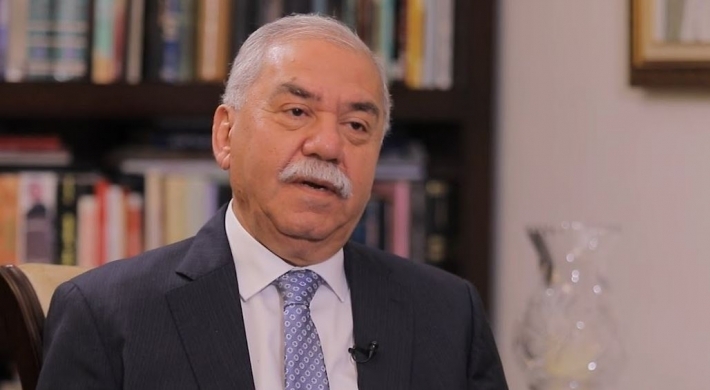
Prominent Iraqi politician Mithal Al-Alusi said on Friday that there is a “deliberate confusion” between sparing the Iraqi state from dangers and the attempt by some politicians and parties to spare themselves the repercussions of regional changes, especially what is happening inside Iran, warning that this confusion puts Iraq on a “very dangerous” path politically, security-wise and economically.
Al-Alousi explained to Shafaq News Agency that “the United States’ insistence and repeated stance rejecting the presence of militias in the next government, and demanding their dismantling and disarmament, does not stem from special American desires or agendas, but rather from an attempt to force Iraqi parties to implement the constitution, abide by the law, and build the state on clear sovereign foundations.”
He added that “Washington, according to its reading of the Iraqi situation, believes that the upper hand in the state has become for the followers of the Iranian Revolutionary Guard within the institutions of government, law and the armed forces, which poses a direct threat to the very concept of the state,” according to his view, adding: “Even the caretaker government bears the responsibility of protecting the Iraqi state from Iranian expansion and from the meddling of what is known as the (axis of resistance).”
Al-Alousi warned that “the continuation of this approach means that Iraq is effectively involved in the quagmire of financing regional wars and conflicts, not only with money or political positions, but even with men,” noting that “the politicians who manage this path will bear serious consequences similar to what the German elites faced after World War II,” pointing out that “any fundamental changes in Iran, Syria or Lebanon will be directly reflected on the individuals and parties associated with them within Iraq.”
Regarding the race for the Iraqi premiership, Al-Alousi said that the outgoing prime minister, who is demanding renewal, as well as his rivals, are required to provide clear and explicit answers about how to implement reform, away from “naive manipulation of words,” stressing that Iraq today needs to clearly define its strategic position.
He added that “continuing to reiterate positions supporting Hamas and Hezbollah, or engaging in absolute support for the whims of the Iranian Revolutionary Guard, represents suspicious positions that would open the gates of hell for Iraqi security and the economy, especially in light of regional escalation and increasing international pressures.”
Al-Alousi pointed out that “the essence of the American position is that the coordination framework is no longer able to impose its political will,” explaining that “this framework was not formed as a normal parliamentary bloc, but was established outside of parliament and before the elections, according to ideas and direct planning from the commander of the Quds Force, Ismail Qaani,” as he put it.
He considered that “the coordination framework includes armed factions accused of terrorism and of being affiliated with a foreign state, and is seen as an Iranian tool to dominate Iraqi legislation and restrict the work of the government in a way that serves the expansion of Tehran’s influence, and not the interest of the Iraqi state,” as he described it.
Al-Alousi concluded his remarks by saying that “the current stage requires political forces to choose between the state and the constitution, or becoming beholden to regional axes that will push Iraq into international isolation and conflicts that it cannot bear.”
shafaq.com
